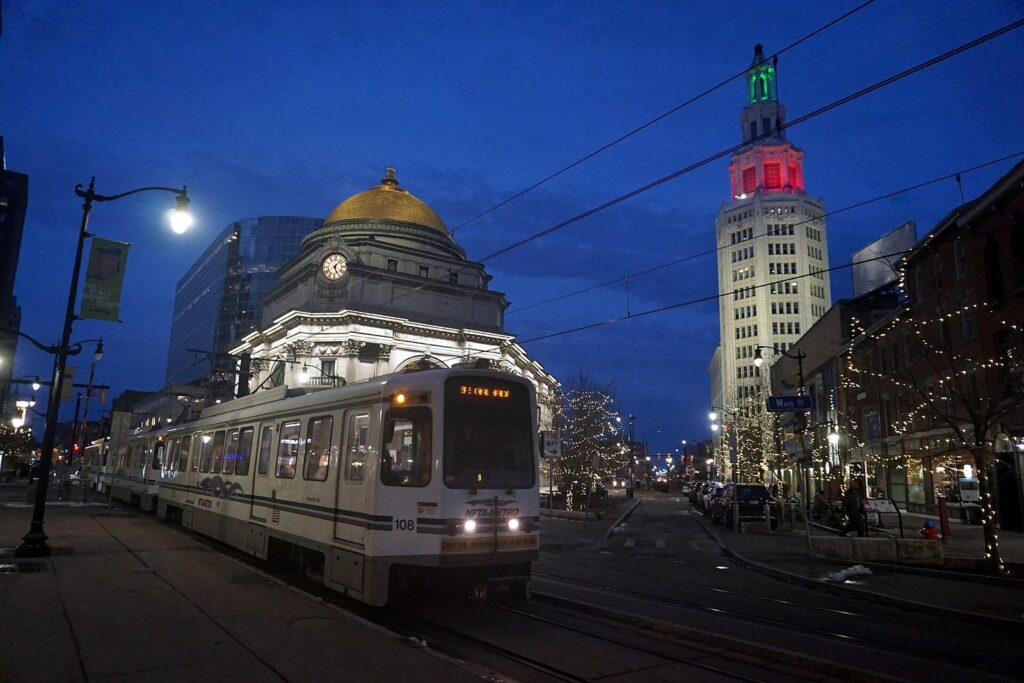
Getting around Buffalo NY is easier than its car-first reputation suggests, as long as you match the mode to the trip. Downtown, Canalside, the Theater District and Allentown are walkable and strung along Metro Rail, which is free on its above-ground section. City buses reach the airport, the Elmwood museums and even Niagara Falls for a $2 fare, capped at $5 a day. Rideshares fill the late-night gaps. You need a car only for the suburbs, the Southtowns, Bills games if you skip the shuttle, and day trips.
This guide is for visitors who’d rather not guess: how to get in from the airport, the train or the bus, what transit actually covers, where to park and when a car is worth renting. The caveat for fall 2026 is Metro Rail construction, which has single-tracked the downtown stretch and slowed trains to about every 20 minutes. Everything here was checked September 23, 2026 against official sources.
| Mode | Cost | How often or how fast | Best for | Plan ahead? |
|---|---|---|---|---|
| Walking | Free | Downtown core is about a mile end to end | Downtown, Canalside, Allentown, Elmwood Village | No |
| Metro Rail | Free above ground; $2 underground | About every 20 minutes during construction | Main Street from Canalside to UB South Campus | No |
| NFTA buses | $2 a ride; capped at $5 a day with MetGo | Airport Route 24 every 20 to 30 minutes | Airport, Elmwood Avenue, Niagara Falls | Check the timetable |
| Rideshare or taxi | Varies with distance and demand | About 20 minutes airport to downtown by road | Late nights, luggage, the suburbs | Book in the app |
| Reddy Bikeshare | $3 to unlock, then 10 cents a minute | Bikes available 24/7, April to October | Short hops and the waterfront | No |
| Rental car | Daily rate plus parking | Door to door | Niagara Falls, the Southtowns, day trips | Yes, in summer and fall |
How is Buffalo laid out?
Picture a fan. Downtown sits at the corner where Lake Erie narrows into the Niagara River, and the city spreads north and east from there. Main Street is the spine: it runs from Canalside at the waterfront north through the downtown office core, the Theater District and the Buffalo Niagara Medical Campus to the University at Buffalo’s South Campus, and Metro Rail runs under and along it the whole way. To the west of Main are Allentown, the Elmwood Village and the West Side; to the north, Delaware Park, the museums and Hertel Avenue; to the east, the East Side and the airport in Cheektowaga, about 10 miles from downtown. South Buffalo, the Outer Harbor and the Southtowns lie across the Buffalo River.
The highways follow the same shape. The Niagara Thruway (I-190) runs along the river from downtown to Niagara Falls, the Kensington Expressway (NY 33) links downtown with the airport, the Skyway carries NY 5 over the harbor to the Outer Harbor and the Southtowns, and the New York State Thruway (I-90) loops around the east side of the metro area. The practical upshot: almost every attraction inside the city is within a 10-to-15-minute drive of downtown outside rush hour, Niagara Falls is about 30 minutes, and Canada is across the Peace Bridge.
Transit covers that map unevenly. The Main Street corridor is well served by Metro Rail, and buses reach the airport, Elmwood Avenue and Niagara Falls. Crosstown trips and anything in the suburbs are slower and less frequent, which is where a rideshare or a car earns its keep. For the bigger picture of when to visit and what to book, see our Buffalo travel guide.
How do you get from the airport to downtown?
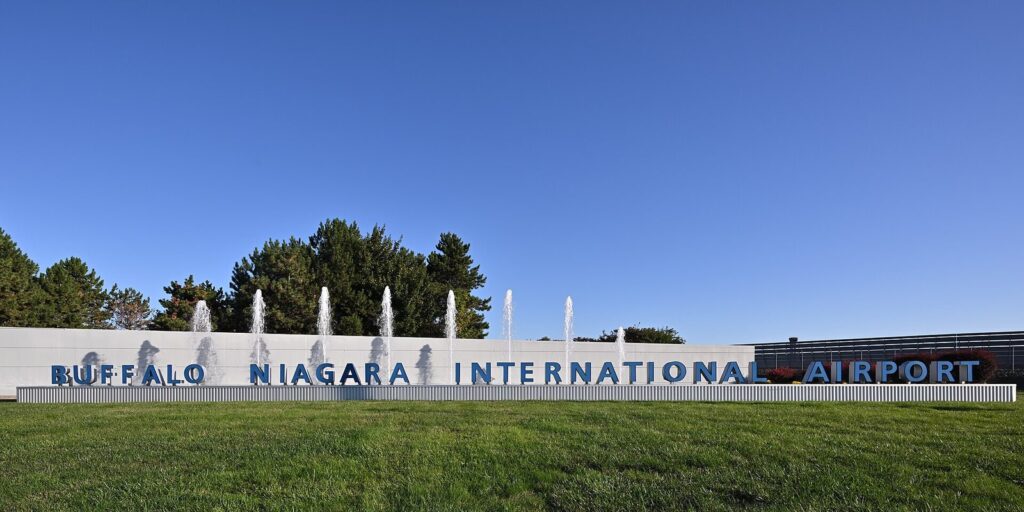
Buffalo Niagara International Airport (BUF) is small and easy, and you have three good ways into town. The cheapest is the NFTA bus. Route 24 Genesee runs every 20 to 30 minutes all day between the airport and downtown along Genesee Street, stopping often. On weekdays, Route 24L Limited Stops covers the same trip faster, with fewer stops, at no extra charge. Route 78 Cheektowaga Express runs about every 25 minutes during the morning and evening rush, using the Kensington Expressway. The fare is the standard $2, and children under 10 ride free.
The bus makes sense if you’re traveling light, arriving in daylight and staying downtown near a stop. With heavy bags, small children or a late flight, take a rideshare or taxi: it’s about 20 minutes to downtown by road outside rush hour, and the airport’s signs point you to the ground transportation pickup areas. Rental car counters are at the airport too, which is the right call if your plans include Niagara Falls, the Southtowns or a Bills game. The airport to downtown by bus guide in this series walks through the ride stop by stop, a companion piece compares every airport transport option, and a third covers late-night arrivals, when buses thin out.
| Option | Cost | When it runs | Verdict |
|---|---|---|---|
| Route 24 Genesee | $2; under 10 free | All day, every 20 to 30 minutes | Cheapest; slow but reliable |
| Route 24L Limited Stops | $2, no surcharge | Weekdays only | The best bus if it’s running |
| Route 78 Cheektowaga Express | $2 | Weekday rush hours, about every 25 minutes | Useful only at commuter times |
| Rideshare or taxi | Varies with demand | Whenever drivers are available | Best with bags, kids or a late arrival |
| Rental car | Daily rate plus parking | Counter hours | Best if you’re leaving the city |
Plan it: $2 bus fare, capped at $5 a day with a MetGo card; Route 24 all day, Route 24L weekdays only; about 20 minutes by car to downtown; check current timetables on the NFTA airport service page.
Arriving by train: which Amtrak station should you use?
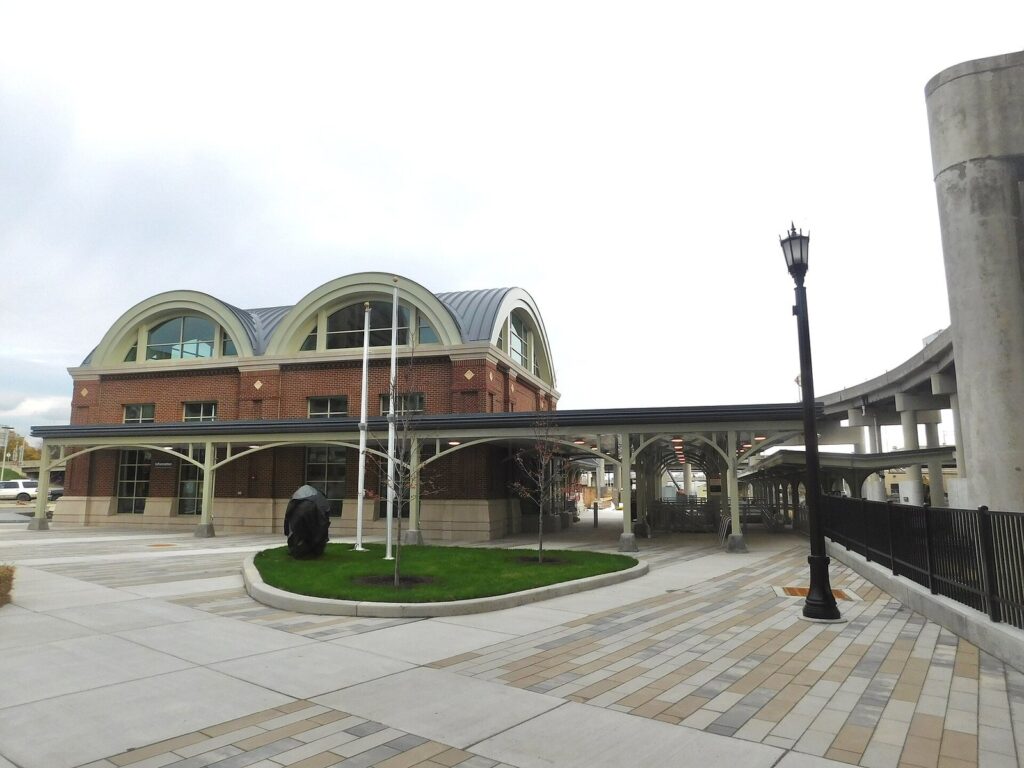
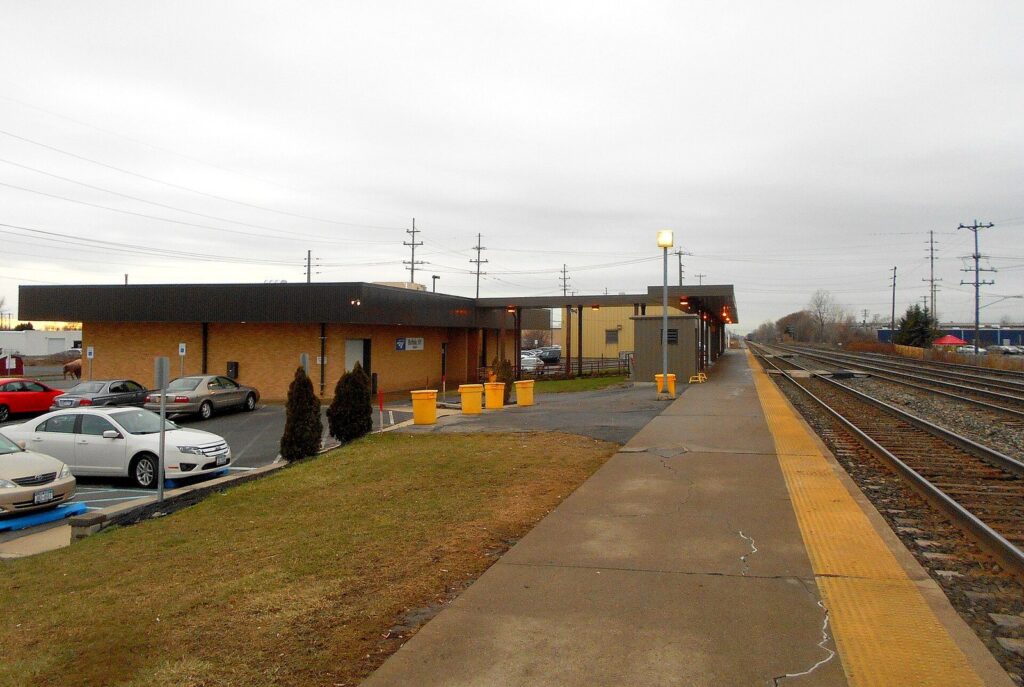
Buffalo has two Amtrak stations, and picking the right one saves you a cab ride. Buffalo-Exchange Street (station code BFX) is downtown, a short walk from Canalside, the KeyBank Center and the downtown hotels; the current station opened in 2020. It’s served by Empire Service trains from New York City and Albany and by the Maple Leaf, which runs between New York and Toronto. Buffalo-Depew (BUF) is in the suburbs east of the city and handles the same Empire Service and Maple Leaf trains plus the Lake Shore Limited between New York, Boston and Chicago.
If your train stops at both, get off at Exchange Street. If you’re on the Lake Shore Limited, you’ll arrive at Depew, which is a 20-minute drive from downtown; book a rideshare before you arrive, especially for the train’s late-night and early-morning times, when waiting for a bus isn’t realistic. The Amtrak to downtown Buffalo guide in this series covers both stations and the onward connections in detail.
Arriving by intercity bus
Greyhound, Megabus and Trailways use the NFTA Metropolitan Transportation Center at 181 Ellicott Street, on the east side of downtown. It’s also the main hub for city buses, including Route 40 to Niagara Falls. From the terminal you can walk to most downtown hotels in 10 to 20 minutes, and Main Street’s Metro Rail stations are a few blocks west. Bus from New York City or Toronto is usually the cheapest way to Buffalo, if not the fastest.
Driving in and parking
If you’re driving, you’ll most likely come in on the New York State Thruway (I-90), which uses cashless tolling, so your plate is billed if you don’t have an E-ZPass. From the east, the Kensington Expressway or the Thruway to I-190 brings you downtown; from Toronto, it’s the Queen Elizabeth Way to the Peace Bridge or the Niagara bridges. Traffic is mild by big-city standards, but the Kensington and I-190 back up at rush hour and on event nights.
Downtown parking follows simple rules. City meters are in effect from 8am to 5pm Monday to Saturday unless a sign says otherwise, and they’re free on Sundays and legal holidays. You can pay at meters and pay-and-display kiosks or with the ParkMobile app, which also has a text-to-pay option listed on the signs; the older Buffalo Roam app is being phased out. Read the time limits on each block. For longer stays, the downtown ramps and surface lots are simpler, and hotels generally charge for parking, so ask when you book.
Outside downtown, parking is easier and often free. Canalside and the Outer Harbor have free parking, as does the Buffalo History Museum. The Buffalo AKG Art Museum charges $12 for three hours, and the Buffalo Zoo charges $6 for the first two hours, up to $12. Event nights are the exception: parking near the KeyBank Center and Canalside fills and prices rise, so take Metro Rail if you can. The downtown Buffalo parking guide in this series maps the ramps and the rules, and the rental car vs transit guide helps you decide whether you need a car at all.
Plan it: meters 8am to 5pm Monday to Saturday, free Sundays and legal holidays; pay by meter, kiosk or ParkMobile; details from the City of Buffalo parking division.
How do you use Metro Rail?
Metro Rail is Buffalo’s single light-rail line, 6.4 miles from Canalside at the foot of Main Street to University Station at UB’s South Campus, with five above-ground stations downtown and eight underground to the north. The whole above-ground section, from Fountain Plaza in the Theater District to the waterfront, is free: just step on. North of Fountain Plaza the line goes underground, and you need a fare. Trains run seven days a week.
The stations that matter most to visitors are Canalside, for the waterfront and the KeyBank Center; Lafayette Square and Church, for the downtown core and its hotels; Fountain Plaza and Theater, for Shea’s and the Theater District; and Allen/Medical Campus, for Allentown. Farther north, the line is mostly useful for the University District and for Hertel Avenue’s restaurants, a walk or short bus ride from the stations. It doesn’t reach the Elmwood museums, the airport or the waterfront parks beyond Canalside.
Plan around the construction this fall. Since June 7, 2026, work on the above-ground section has single-tracked the line between Church and Canalside, and trains run about every 20 minutes while it lasts, so check the NFTA Metro Rail schedule before you time a show or a game around it. On the plus side, after Sabres games and select downtown events the last train leaves Canalside 30 minutes after the event ends. The Metro Rail visitor guide in this series lists every station and what’s near it.
How do fares and passes work?
One fare covers buses and the underground part of Metro Rail. A single ride costs $2 and children under 10 ride free. The better deal for most visitors is to use a MetGo card or account, which caps what you pay at $5 a day, $25 a week or $75 a month: ride as much as you like and you’ll never pay more than a day pass. Day Passes ($5) and 7-Day Passes ($25) exist too. Buses take cash, but cash rides don’t count toward the fare cap, so a card is worth setting up if you’ll ride more than twice. Current fares and the MetGo details are on the NFTA Metro site.
| Fare | Price | Notes |
|---|---|---|
| Metro Rail, above ground | Free | Fountain Plaza to Canalside |
| Single ride | $2.00 | Bus or underground Metro Rail; under 10 free |
| Day cap or Day Pass | $5.00 | Cap applies automatically with MetGo |
| Week cap or 7-Day Pass | $25.00 | Good for a long stay or daily commuting |
| Month cap | $75.00 | MetGo only |
| Bills Game Day Express | $5 each way | Exact cash or Token Transit |
Which bus routes are useful for visitors?
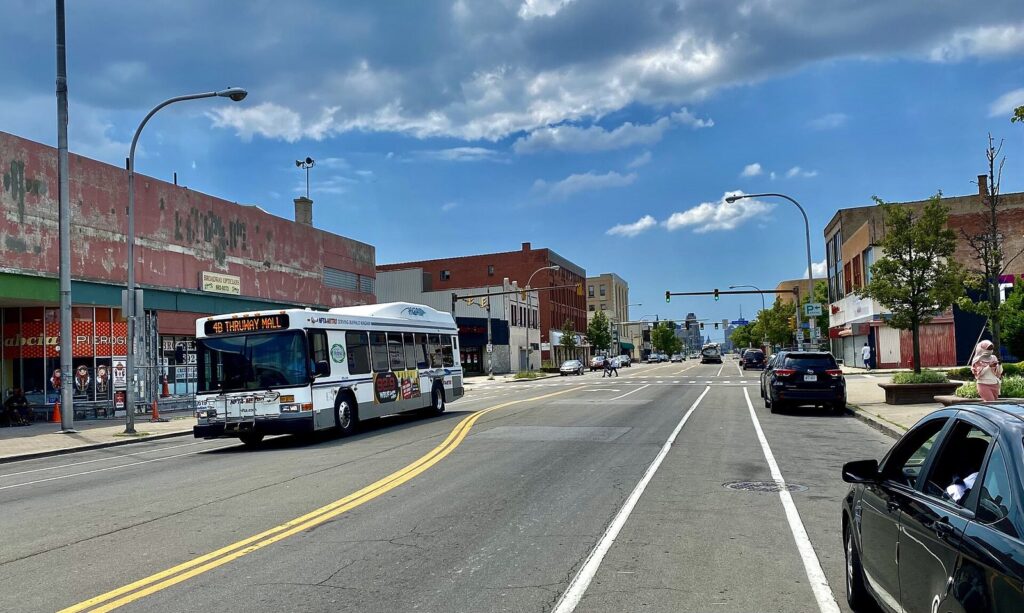
You’ll use four routes at most. Route 24 Genesee, and 24L on weekdays, gets you to and from the airport. Route 20 Elmwood runs up Elmwood Avenue through the Elmwood Village to the museum district, with a stop at Elmwood and Nottingham for the Buffalo History Museum and a short walk to the Buffalo AKG. Route 40 runs between the Metropolitan Transportation Center and Niagara Falls, via Black Rock, Grand Island and the Seneca Niagara Casino, seven days a week, taking about an hour end to end; our guide to Niagara Falls from Buffalo covers that trip and the options on the other side. And on Bills game days, the Game Day Express runs from six transit centers, including the Metropolitan Transportation Center and University Station, to the stadium for $5 each way.
Everything else is a matter of patience. Many routes run every 30 minutes or less often in the evenings and on Sundays, so check the timetable rather than turning up and hoping. Our guide to public transit to Canalside and the Buffalo AKG shows the exact stops and transfers for the two trips visitors ask about most.
Is renting a car worth it?
For a downtown weekend, no: between parking fees and the free downtown train, a car mostly sits in a ramp. For a trip that includes Niagara Falls on your own schedule, the Southtowns, Graycliff, wine country or a Bills game with a tailgate, yes. A middle path works well too: go car-free for the city days and rent for one day of excursions.
If you do rent, book early for fall weekends and Bills home games, when airport inventory tightens. Ask how the company bills Thruway tolls, since cashless tolling runs through the rental agreement and often carries a fee. If you plan to drive into Canada, confirm that the rental company allows it and keep the agreement in the car for the border. In winter, expect all-season tires rather than snow tires, pack a scraper, and give yourself extra stopping distance on the first snowy day, when everyone is out of practice.
Rideshare, taxi or Metro Rail: which is better?
Uber and Lyft both operate across the metro area, and they’re the answer for late nights, bad weather, airport runs with luggage and any trip that crosses the city rather than running up Main Street. You can’t reliably hail a taxi on the street; book through an app or call a cab company. Prices rise on Bills and Sabres days and at bar close in Allentown and on Chippewa Street, so leave a little early or expect to wait.
Metro Rail wins when your trip follows Main Street, because it’s free downtown and dodges event traffic. Buses win on price for the airport and Elmwood Avenue if you’re not in a hurry. The ride share vs Metro guide in this series compares them trip by trip.
| Trip | Best choice | Why |
|---|---|---|
| Hotel downtown to Canalside or a Sabres game | Walk or Metro Rail | Free, and faster than traffic on game nights |
| Downtown to the Theater District | Metro Rail | Free above ground |
| Downtown to the Buffalo AKG or the History Museum | Route 20 bus or rideshare | Metro Rail doesn’t reach Elmwood Avenue |
| Airport to downtown with bags | Rideshare or taxi | About 20 minutes, door to door |
| Allentown bars to your hotel at 2am | Rideshare | Buses thin out late |
| Bills game | Game Day Express | $5 each way and no stadium parking fight |
Can you get around by bike or on foot?
On foot, yes, within neighborhoods. Downtown is compact, and it’s an easy walk from the hotels to Canalside, the Theater District and Lafayette Square. Allentown, the Elmwood Village and Hertel Avenue are each great to walk once you’re there. The gaps between them are long enough that you’ll want the train, a bus or a bike to connect them.
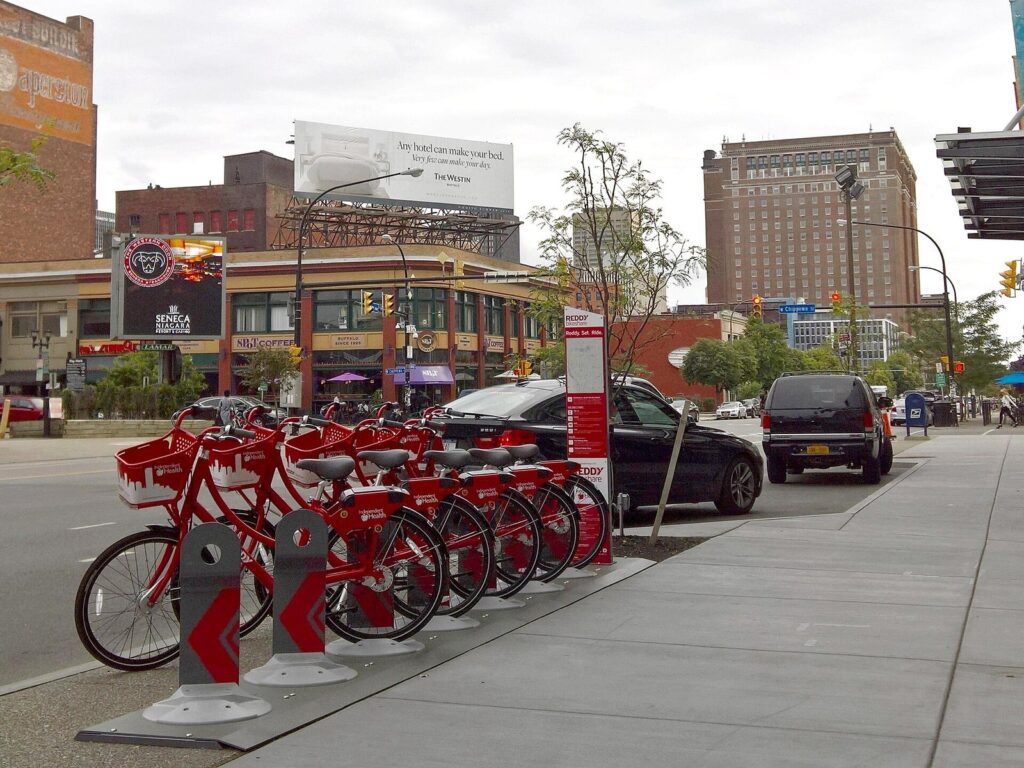
By bike, Buffalo is flat and increasingly well connected. Reddy Bikeshare runs from April through October, with bikes available around the clock for $3 to unlock plus 10 cents a minute, which suits short hops better than all-day rides. The waterfront is the best riding: from Canalside you can follow the harbor to the Outer Harbor’s paths, taking the Queen City Bike Ferry across in summer, or head north on the Shoreline Trail along the Niagara River. Our guide to outdoor things to do in Buffalo covers the trails, and the Buffalo by bike guide in this series has visitor routes by length.
How do you reach the main sights?
Most of what visitors come for sits on one of three corridors: Main Street, served by Metro Rail; Elmwood Avenue, served by the Route 20 bus; and the waterfront, served by your feet, a bike or, in summer, the bike ferry. The table covers the trips people ask about most, with the honest answer when transit is a stretch.
| Destination | Without a car | By car or rideshare from downtown |
|---|---|---|
| Canalside and the KeyBank Center | Walk, or free Metro Rail to Canalside | 5 minutes, but event parking fills |
| Theater District and Shea’s | Free Metro Rail to Fountain Plaza | 5 minutes |
| Allentown and the Anchor Bar | Metro Rail to Allen/Medical Campus | 5 to 10 minutes |
| Buffalo AKG and the History Museum | Route 20 Elmwood bus | 10 to 15 minutes; AKG parking $12 for 3 hours |
| Martin House | Rideshare is simplest | 10 to 15 minutes |
| Buffalo Zoo | Rideshare | 10 to 15 minutes; zoo parking from $6 |
| Outer Harbor | Bike ferry in summer, or ride a bike | 5 to 10 minutes; free parking |
| Highmark Stadium for the Bills | Game Day Express, $5 each way | 20 to 25 minutes without game traffic |
| Niagara Falls, New York | Route 40, about an hour | About 30 minutes |
The pattern is simple. Anything on Main Street or at Canalside is easy without a car, Elmwood Avenue takes a bus, and the Martin House, the zoo and the stadium are where a car or rideshare starts saving real time. For what to see once you get there, see our guide to things to do in Buffalo.
Where should you stay if you’re not driving?
Where you sleep decides how much you’ll use transit. Downtown within a few blocks of Main Street is the easiest base: you can walk to Canalside, the Theater District and the KeyBank Center, ride Metro Rail free along the rest of downtown, and reach Allentown at Allen/Medical Campus station. Allentown itself is the best-value alternative, walkable and full of restaurants and bars, with Metro Rail on one side and the Route 20 bus on Elmwood Avenue on the other. The Elmwood Village suits a slower trip built around the museums and Delaware Park, with Route 20 for trips downtown.
Hotels near the airport make sense only for an early flight, and those out in the suburbs almost force a car, however cheap they look. If you’re coming for a Bills game, remember that the stadium is in Orchard Park, well south of the city, so a downtown base plus the Game Day Express usually beats a suburban hotel with game-day traffic.
How can you do a weekend without a car?
Here’s how three common trips work without renting anything.
Flying in for a city weekend
Land, take a rideshare to a downtown hotel near Metro Rail (or Route 24 if it’s daytime and you’re packing light), and walk to dinner. On Saturday, walk Canalside in the morning, ride Metro Rail free up Main Street to the Theater District, and take Route 20 up Elmwood Avenue in the afternoon for the Buffalo AKG and the Elmwood Village. On Sunday, ride back down to Canalside for the waterfront, then take Route 24 or a rideshare to the airport. Total transit cost: a few $5 capped days at most. Our guide to where to stay in Buffalo explains which areas make this easiest.
Arriving by train from New York or Toronto
Book a train that stops at Exchange Street and you can walk to a downtown hotel in minutes. The same weekend plan works from there. If your only option is Depew, pre-book a rideshare for the 20-minute run into the city, and do the same for the trip back.
A Bills or Sabres weekend
For the Sabres, stay downtown and walk or ride Metro Rail to the KeyBank Center; the last train waits until 30 minutes after the game. For the Bills, take the Game Day Express from the Metropolitan Transportation Center or University Station for $5 each way, and skip stadium parking entirely. The Buffalo without a car guide in this series builds out longer trips, including day trips by bus.
What changes on event days?
Sabres games, concerts at Canalside and the big summer festivals change the downtown traffic picture for a few hours. Parking near the KeyBank Center and Canalside fills early and prices rise, and the streets around the arena clog after the final whistle. Metro Rail is the easy answer: it’s free to Canalside from anywhere downtown, and after Sabres games and select events the last train waits until 30 minutes after the finish. Bills Sundays are a different animal, with traffic around Orchard Park building for hours before kickoff; the Game Day Express at $5 each way is the calm way in.
Getting around with kids
Buffalo is easy with children if you lean on the short hops. Kids under 10 ride NFTA buses and Metro Rail free, and the free downtown stretch of Metro Rail doubles as a cheap attraction for train-mad toddlers. Rideshare drivers don’t supply car seats, so bring your own or plan around transit and walking. Our Buffalo with kids guide covers the family attractions and how to reach them.
How do you cross into Canada or reach Niagara Falls?
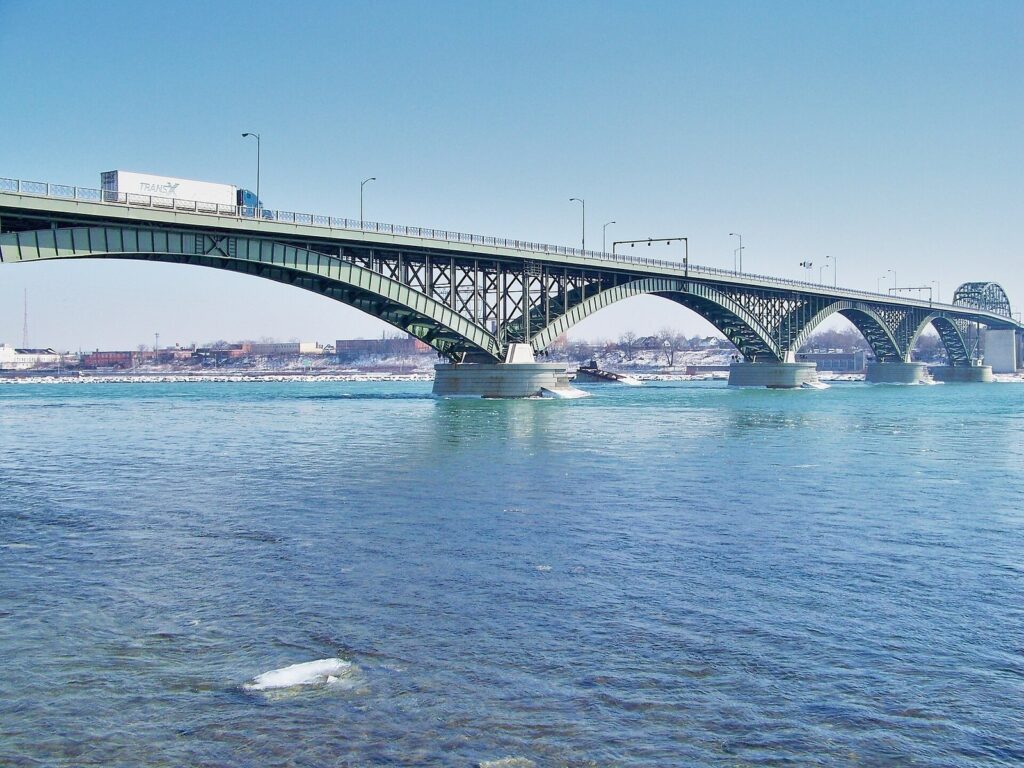
Niagara Falls, New York, is about 30 minutes north by car on the I-190, or about an hour on NFTA Route 40 from the Metropolitan Transportation Center. The Canadian side, and anywhere in Ontario, requires a passport or another accepted border document for everyone in the car, and the Peace Bridge from Buffalo’s West Side to Fort Erie is the most direct crossing. Border waits vary a lot by time of day and season, so check current wait times before you commit to a schedule.
If you’re coming from Toronto without a car, you have two practical choices: an intercity bus to the Metropolitan Transportation Center, or Amtrak’s Maple Leaf, which crosses at Niagara Falls and continues to Buffalo. The Toronto to Buffalo without driving guide in this series compares them, including how the border stop works on each.
What changes in winter?
Buffalo handles snow well, but lake-effect storms are narrow and intense: one band can bury the Southtowns while downtown gets a dusting, or the reverse. If a big storm is forecast, allow extra time for the airport, watch for travel advisories and driving bans, and don’t plan a drive to Niagara Falls or the Southtowns on a storm day. When a ban is in effect, stay put; the city means it.
Transit is the steadier choice in bad weather. The underground part of Metro Rail doesn’t care about snow, and buses keep running on main roads, though with delays. Sidewalks downtown are cleared quickly, but side streets can stay rough for a day or two after a big storm, so pack boots with grip rather than fashion boots.
Getting around with a disability
Metro Rail’s stations and NFTA buses are built for step-free boarding, and NFTA runs a paratransit service, PAL, for eligible riders who can’t use fixed routes. Downtown’s sidewalks are mostly flat and in good shape, though winter snowbanks at crossings can be a real obstacle. If you need a wheelchair-accessible rideshare, check what the apps offer before you rely on one. Our accessible Buffalo travel guide covers venues, hotels and transit in more detail.
Getting Around Buffalo FAQ
Do you need a car in Buffalo?
Not for a downtown-based city trip. Walking, free above-ground Metro Rail, a few $2 bus rides and the odd rideshare cover downtown, Canalside, the Theater District, Allentown and the Elmwood museums. Rent a car if you’re visiting Niagara Falls on your own schedule, exploring the Southtowns, or taking day trips beyond Route 40’s reach.
Is Metro Rail free in Buffalo?
Partly. Rides are free on the above-ground section downtown, from Fountain Plaza in the Theater District to Canalside at the waterfront. North of Fountain Plaza the line runs underground and costs $2 a ride, capped at $5 a day with a MetGo card. Children under 10 ride free on the whole system.
How do you get from Buffalo airport to downtown?
Take NFTA Route 24 Genesee, which runs every 20 to 30 minutes all day for $2, or Route 24L Limited Stops on weekdays for the same fare. A rideshare or taxi takes about 20 minutes by road outside rush hour. Rental cars are at the airport if you’re planning trips beyond the city.
Which Amtrak station is closer to downtown Buffalo?
Buffalo-Exchange Street, which is downtown and a short walk from Canalside and the hotels. It’s served by Empire Service trains and the Maple Leaf. Buffalo-Depew, in the eastern suburbs about 20 minutes’ drive away, also gets the Lake Shore Limited to Chicago and Boston, so riders on that train should plan a rideshare into the city.
Is street parking free in Buffalo on Sundays?
Yes. City parking meters are in effect from 8am to 5pm Monday to Saturday unless signs say otherwise, and they’re free on Sundays and legal holidays. Time limits still apply where posted, and event parking near the KeyBank Center and Canalside is a separate matter. Pay at meters, kiosks or through the ParkMobile app.
How do you get to a Bills game without driving?
Take NFTA’s Game Day Express, which runs from six transit centers, including the Metropolitan Transportation Center downtown and University Station, to the stadium for $5 each way, payable in exact cash or through Token Transit. It skips the stadium parking lots and the worst of the traffic. Leave plenty of time, because game-day crowds build hours before kickoff.
Can you take a bus from Buffalo to Niagara Falls?
Yes. NFTA Route 40 runs seven days a week between the Metropolitan Transportation Center downtown and Niagara Falls, New York, via Grand Island, taking about an hour end to end for the standard $2 fare. Check the timetable for the return trip, and bring a passport if you plan to cross into Canada.
Related Buffalo Guides
- Niagara Falls from Buffalo NY
- Where to Stay in Buffalo NY
- Buffalo NY Travel Guide
- Things to Do in Buffalo NY
- Buffalo NY Fall Things to Do
- Buffalo NY Food Guide
Sources and How We Checked
Hours, prices, routes and other details in this guide were checked on September 23, 2026 against the official sources below. The guide is compiled from those operators and agencies rather than from other travel lists, and it doesn’t describe first-hand visits. Details change, so confirm anything time-sensitive with the operator before you go.
- NFTA Metro: metro.nfta.com/fares/fare-info
- NFTA Metro Rail: metro.nfta.com/schedules/heading-to-an-event, metro.nfta.com/schedules/route/rail
- NFTA airport service: metro.nfta.com/getting-around/special-services/airport-se…
- Amtrak Buffalo stations: amtrak.com/stations/bfx
- NFTA Metropolitan Transportation Center: nfta.com/doing-business/property-and-asset-leasing/proper…
- City of Buffalo parking: buffalony.gov/485/Parking-Enforcement-Division, buffalony.gov/CivicAlerts.aspx?AID=1643
- Canalside: buffalowaterfront.com
- The Buffalo History Museum: buffalohistory.org/visit-us
- Buffalo AKG Art Museum: buffaloakg.org/hours-admission
- Buffalo Zoo: buffalozoo.org/tickets
- NFTA Route 40: metro.nfta.com/schedules/route/40
- NFTA Game Day Express: metro.nfta.com/getting-around/special-services/game-day-e…
- Reddy Bikeshare: reddybikeshare.socialbicycles.com
- Queen City Bike Ferry: buffalowaterfront.com/activities/ferry-boat
Buffalo Tourism Guide is an independent publication. We are not affiliated with Visit Buffalo Niagara, the City of Buffalo or any attraction listed here, and no one paid to be included.
Photo Credits
- Metro Rail on Main Street: photo by Michael Barera, Wikimedia Commons (CC BY-SA 4.0)
- Buffalo Niagara International Airport: photo by G. Edward Johnson, Wikimedia Commons (CC BY 4.0)
- Buffalo Exchange Street station: photo by Adam Moss, Wikimedia Commons (CC BY-SA 2.0)
- Buffalo-Depew station: photo by Adam Moss from East Amherst, New York, United States, Wikimedia Commons (CC BY-SA 2.0)
- NFTA Metro bus: photo by Andre Carrotflower, Wikimedia Commons (CC BY-SA 4.0)
- Reddy Bikeshare rack: photo by Andre Carrotflower, Wikimedia Commons (CC BY-SA 4.0)
- Peace Bridge: photo by Óðinn, Wikimedia Commons (CC BY-SA 3.0)