This Buffalo NY neighborhoods guide covers the dozen parts of the city most worth a visitor’s time, with where each walk starts and ends, what to see, how to get there and how long to give it. The short version: walk Allentown and the Elmwood Village for Victorian streets, cafes and the art museums; downtown and Canalside for the landmark buildings and the waterfront; the Old First Ward for the grain elevators; Hertel Avenue for Italian bakeries; the West Side for the city’s most varied food; and Broadway-Fillmore and Michigan Street for Polish and African American history. Most are 10 to 15 minutes from downtown, and several are on the Metro Rail.
This guide is for visitors who want to see Buffalo beyond its headline attractions, on foot where possible. The caveat is scale: Buffalo’s neighborhoods are spread out, some have long quiet stretches between their best blocks, and a few are more rewarding with a guide than on your own. The transit details, venue hours and tour information below were checked September 23, 2026 against official sources; for where to sleep in each area, see our guide to where to stay in Buffalo NY.
Buffalo Neighborhoods at a Glance
Here’s how the main areas compare for a visitor. Walking times are for a relaxed pace with stops.
| Neighborhood | Character | Time needed | Getting there | Best time |
|---|---|---|---|---|
| Downtown and Canalside | Landmark buildings, theaters, the waterfront | Half day to a full day | Metro Rail | Weekdays, for City Hall |
| Allentown | Victorian houses, galleries, bars | 1–2 hrs | Metro Rail to Allen/Medical Campus | Evenings |
| Elmwood Village | Independent shops, cafes, museums at the north end | Half day | Route 20 bus | Thursday to Sunday |
| Parkside | Olmsted streets, Frank Lloyd Wright, the zoo | 2–3 hrs | Car or bus | Any day but Tuesday |
| Hertel Avenue | Italian bakeries, restaurants, a 1920 cinema | 1–2 hrs | Bus or car | Evenings and weekends |
| West Side and Grant Street | Immigrant food and shops | 1–2 hrs | Bus or car | Lunch, Tuesday to Saturday |
| Old First Ward | Grain elevators, Irish taverns, the river | Half day | Car, bike or rideshare | Summer and fall |
| Larkinville | Revived factory district, food and events | 1 hr | Car or bus | Summer evenings |
| Broadway-Fillmore | Polish heritage, the market, the Central Terminal | 1–2 hrs | Broadway bus or car | Easter week |
| Michigan Street corridor | African American history and the Underground Railroad | 1–2 hrs | Walk from downtown | Saturdays |
| Black Rock and Riverside | The Niagara River shoreline | 1–2 hrs | Bike or car | Summer sunsets |
| South Buffalo | Olmsted parks, the Botanical Gardens, Irish taverns | Half day | Car | Any day |
How Buffalo’s Neighborhoods Fit Together
Buffalo is easiest to understand from Main Street, which runs north from the waterfront at Canalside through downtown and the Theater District, past the Medical Campus and up to the University at Buffalo’s South Campus. The Metro Rail runs along it the whole way, and most visitors spend at least part of every day within a few blocks of it.
West of Main Street lie the neighborhoods most visitors know best. Allentown starts just north of downtown, and the Elmwood Village runs north from it along Elmwood Avenue to Delaware Park and the museum district. Beyond them, the West Side stretches to the Niagara River, and Black Rock and Riverside follow the river north. North of Delaware Park, Parkside, North Buffalo and Hertel Avenue form a band of leafy residential streets.
East of Main Street, the city is poorer and less visited, but it holds some of Buffalo’s most important history: the Michigan Street African American Heritage Corridor just east of downtown, Larkinville’s revived factories, and Broadway-Fillmore, the old Polish neighborhood around the Broadway Market and the Central Terminal. South of downtown, across the Buffalo River, are the Old First Ward and its grain elevators, and beyond them South Buffalo and the Outer Harbor on Lake Erie.
If Buffalo is new to you, our guide to the best things to do in Buffalo covers the attractions in each of these areas, and our guide to Buffalo’s architecture and history explains how the city grew this way.
Downtown and Canalside
Downtown is where Buffalo’s wealth once concentrated, and it shows. Niagara Square is dominated by City Hall, the 1931 Art Deco tower with a free observation deck on the 28th floor, open on weekdays. A few blocks away stand Louis Sullivan and Dankmar Adler’s Guaranty Building, one of the first great skyscrapers, and the grand bank and office buildings of Main and Pearl Streets. North along Main Street, the Theater District gathers Shea’s Buffalo Theatre and a cluster of smaller stages. South, at the end of Main, Canalside is the revived waterfront where the Erie Canal once met the lake, with the Naval & Military Park’s warships, the children’s museum and the Buffalo Heritage Carousel.
The walk is simple: start at City Hall, head east to Lafayette Square and down Main Street to Canalside, a little over a mile, or reverse it. Allow a half day with stops, or a full day if you add the Naval Park and a show. The Metro Rail runs along Main Street, above ground downtown, though single-track construction means trains come about every 20 minutes. Downtown is liveliest on weekdays and on event nights at KeyBank Center; on quiet weekends, the office blocks can feel empty, so plan your weekend downtown around Canalside, the theater or a game.
Plan it: start at Niagara Square; walk about 1–1.5 miles to Canalside; City Hall’s deck and noon tour are free on weekdays; Canalside is free and open dawn to dusk; the Metro Rail costs $2 a ride. Our downtown Buffalo walking guide covers the route building by building.
Allentown
Allentown, just north of downtown between Main Street and Richmond Avenue, is Buffalo’s bohemian quarter: a small grid of Victorian houses, galleries, bars and restaurants, one of the largest historic districts in the country. Allen Street is its spine, a few blocks of bars and small shops that come alive at night, and the side streets are lined with painted wooden houses and brick row houses. Delaware Avenue, the old mansion row, runs through its eastern half, with some of the city’s grandest 19th-century houses now used as offices, clubs and a hotel.
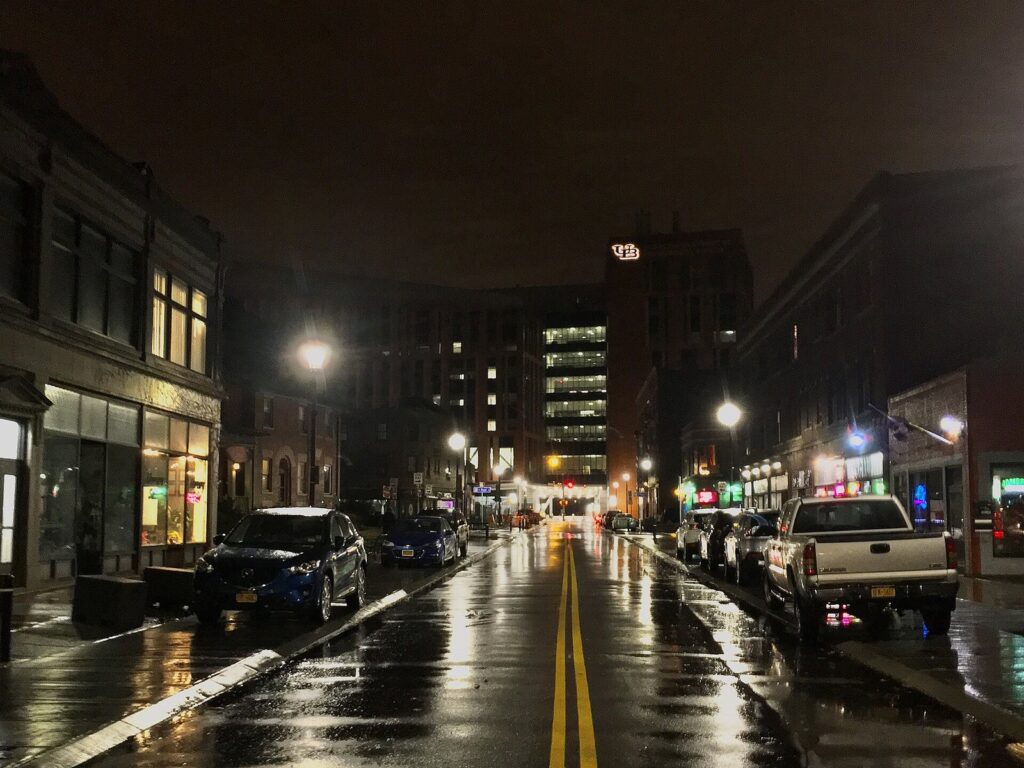
The walk is short: Allen Street from Main Street west past Delaware and Elmwood Avenues, with detours down the side streets to see the houses, takes an hour or two. Kleinhans Music Hall, home of the Buffalo Philharmonic, sits on Symphony Circle at the neighborhood’s western edge. Come in the evening, when the bars and restaurants fill, and combine it with dinner and a show.
Plan it: take the Metro Rail to Allen/Medical Campus station, at the east end of Allen Street; walk west; allow 1–2 hours, more for dinner; street parking can be tight in the evening. Our Allentown Buffalo visitor guide has a walking route and the best stops.
Delaware Avenue’s Mansion Row
Delaware Avenue was Buffalo’s millionaires’ row in the decades around 1900, and the stretch from downtown north toward Forest Lawn still holds some of the finest houses in the city. Many are now offices, private clubs or institutions, so you’ll mostly admire them from the sidewalk, but a few open their doors. The Mansion on Delaware Avenue is a small hotel in a restored Second Empire house. Further north, the Wilcox Mansion is where Theodore Roosevelt took the oath of office in September 1901, after President McKinley died of the wounds he received at the Pan-American Exposition; the house is now a National Park Service historic site.
Walk it as a straight line north from Allentown, or drive it slowly, and finish at Forest Lawn, the landscape cemetery at the avenue’s northern end, which is open every day from 8 a.m. Allow an hour on foot for the main stretch, more with a visit inside the Roosevelt site. Our guide to Buffalo’s architecture and history covers the houses and their builders in detail.
The Elmwood Village and the Museum District
The Elmwood Village runs north along Elmwood Avenue from Allentown to the museum district at Delaware Park, a walk of about two miles past independent shops, cafes, bars and restaurants, with side streets of big wooden houses. It’s been named one of the country’s great neighborhoods by the American Planning Association, and it feels it: this is the Buffalo street locals take visiting friends to. At its north end, the Buffalo AKG Art Museum and the Burchfield Penney Art Center face each other across the avenue, the Buffalo History Museum sits on Delaware Park’s lake, and the towers of the Richardson Olmsted Campus rise just to the west.
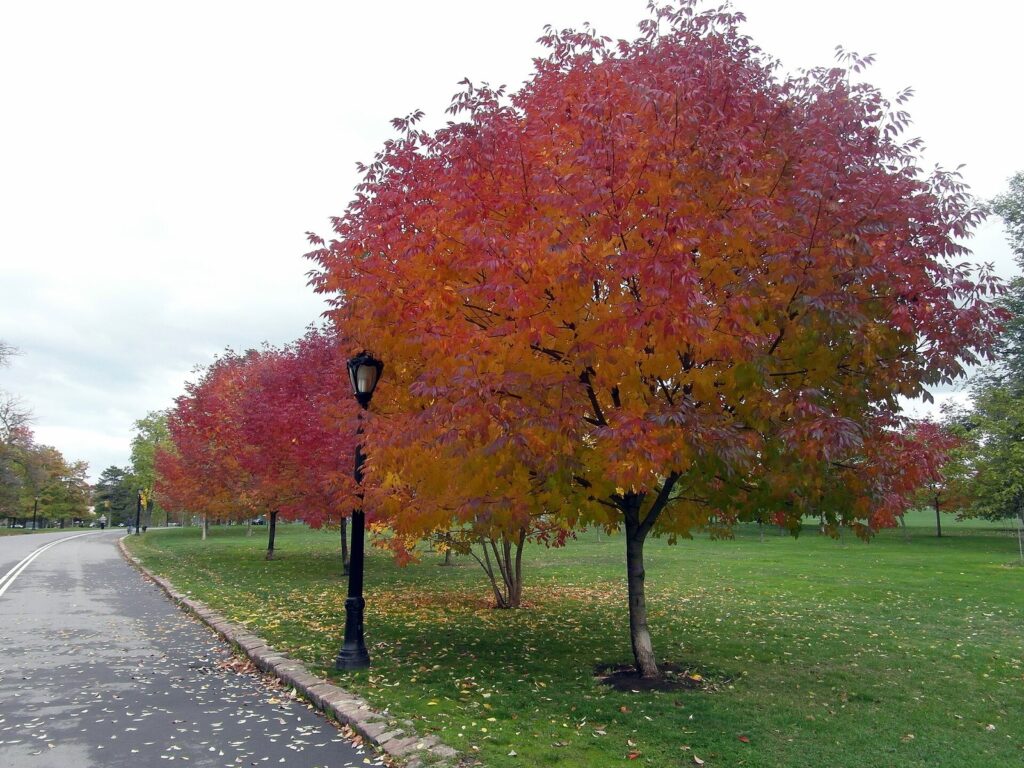
Walk it from south to north, with a coffee stop halfway, and end at the museums; or take the bus to the museums and walk back south for dinner. Allow a half day, or a full day with the AKG. It works best from Thursday to Sunday, when the AKG, the Burchfield Penney and the History Museum are all open.
Plan it: the Route 20 bus runs the length of Elmwood Avenue and stops at Elmwood and Nottingham for the History Museum; about 25–35 minutes by bus or 10–15 minutes by car from downtown; the AKG is closed Tuesday and Wednesday, the Burchfield Penney and History Museum Monday and Tuesday. Our Elmwood Village Buffalo visitor guide covers the shops, cafes and side streets, and our Buffalo museums and art guide covers the museums.
Parkside
Parkside, on the east side of Delaware Park, was laid out by Frederick Law Olmsted as a residential neighborhood, with curving streets that follow the park rather than the grid. It’s one of the prettiest residential areas in the city, full of large turn-of-the-century houses, and it holds two major attractions: Frank Lloyd Wright’s Darwin D. Martin House, on Jewett Parkway, and the Buffalo Zoo, on Parkside Avenue. The zoo is open every day, and the Martin House runs tours every day except Tuesday.
A good Parkside walk starts at the Martin House, loops through the curving streets of houses around it, and ends at the zoo or in Delaware Park, about two miles in total. Allow two to three hours without the zoo, or a full day with it. The Metro Rail runs along Main Street at Parkside’s eastern edge, and the neighborhood is a 10-minute drive from downtown.
Plan it: book the 75-minute Martin House tour in advance ($25); the zoo is open daily 10 a.m.–5 p.m.; street parking is easy on weekdays. Our Parkside Buffalo visitor guide has the walking loop and the best houses to look for.
North Buffalo and Hertel Avenue
North of Delaware Park, Hertel Avenue is North Buffalo’s main street and the city’s modern Little Italy, lined with Italian bakeries, restaurants and shops as well as newer bars and cafes. Its anchor is the North Park Theatre, a movie house that has been showing films since 1920, with a restored marquee that lights up the avenue at night. The street is lively on weekend evenings, when the restaurants fill, and relaxed on weekday afternoons.
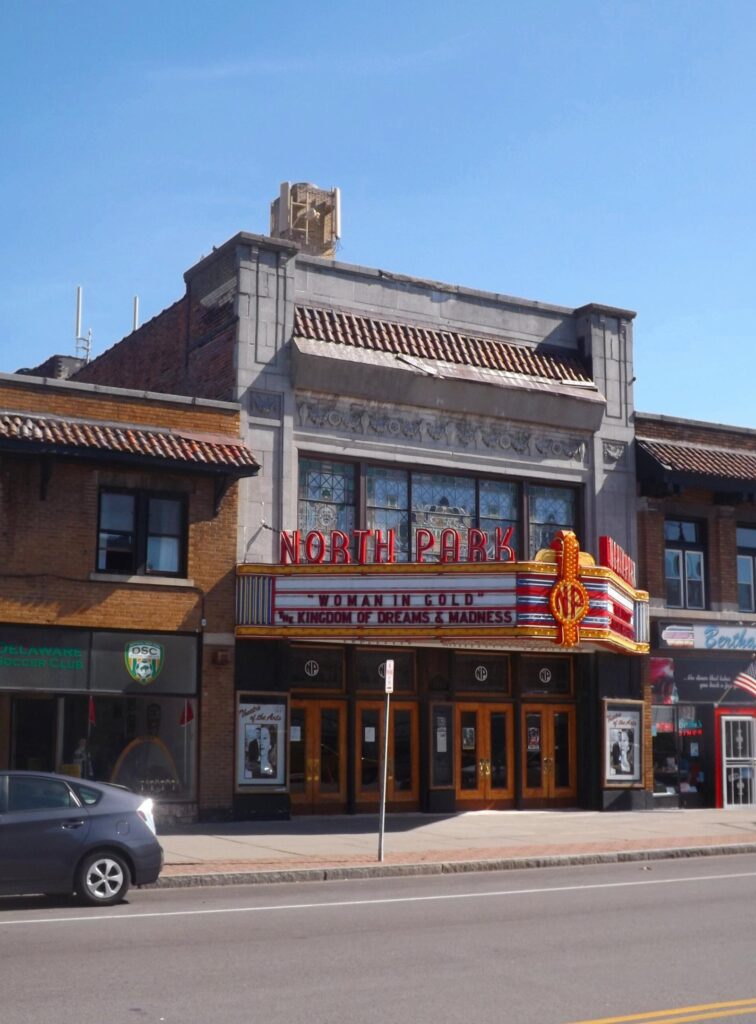
Walk the stretch around the theater, where the shops and restaurants are densest, and eat a pastry or an early dinner. Allow an hour or two, or an evening with a film. Hertel is a short drive or bus ride from the Elmwood Village and Parkside, so it pairs well with either.
Plan it: about 10–15 minutes by car from downtown; street parking along the avenue; check the North Park Theatre’s website for films. Our Hertel Avenue Buffalo visitor guide covers the bakeries, restaurants and the best time to go.
University Heights
At the northern end of the Metro Rail line, University Heights grew up around the University at Buffalo’s original South Campus, and it has a student neighborhood’s mix of cheap eats, bars and old houses split into apartments. The visitor’s reason to come is Parkside Candy, an old-fashioned candy shop on Main Street where Buffalo’s famous sponge candy is sold in a room that looks much as it did generations ago. Combine it with a walk across the South Campus’s older quadrangle, and you have an easy hour at the end of a Metro Rail ride.
The West Side, Grant Street and Five Points
The West Side, between Richmond Avenue and the Niagara River, is where Buffalo’s newest arrivals have settled, and it’s the city’s most varied place to eat. Grant Street and Niagara Street are lined with groceries and restaurants run by families from Southeast Asia, East Africa, the Middle East and Puerto Rico, and the West Side Bazaar on Niagara Street, a small-business incubator run by the nonprofit WEDI, puts several of them under one roof. Its current stalls cook Afghan, Egyptian, Congolese, Thai and Korean food.
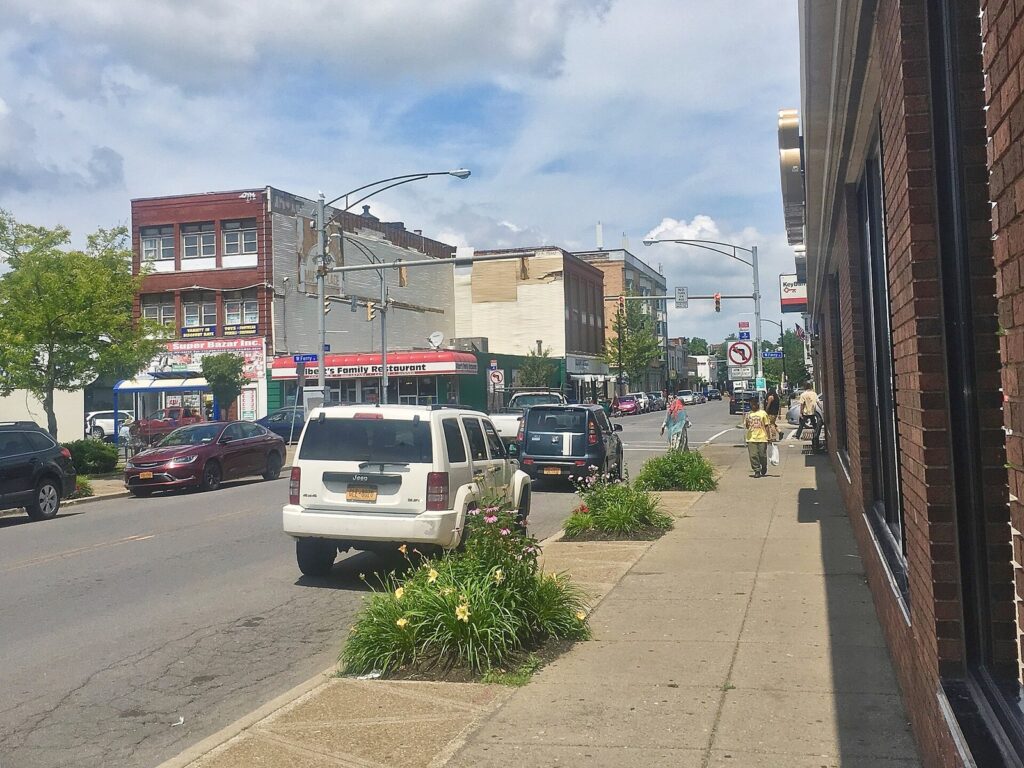
Nearby, Five Points, where several West Side streets meet, has become a small hub of independent food businesses, and it’s a pleasant stop on a walk between Grant Street and the Elmwood Village. The West Side’s houses are modest, and there are few sights in the usual sense; this is a neighborhood to eat and wander in. Come at lunchtime, Tuesday to Saturday, when the West Side Bazaar is open from 11 a.m. to 8 p.m.
Plan it: the West Side Bazaar is at 1432 Niagara Street, open Tuesday to Saturday, 11 a.m.–8 p.m.; allow 1–2 hours; about 10 minutes by car from downtown. Our West Side and Grant Street Buffalo visitor guide covers the food stops, and our Five Points Buffalo visitor guide covers the crossroads in detail. For the dishes themselves, see our Buffalo food guide.
Black Rock and Riverside
North of the West Side, Black Rock and Riverside line the Niagara River, where Lake Erie pours into the river on its way to the falls. The shoreline is the draw: a chain of riverside parks and paths, including Broderick Park, where people escaping slavery once crossed to Canada, and Tow Path Park and Black Rock Canal Park further north, with benches facing Grand Island and Ontario across the fast blue water. On a clear evening, you can sometimes see the mist from Niagara Falls rising far downstream.
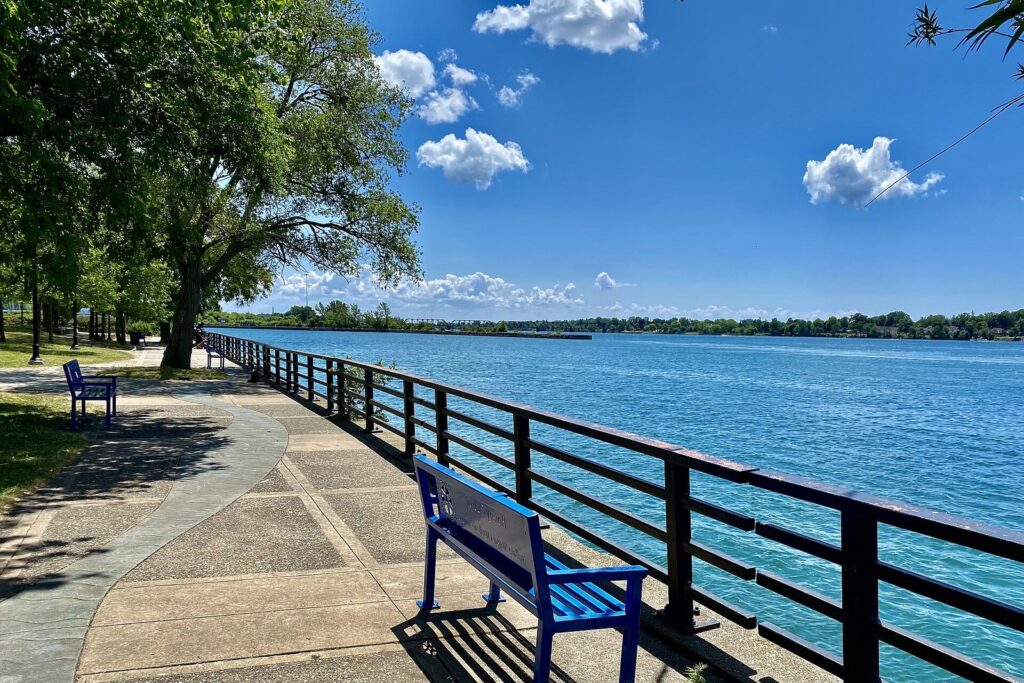
This is bike territory as much as walking territory, since the paths run for miles along the river as part of the Shoreline Trail. Allow an hour or two, and come for sunset in summer. Our guide to the Buffalo waterfront covers the whole shoreline, from the Niagara River to the Outer Harbor.
Plan it: free; best by bike or car; about 10–15 minutes from downtown; bring a layer, because the wind off the river is cool even in summer.
The Old First Ward and the Buffalo River
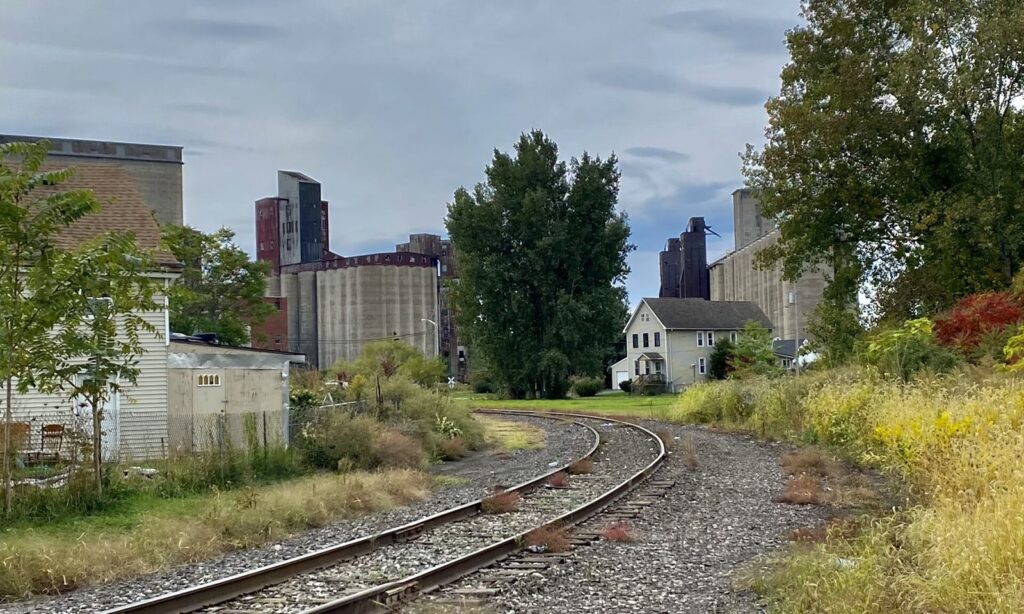
Just south of downtown, across the Buffalo River from Canalside, the Old First Ward was home to the Irish dockworkers and grain scoopers who unloaded the lake freighters, and the grain elevators they worked in still tower over the neighborhood’s small wooden houses. It’s one of the most atmospheric corners of the city: taverns on quiet corners, church steeples, rail lines and the concrete silos of Silo City and the working elevators along the river.
The best way to see it is on the water or on a guided tour. Buffalo River boat tours pass the elevators in season, Explore Buffalo’s Silo City ground tour costs $22, and Buffalo RiverWorks, a complex built into old silos, has year-round skating, curling, a restaurant and a brewery. On a Friday night, finish at a tavern such as Gene McCarthy’s for a fish fry. Allow a half day, and come in summer or fall, when the tours and boats run.
Plan it: about 5–10 minutes by car or bike from Canalside; RiverWorks is at 359 Ganson Street; check tour and boat schedules, which wind down in the fall. Our Old First Ward Buffalo visitor guide covers the elevators, taverns and tours.
Larkinville
East of downtown, Larkinville is a revived factory district built around the old Larkin Soap Company, the mail-order giant for which Frank Lloyd Wright designed his famous Larkin Administration Building, demolished in 1950. The company’s surviving warehouses now hold offices, and Larkin Square, at 745 Seneca Street, is the neighborhood’s outdoor gathering place, with restaurants including Hydraulic Hearth. In summer, Larkin Square fills with food-truck nights and concerts; out of season, it’s quieter, but the restaurants carry on.
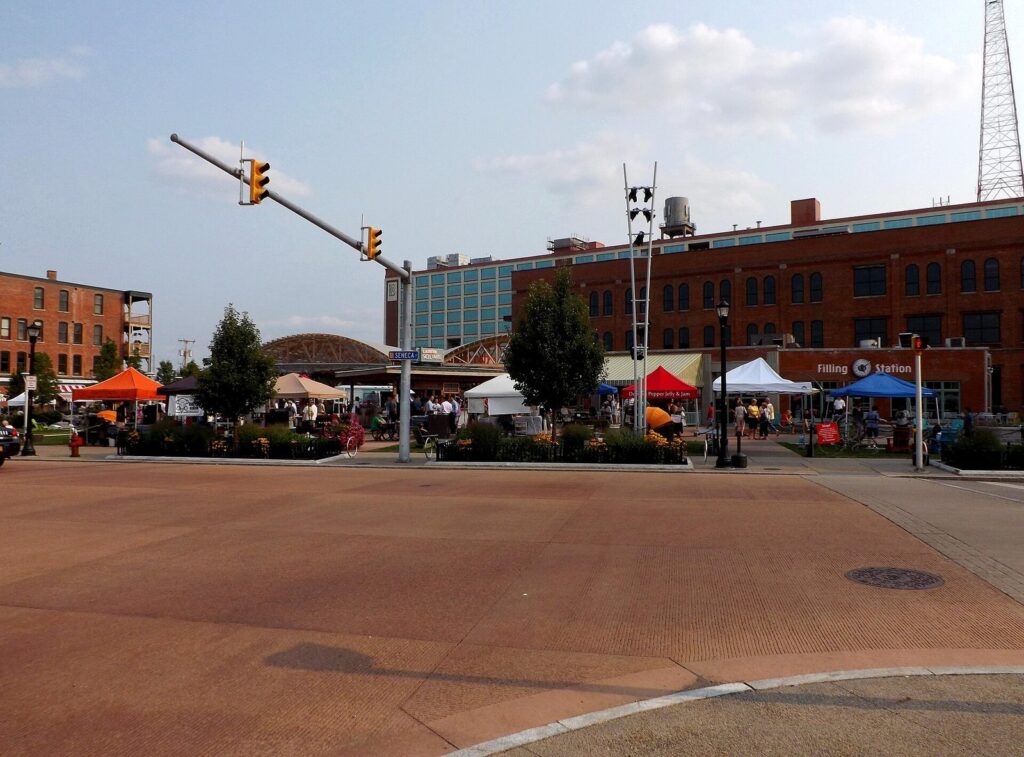
Plan it: 745 Seneca Street; about 5 minutes by car from downtown; allow an hour, more for a meal or an event; check Larkin Square’s calendar for summer events. Our Larkinville Buffalo visitor guide covers the history and what’s on.
Broadway-Fillmore
Broadway-Fillmore, on the East Side, was the heart of Polish Buffalo, and its churches, the Broadway Market and the Buffalo Central Terminal still speak to that history. The Broadway Market, at 999 Broadway, is the city’s public market, quiet most of the year and packed in the week before Easter, when shoppers come for butter lambs, pierogi, kielbasa and horseradish. The day after Easter, Dyngus Day turns the neighborhood into a Polish-American street party (it fell on April 6 in 2026). A mile to the east, the Central Terminal, a 1929 Art Deco railroad station, is being restored; you can walk its exterior on a self-guided audio tour, with segments voiced by members of the Goo Goo Dolls.
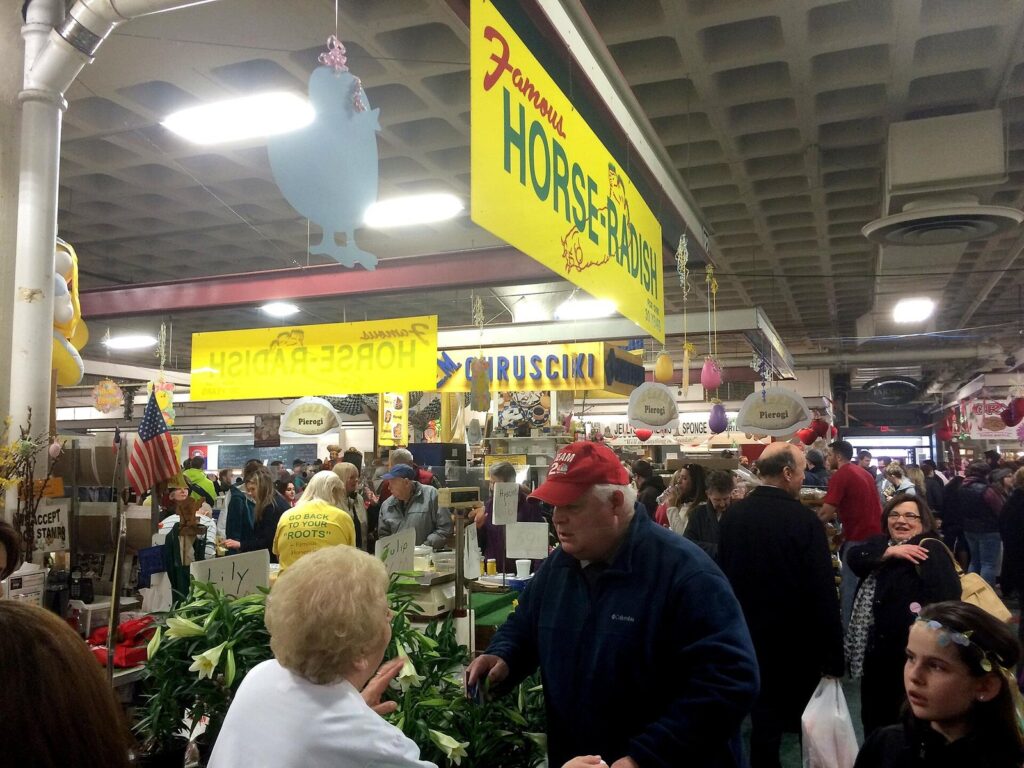
Much of Broadway-Fillmore is struggling, with vacant lots between its landmarks, so it’s best visited with a clear plan, by car or on a guided tour, rather than as a long wander. Allow an hour or two.
Plan it: the Broadway Market is at 999 Broadway, open year-round with the fullest stalls in Holy Week, so check its hours before a special trip; NFTA’s Broadway bus runs from downtown; the Central Terminal’s audio tour is outdoors only while construction continues.
The Michigan Street African American Heritage Corridor
Just east of downtown, a short stretch of Michigan Avenue holds the heart of Buffalo’s African American history. The Michigan Street Baptist Church, built in the 1840s, was a station on the Underground Railroad. The Nash House Museum preserves the home of the church’s longtime pastor, the Rev. J. Edward Nash, and opens on Saturdays from 11 a.m. to 4 p.m. The Colored Musicians Club, a few blocks away on Broadway, is one of the country’s great jazz landmarks, though it has been closed for a major renovation and expansion since June 2023.
The corridor is walkable from downtown in about 15 to 20 minutes, and its historical markers can be read any time. Allow an hour or two, and come on a Saturday if you want to see inside the Nash House. Our Michigan Street African American Heritage Corridor guide covers every site, including the Underground Railroad crossing at Broderick Park.
Plan it: walk east from downtown along Michigan Avenue; the Nash House, at 36 Nash Street, opens Saturdays 11 a.m.–4 p.m. and by appointment, so call ahead; check the Colored Musicians Club’s reopening before planning around it.
South Buffalo
South Buffalo is the city’s Irish heartland, a neighborhood of neat houses, parish churches and corner taverns, and it’s home to two of Olmsted’s parks. South Park, designed as an arboretum, surrounds the Buffalo and Erie County Botanical Gardens, whose Victorian glass conservatory is open daily from 10 a.m. to 4 p.m. Cazenovia Park, to the north, has a creek, ball fields and a golf course. Closer to the lake, Tifft Nature Preserve’s boardwalks cross a marsh on the Outer Harbor.
South Buffalo is spread out and best done by car. Allow a half day for the Botanical Gardens, a drive through the parks and a meal at a neighborhood tavern. Our South Buffalo visitor guide for tourists covers the parks, the Irish heritage and the best stops.
Plan it: the Botanical Gardens are at 2655 South Park Avenue, about 15 minutes by car from downtown; $19 adults; Tifft’s Education Center is open Wednesday to Sunday, 10 a.m.–4 p.m.
Canalside and the Outer Harbor
Buffalo’s waterfront isn’t a neighborhood in the usual sense, but it’s where many visitors spend the most time. Canalside, at the foot of downtown, is the busy, programmed side, with the Naval Park, the carousel, summer concerts and winter skating. Across the Buffalo River, the Outer Harbor is the quiet side, a long strip of lakefront parks, trails and the marina at Buffalo Harbor State Park, with Tifft Nature Preserve’s marsh at its southern end. In summer, the Queen City Bike Ferry links the two from Memorial Day to Labor Day. Our Buffalo waterfront guide covers both in full, along with the Niagara River shoreline and the Buffalo River.
Neighborhood Festivals Through the Year
Many of Buffalo’s neighborhoods are at their best during their own festivals, when the streets close and the residents come out. In spring, Dyngus Day on the Monday after Easter turns Broadway-Fillmore into a Polish-American party; in 2026 it fell on April 6. In June, the Juneteenth Festival, one of the largest in the country, fills Martin Luther King Jr. Park on the East Side, and it ran June 13 and 14 in 2026. Allentown’s art festival takes over its streets in early summer, and Hertel Avenue celebrates its Italian heritage each summer.
Late July brings Garden Walk Buffalo, when hundreds of private gardens in the Elmwood Village, Allentown, the West Side and beyond open to the public for free; in 2026 it ran July 25 and 26. It’s the best way to see behind the fences of Buffalo’s older neighborhoods, and it’s a local favorite. Downtown hosts the city’s biggest food festival, the Taste of Buffalo, in July. If your trip lines up with one of these, build a day around it; our Buffalo events and festivals guide has the full calendar.
A Car-Free Neighborhood Route
You can see five neighborhoods in a day without a car. Start at Canalside in the morning and walk up Main Street through downtown to City Hall, then ride the Metro Rail to Allen/Medical Campus for lunch in Allentown. Walk west along Allen Street, then north up Elmwood Avenue through the Elmwood Village, stopping for coffee, and catch the Route 20 bus for the last stretch to the museum district if your legs are tired. Spend the afternoon at the Buffalo AKG and Delaware Park, then take the bus back down Elmwood for dinner. The Metro Rail and bus cost $2 a ride, or $5 for the day with a MetGo card’s fare cap.
The route covers downtown, Canalside, Allentown, the Elmwood Village and the museum district, with about four miles of walking. Our Buffalo neighborhoods without a car walking route has the full version with timings and alternatives for bad weather, and our guide to getting around Buffalo covers fares and passes.
Guided Neighborhood Walking Tours
Several Buffalo neighborhoods are best seen with a guide, especially on the East Side and in the Old First Ward, where the history isn’t obvious from the street. Explore Buffalo, a volunteer-driven nonprofit, runs walking tours in downtown, Allentown, Black Rock, Delaware Avenue, the East Side (including Broadway-Fillmore, Kaisertown and the Larkin District), the Elmwood Village, North Buffalo and Parkside, the Old First Ward, South Buffalo and the West Side. Most last about 90 minutes and cover one to two miles, and all are free with its Explorer Pass membership. Book ahead, because tour dates are added a month or two in advance and fill up.
Which Neighborhood for Which Interest?
| If you’re into | Head to |
|---|---|
| Architecture | Downtown, Delaware Avenue, Parkside |
| Art | The Elmwood Village museum district, Allentown’s galleries |
| Food | The West Side, Hertel Avenue, the Old First Ward on a Friday |
| Nightlife | Allentown, Elmwood Avenue, Hertel Avenue |
| Industrial history | The Old First Ward, Larkinville |
| African American history | The Michigan Street corridor, Broderick Park |
| Polish heritage | Broadway-Fillmore |
| Parks and water | Delaware Park, Black Rock and Riverside, South Buffalo |
| Families | Canalside, Parkside and the zoo, South Park |
Visiting Buffalo’s Neighborhoods Respectfully
Most of the neighborhoods in this guide are residential, and their charm is in the houses people live in. Enjoy them from the sidewalk: don’t climb porches or wander into yards for photos, keep noise down on side streets late at night, and park legally, because many streets have alternate-side parking rules. In summer, some neighborhoods, especially around the Elmwood Village and the West Side, open their gardens to the public during Garden Walk Buffalo, which ran July 25 and 26 in 2026; that’s the time to see behind the fences. Spend money locally where you can, at the bakeries, taverns and shops that keep these streets alive.
Buffalo Neighborhoods FAQ
What is the best neighborhood to walk in Buffalo?
The Elmwood Village and Allentown together make the best walk in the city: about two miles of Victorian houses, independent shops, cafes and restaurants, ending at the Buffalo AKG and Delaware Park. Downtown and Canalside are the best walk for landmark buildings, with City Hall, the Guaranty Building and the waterfront a little over a mile apart.
What neighborhoods should tourists visit in Buffalo?
Start with downtown and Canalside, Allentown and the Elmwood Village. With more time, add Parkside for Frank Lloyd Wright’s Martin House, the Old First Ward for the grain elevators, Hertel Avenue for Italian food, the West Side for global food, and the Michigan Street corridor and Broadway-Fillmore for African American and Polish history.
Can you get around Buffalo’s neighborhoods without a car?
Partly. The Metro Rail runs along Main Street from Canalside through downtown and past Allentown to the university, and the Route 20 bus covers the Elmwood Village. The Old First Ward, Black Rock, South Buffalo and Broadway-Fillmore are easier by car, bike or rideshare. Fares are $2 a ride, capped at $5 a day with a MetGo card.
Where is Little Italy in Buffalo?
Buffalo’s modern Little Italy is Hertel Avenue in North Buffalo, lined with Italian bakeries, restaurants and shops around the historic North Park Theatre, which has shown films since 1920. The city’s original Italian neighborhood was on the lower West Side, near downtown, before many families moved north to the Hertel area.
Is the Elmwood Village worth visiting?
Yes. It’s Buffalo’s most pleasant neighborhood to walk, with independent shops, cafes and restaurants along two miles of Elmwood Avenue, and the Buffalo AKG, the Burchfield Penney and the Buffalo History Museum at its northern end. Visit from Thursday to Sunday, when all three museums are open.
Are there guided neighborhood tours in Buffalo?
Yes. Explore Buffalo runs walking tours in most of the city’s historic neighborhoods, from downtown and Allentown to the Old First Ward, Broadway-Fillmore, Parkside and the West Side. Most last about 90 minutes and cover one to two miles, and they’re free with an Explorer Pass membership. Book ahead, as tours fill.
Related Buffalo Guides
- Buffalo NY Food Guide
- Where to Stay in Buffalo NY
- Things to Do in Buffalo NY
- Niagara Falls from Buffalo NY
- Buffalo NY Fall Things to Do
- Buffalo NY Itineraries
Sources and How We Checked
Hours, prices, routes and other details in this guide were checked on September 23, 2026 against the official sources below. The guide is compiled from those operators and agencies rather than from other travel lists, and it doesn’t describe first-hand visits. Details change, so confirm anything time-sensitive with the operator before you go.
- Explore Buffalo: explorebuffalo.org/walking-tours
- Larkin Square: larkinsquare.com
- West Side Bazaar: wedibuffalo.org/westside-bazaar
- Buffalo City Hall: explorebuffalo.org/downtown/buffalo-city-hall
- Canalside: buffalowaterfront.com
- NFTA Metro: metro.nfta.com/fares/fare-info
- NFTA Metro Rail: metro.nfta.com/schedules/route/rail
- Buffalo AKG Art Museum: buffaloakg.org/hours-admission
- Burchfield Penney Art Center: burchfieldpenney.org/visit
- The Buffalo History Museum: buffalohistory.org/visit-us
- Darwin D. Martin House: martinhouse.org/tours, martinhouse.org/visit/prepare/hours
- Buffalo Zoo: buffalozoo.org/tickets
- Richardson Olmsted Campus: richardson-olmsted.com/tours
- Silo City: explorebuffalo.org/waterfront/silo-city-ground
- Forest Lawn: forest-lawn.com/plan-your-visit/hours
- Buffalo RiverWorks: buffaloriverworks.com/things-to-do/summer-fall
- Fish fry: visitbuffalo.com/crawl/ultimate-food-trail
- Buffalo Central Terminal: buffalocentralterminal.org/tours
- Buffalo festivals 2026: visitbuffalo.com/signature-events
- Colored Musicians Club: thecoloredmusiciansclub.com
- Buffalo and Erie County Botanical Gardens: buffalogardens.com/plan-your-visit
- Tifft Nature Preserve: tifft.org
- Buffalo Philharmonic Orchestra: bpo.org
- Queen City Bike Ferry: buffalowaterfront.com/activities/ferry-boat
- Buffalo Harbor State Park: parks.ny.gov/visit/state-parks/buffalo-harbor-state-park
- Buffalo Heritage Carousel: buffaloheritagecarousel.org/planning-your-visit
- Sponge candy: visitbuffalo.com/crawl/ultimate-food-trail
Buffalo Tourism Guide is an independent publication. We are not affiliated with Visit Buffalo Niagara, the City of Buffalo or any attraction listed here, and no one paid to be included.
Photo Credits
- Old First Ward houses and grain elevators: photo by Andre Carrotflower, Wikimedia Commons (CC BY-SA 4.0)
- Allen Street at night: photo by Andre Carrotflower, Wikimedia Commons (CC BY-SA 4.0)
- Delaware Park in autumn: photo by Reading Tom from Reading, UK, Wikimedia Commons (CC BY 2.0)
- North Park Theatre on Hertel Avenue: photo by Andre Carrotflower, Wikimedia Commons (CC BY-SA 4.0)
- Grant Street on the West Side: photo by Andre Carrotflower, Wikimedia Commons (CC BY-SA 4.0)
- Niagara River at Tow Path Park: photo by Andre Carrotflower, Wikimedia Commons (CC BY-SA 4.0)
- Market at Larkin Square: photo by Andre Carrotflower, Wikimedia Commons (CC BY-SA 4.0)
- Broadway Market before Easter: photo by Andre Carrotflower, Wikimedia Commons (CC BY-SA 4.0)