This Buffalo NY travel guide works through the decisions to make before you book: when to come, how long to stay, whether you need a car, what it will cost and how to get here. The short answers: come between late May and October for the easiest weather, or in winter if you want lower prices and don’t mind snow; give the city two full days, or three with Niagara Falls; skip the car if you’re staying downtown and not planning day trips; and book the Frank Lloyd Wright houses and any Bills weekend well ahead. Buffalo rewards a little planning more than most cities its size, mostly because its museums keep unusual hours and its weather has opinions.
This guide is for first-time visitors and anyone planning a trip from scratch, from a long weekend to a week in Western New York. The caveat is that some of the best things here are seasonal, and a few of the most famous ones, such as Niagara Falls, aren’t in Buffalo at all. Weather figures come from the National Weather Service, taxes from New York State and Erie County, and hours and prices from each venue’s own website, all checked September 23, 2026.
Buffalo Trip Planning at a Glance
These are the decisions most visitors need to make, with the short answer to each. The sections below explain them.
| Decision | Short answer |
|---|---|
| Best time to go | June to October for weather and waterfront; September for the best balance; winter for low prices |
| How long to stay | Two full days for the city; three with Niagara Falls; four for a relaxed pace |
| Do you need a car? | Not for downtown, Allentown and the Metro Rail corridor; yes for the suburbs, Graycliff and day trips |
| Main costs | Admissions of about $20–$25 per paid stop; $5 a day for unlimited transit; hotel taxes on top of the room rate |
| Getting here | Fly into Buffalo Niagara International Airport, 20 minutes from downtown; or Amtrak to Exchange Street, downtown |
| Book ahead | The Martin House and Graycliff tours, Shea’s shows, and hotels on Bills weekends |
| Passport? | Only if you cross into Canada, including the Canadian side of Niagara Falls |
Is Buffalo Worth Visiting?
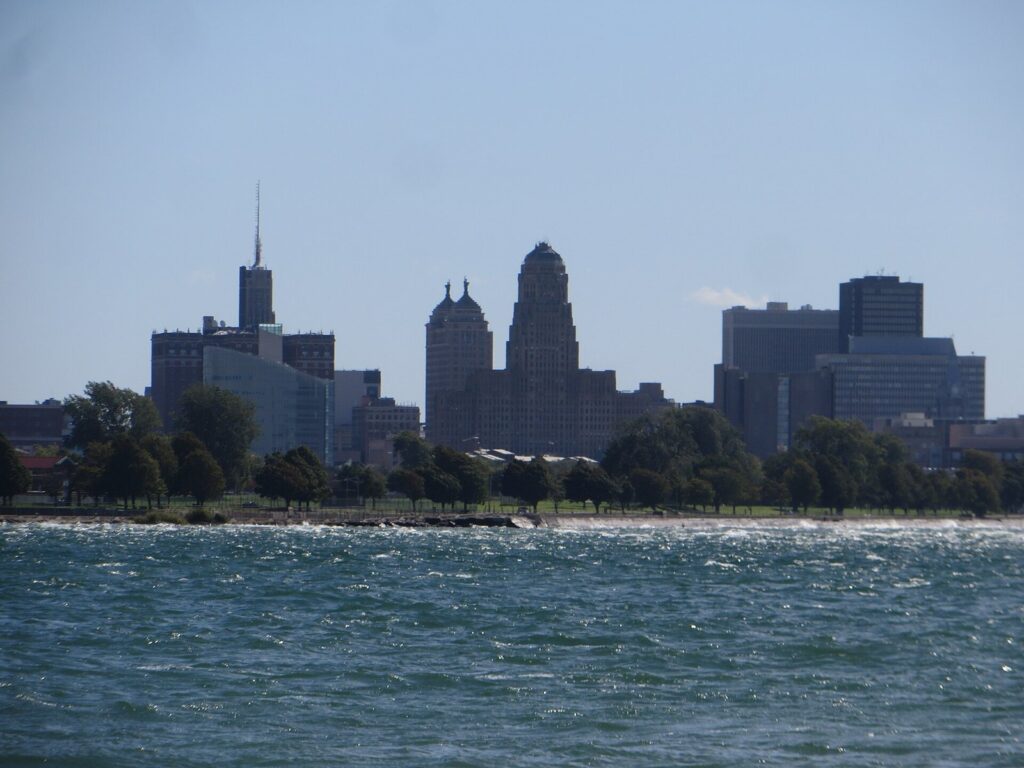
Yes, and more than its reputation suggests. Buffalo was one of the richest cities in the country around 1900, and it still has the buildings to prove it: an Art Deco city hall with a free observation deck, Louis Sullivan’s Guaranty Building, Frank Lloyd Wright’s Darwin D. Martin House, H.H. Richardson’s twin-towered former state hospital, and a park system laid out by Frederick Law Olmsted. Add the Buffalo AKG Art Museum, which reopened in 2023 with a new glass building, a waterfront reborn around Canalside, the concrete grain elevators along the Buffalo River, and a food culture that goes well beyond wings, and you have a strong long weekend. Niagara Falls, 30 minutes north, is the bonus.
It’s not a city for everyone. If you want a dense, walkable downtown that buzzes every night of the week, or guaranteed sunshine, you’ll be disappointed on some days. But for architecture, art, food, sports and a friendly, unpretentious city that doesn’t charge big-city prices, it’s hard to beat. Our guide to whether Buffalo NY is worth visiting for a weekend makes the full case, and our list of the best things to do in Buffalo shows what you’d actually do.
Who loves Buffalo most? Architecture fans, first of all, because few American cities pack so many landmark buildings into so small an area. Food travelers come for the wings and stay for the fish fries, the sponge candy and the global kitchens of the West Side. Sports fans come for the Bills and the Sabres and discover a city that treats game day like a holiday. And anyone who likes cities with a strong sense of place, where the neighborhoods still feel like neighborhoods and people talk to strangers at the bar, tends to leave planning a second trip.
When Is the Best Time to Visit Buffalo?
The best time to visit Buffalo is from June to October, when the weather is warm, the waterfront is busy and every attraction keeps its full hours. September is the sweet spot: the summer crowds have gone, the lake is still warm enough to keep evenings mild, the Bills season has started, and the Maid of the Mist is still sailing at Niagara Falls. But winter has its own appeal, and it’s the cheapest time to come.
Here are the National Weather Service’s normals for Buffalo, the averages for 1991 to 2020, with what’s on each month.
| Month | Avg high / low | Avg snow | What’s on |
|---|---|---|---|
| January | 32°F / 19°F | 26.7 in | Sabres hockey, Canalside skating, low hotel rates |
| February | 33°F / 20°F | 18.1 in | Winter sports and indoor museums |
| March | 42°F / 26°F | 14.1 in | The end of winter; Lent fish fries |
| April | 55°F / 37°F | 2.5 in | Easter at the Broadway Market and Dyngus Day; the Maid of the Mist reopens late in the month |
| May | 67°F / 48°F | Rare | Parks turn green; the waterfront wakes up |
| June | 76°F / 58°F | None | Festival season starts; long evenings |
| July | 80°F / 63°F | None | Taste of Buffalo, Garden Walk Buffalo, peak waterfront season |
| August | 79°F / 62°F | None | Summer at Canalside; the wing festival at summer’s end |
| September | 72°F / 55°F | None | Bills season starts; the best balance of weather and crowds |
| October | 60°F / 44°F | Rare | Fall color, pumpkin farms, the Sabres season opener |
| November | 48°F / 34°F | 7.8 in | Thanksgiving traditions; the outdoor season ends |
| December | 37°F / 26°F | 25.3 in | Holiday lights, skating and Sabres games |
A few numbers from that table deserve context. Buffalo’s normal annual snowfall is 95.4 inches, but almost all of it falls from late November to March, and much of it arrives in lake-effect bands that bury one suburb while leaving the next one clear. Summer highs sit around 80°F, and the lake takes the edge off the hottest days, so Buffalo rarely feels as sticky as cities further south. And rain is spread through the year, with about 40 inches in a normal year, so pack a rain layer whatever the month.
Summer
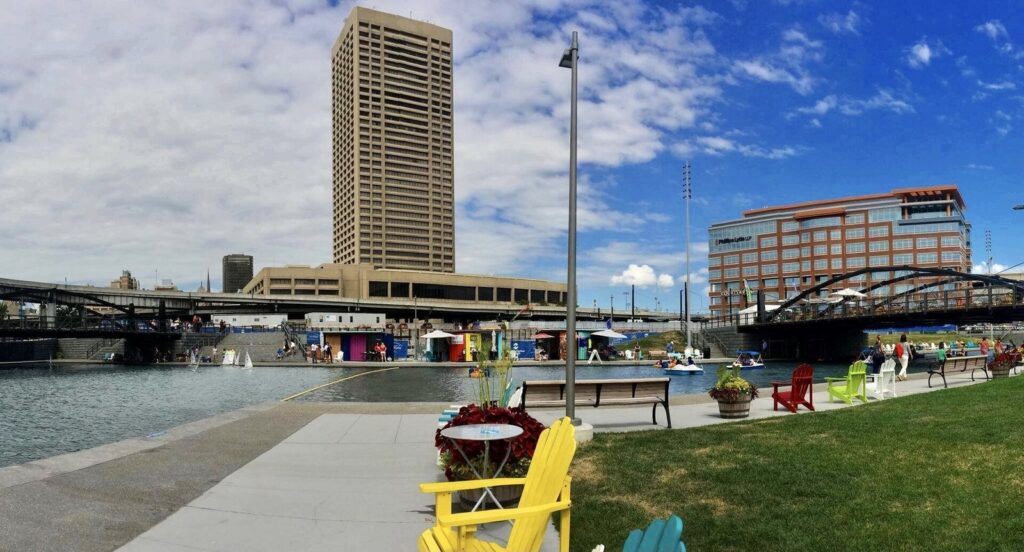
Summer is Buffalo’s best-known season. The waterfront fills up, the Queen City Bike Ferry crosses from Canalside to the Outer Harbor between Memorial Day and Labor Day, boat tours run on the river and harbor, and festivals take over the weekends: in 2026, Juneteenth ran June 13 and 14, the Taste of Buffalo July 11 and 12, and Garden Walk Buffalo, when hundreds of private gardens open to visitors, July 25 and 26. Hotels are at their busiest, so book early for festival weekends. Our Buffalo summer guide covers the season in full.
Fall
Fall is many locals’ favorite. September keeps summer’s warmth without the crowds, October brings the color and the pumpkin farms, and the Bills and Sabres give every weekend a buzz. The trade-off is that hours start to shrink: the Naval Park closes earlier from October 1 and goes to weekends only in November, and the Maid of the Mist makes its last trip of 2026 on November 8. Our Buffalo fall guide covers foliage timing, farms and the season’s dates.
Winter
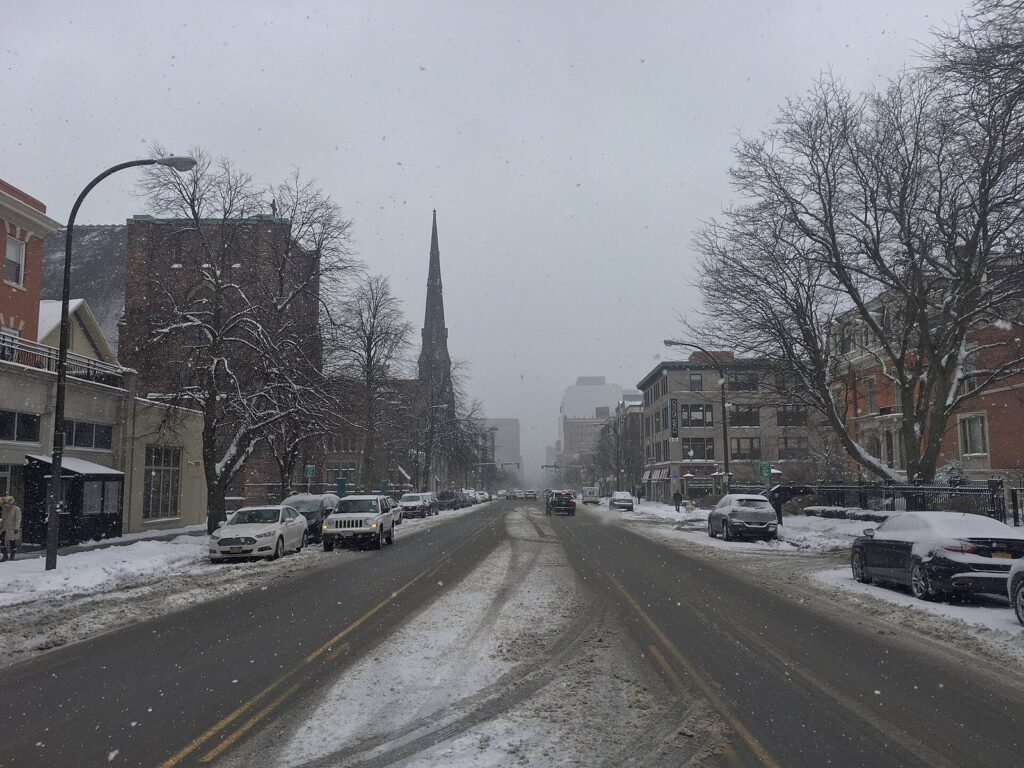
Winter is Buffalo’s cheapest season and its most misunderstood. The city doesn’t shut down in the snow; it’s built for it. The museums, the Theater District, the Botanical Gardens’ glass conservatory and the restaurants carry on as usual, the Sabres play at home through the season, and Canalside turns into a skating rink with curling and ice bumper cars. The risk is the lake: a big lake-effect storm can close highways or delay flights for a day, so build some slack into a winter trip and buy travel insurance for anything expensive. Our Buffalo winter guide covers what to do and how to handle the weather.
Spring
Spring is the quiet season. April can still bring snow, and May can be cold and wet, but prices are low and the city’s Polish-American Easter traditions are a genuine highlight: the Broadway Market fills up in Holy Week, and Dyngus Day, the day after Easter, turns Broadway-Fillmore into a street party (April 6 in 2026). By late May the parks are green and the waterfront is opening up again. Our guide to the best time to visit Buffalo NY for a vacation weighs the seasons against each other, and our comparison of Buffalo in summer vs fall helps if you’re torn between the two most popular.
Events Worth Planning a Trip Around
Some visitors pick their dates by the weather; others pick them by the calendar. These are the events that draw people to Buffalo, and the ones that fill its hotels.
Football comes first. The Bills play in their new Highmark Stadium in Orchard Park, which hosted its first regular-season game on September 17, 2026; the remaining fall home dates are September 27, October 4, November 1, November 22, November 27 and December 20, with a January 4 date to be confirmed. A home game is an experience even if you don’t follow the sport, but it also fills every hotel in the region, so book the moment you commit. The Sabres play at KeyBank Center downtown from their home opener on Saturday, October 3, through the winter, and a hockey night is easier to fit into a city trip because the arena sits next to Canalside.
Summer brings the festivals. In 2026, the Taste of Buffalo ran July 11 and 12, Garden Walk Buffalo, when hundreds of private gardens open to the public, July 25 and 26, and the National Buffalo Wing Festival August 29 and 30; the 2027 wing festival is set for September 4 and 5, Labor Day weekend, at Sahlen Field. Spring has the Polish-American Easter traditions at the Broadway Market and Dyngus Day, which falls on Monday, March 29, in 2027. And Thanksgiving weekend has traditions of its own: the YMCA Turkey Trot, first run in 1896, on Thanksgiving morning, and the World’s Largest Disco, traditionally held on the Saturday after Thanksgiving. Our Buffalo events and festivals guide keeps the full calendar.
How Many Days Do You Need in Buffalo?
Two full days cover Buffalo’s highlights at a comfortable pace. Spend one day downtown and on the waterfront, with City Hall, the Guaranty Building, Canalside and the Naval Park, and the other in the museum district, with the Martin House, the Buffalo AKG and Delaware Park. Add a third day for Niagara Falls, and a fourth if you want a day trip south, a game, or simply a slower trip.
The complication is the calendar. The Buffalo AKG closes on Tuesdays and Wednesdays, the Martin House on Tuesdays, the Buffalo History Museum on Mondays and Tuesdays, and the City Hall observation deck on weekends, so Thursday and Friday are the only days when everything is open. A Thursday-to-Sunday trip is the easiest to plan. Our guide to how many days you need in Buffalo NY goes deeper, and our Buffalo itineraries turn the days into timed routes.
A first trip in outline
Here’s a simple shape for a first visit of three days. Arrive on a Thursday and spend the afternoon downtown: the City Hall observation deck if you’re in before it closes, a walk down Main Street past the Guaranty Building and Shea’s, and dinner in Allentown. On Friday, book a morning Martin House tour, spend the afternoon at the Buffalo AKG, which stays open until 8 p.m. on Fridays, and walk around Hoyt Lake before dinner on Elmwood Avenue. On Saturday, drive or take the bus to Niagara Falls, and come back for wings. If you have a Sunday, give it to Canalside, the Naval Park and the Buffalo River. Every piece of that plan dodges an early-week closure, which is the whole point.
Buffalo’s Neighborhoods in Brief
Buffalo is a city of distinct neighborhoods, and knowing roughly where they are makes every other decision easier.
Downtown holds City Hall, the Guaranty Building, the Theater District and the business towers, with the Metro Rail down Main Street. Canalside, at downtown’s southern edge, is the revived waterfront where the Erie Canal once met the lake, with the Naval Park and KeyBank Center. Allentown, just north, is the Victorian bohemian quarter of galleries and bars. The Elmwood Village runs north from there along Elmwood Avenue to Delaware Park and the museum district. North Buffalo has Hertel Avenue’s Italian bakeries and restaurants, and University Heights sits at the northern end of the Metro Rail line.
To the west, the West Side and Black Rock run along the Niagara River, with the city’s most varied immigrant food scene. To the east, Broadway-Fillmore is the historic Polish neighborhood around the Broadway Market and the Central Terminal, and Larkinville is a revived warehouse district with food-truck nights in summer. South of downtown, the Old First Ward and the Buffalo River have the grain elevators, Silo City and RiverWorks, and the Outer Harbor has the lakefront parks. Our Buffalo neighborhoods guide describes each one in more depth.
How to Get to Buffalo
Buffalo is easy to reach by air, rail and road, and it’s closer to Toronto than to New York City, which shapes how many visitors arrive.
By air
Buffalo Niagara International Airport (BUF) is in Cheektowaga, about 20 minutes east of downtown by car. Taxis and rideshare are the quickest way into the city. NFTA’s Routes 24 and 24L serve the airport all day along Genesee Street, and the 78 Cheektowaga Express adds rush-hour trips, so you can get downtown on the bus for $2 if you’re patient. Rental cars are on site. Some travelers compare fares into Toronto Pearson as well, but the drive from Toronto adds a couple of hours and a border crossing, so it rarely pays off for a short trip.

By train
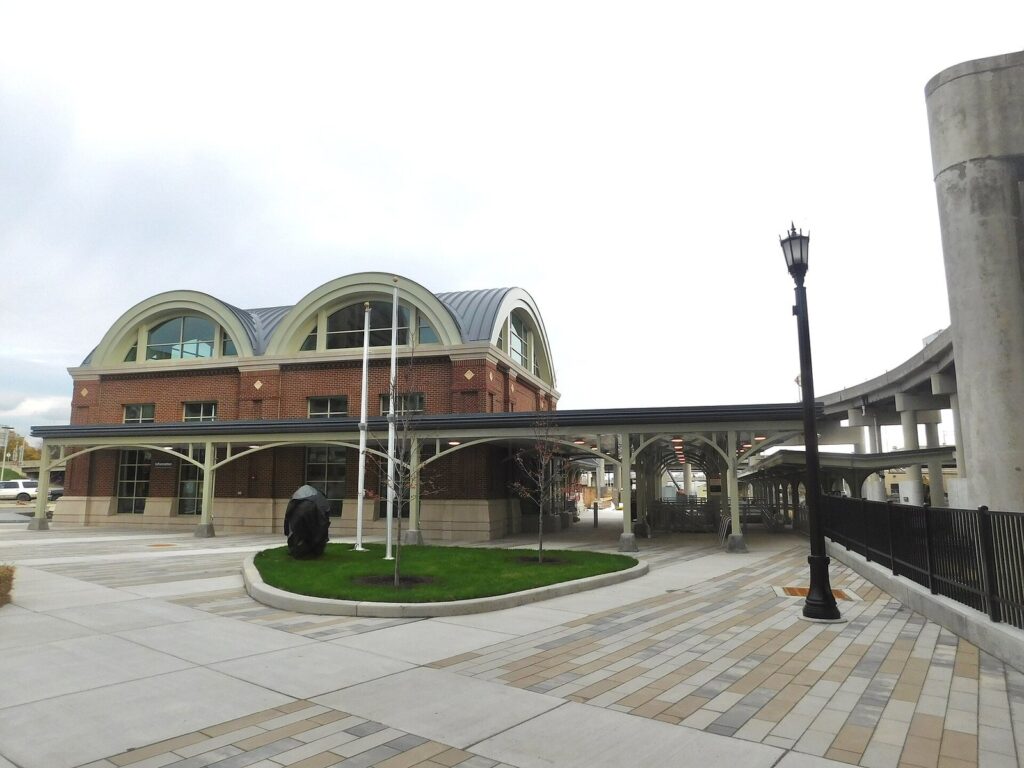
Amtrak serves two Buffalo stations. Exchange Street, rebuilt and reopened in 2020, is downtown, a short walk from Canalside and the downtown hotels, which makes the train an easy arrival for a car-free trip. Depew, in the eastern suburbs, is served by more trains but sits about 10 miles from downtown, so you’ll need a taxi, rideshare or rental car from there. Trains run east to Rochester, Syracuse, Albany and New York City, west to Cleveland and Chicago, and north to Niagara Falls and Toronto.
By car
Buffalo sits on the New York State Thruway (I-90), which runs east to Rochester, Syracuse and Albany and southwest toward Erie, Pennsylvania, and Cleveland. The Thruway uses cashless tolling, so you’ll pay by E-ZPass or receive a bill by mail; if you’re in a rental, check how the company handles tolls. Downtown hotels usually charge for parking, while suburban hotels usually don’t. Our guide to getting around Buffalo covers parking, rideshare and the NFTA in detail.
From Canada
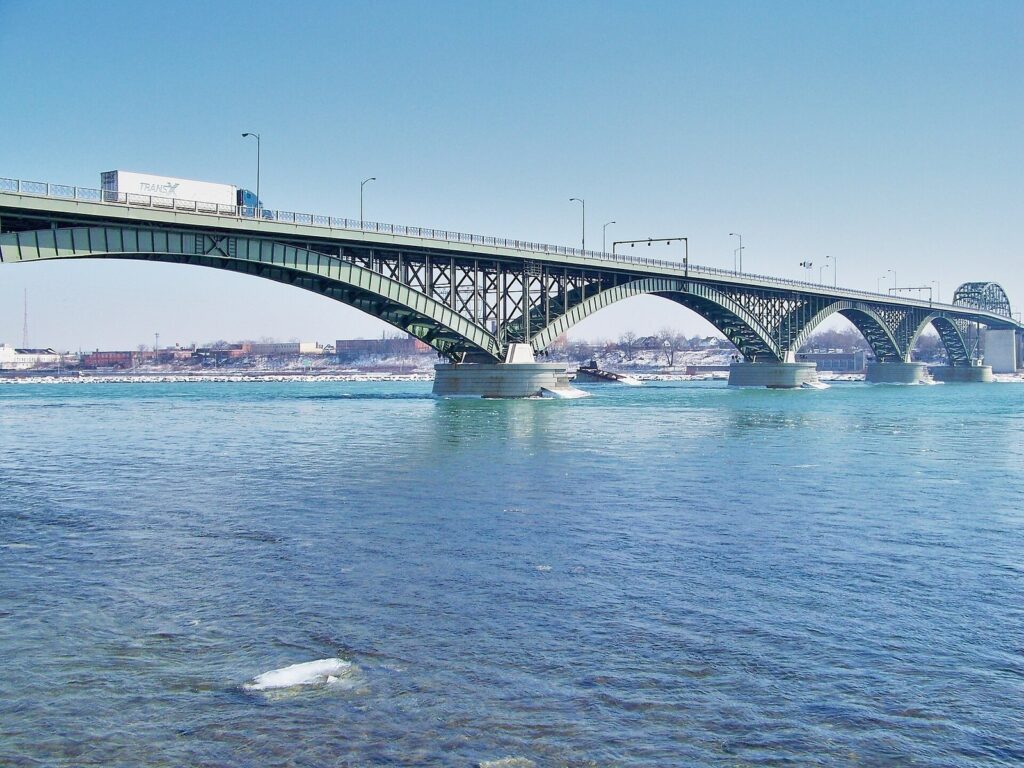
Buffalo is about a two-hour drive from Toronto, depending on traffic and the border. The Peace Bridge lands you on Buffalo’s West Side, minutes from downtown, and the Lewiston-Queenston and Rainbow Bridges cross further north near Niagara Falls. Canadian citizens entering by land need a passport, a NEXUS card or another accepted document, such as an enhanced driver’s license from a province that issues them, and should check the Canada Border Services Agency’s personal exemptions before shopping, because the allowances depend on how long you’ve been away. Our Buffalo NY travel guide for Canadians covers documents, currency, shopping and the best border crossing for each trip.
Do You Need a Car in Buffalo?
It depends on where you stay and what you want to see. Here’s how the two options compare.
| Without a car | With a car | |
|---|---|---|
| Downtown, Canalside, the Theater District | Easy on foot and the Metro Rail | Easy, but you’ll pay to park |
| The museum district | Route 20 bus, 25–35 minutes from downtown | 10–15 minutes |
| Niagara Falls | NFTA Route 40, about an hour | 25–35 minutes |
| Graycliff, Letchworth, East Aurora, suburban food spots | Impractical | Easy |
| Bills games in Orchard Park | Rideshare or organized transport | Possible, with heavy game-day traffic |
| Cost | $2 a ride, capped at $5 a day with a MetGo card | Rental, gas, tolls and parking |
Our verdict: for a two-day city trip based downtown or in Allentown, skip the car. The Metro Rail runs along Main Street from Canalside to the University at Buffalo, the Route 20 bus covers Elmwood Avenue, and rideshare fills the gaps. Construction has single-tracked the above-ground stretch downtown for now, so trains run about every 20 minutes. For anything longer, or a trip that includes Graycliff, Letchworth or the suburban food institutions, rent a car for at least part of it. Our guide to Buffalo with or without a rental car covers the trade-offs in more detail.
What Does a Trip to Buffalo Cost?
Buffalo is one of the better-value cities in the Northeast. Hotels cost well below big-city levels outside peak weekends, several headline sights are free, and a meal of wings costs a fraction of a big-city dinner. Here’s what shapes the budget.
| Cost | What to expect |
|---|---|
| Hotels | Lowest in winter and midweek; highest on Bills weekends, festival weekends and peak foliage Saturdays |
| Hotel taxes | 8.75% sales tax plus Erie County’s 5% occupancy tax at hotels with more than 30 rooms (3% at smaller ones) |
| Free sights | City Hall’s deck and noon tour, Canalside, Delaware Park, Forest Lawn, the Outer Harbor |
| Paid sights | Mostly $15–$25 per adult; the Martin House tour is $25 and the AKG $24 |
| Transit | $2 a ride; $5 day pass or daily cap |
| Parking | Often charged downtown; usually free in the suburbs; $10–$15 at Niagara Falls State Park’s main lots in summer |
| Food | Tavern wings, weck and fish fry are inexpensive; chef-driven dinners cost more |
| Sales tax on purchases | 8.75% in Erie County |
Three sample budgets
These are daily costs per person for a couple sharing a room, before the hotel itself.
- Budget: free sights plus one pay-what-you-wish museum, a $5 transit day pass, and tavern meals. Time the trip for the first Friday of the month, when the Buffalo AKG is pay what you wish, and you can see most of the headliners for very little.
- Midrange: two paid attractions a day at about $45–$50 in total, a rental car or rideshare for the museum district and Niagara Falls, and one sit-down dinner.
- Splurge: the two-hour Martin House Plus tour at $50, Graycliff, a Shea’s Buffalo Theatre show, a historic boutique hotel and a chef-driven dinner, with a Maid of the Mist ride at $30.25 thrown in.
Tipping follows American norms: about 20% for table service and a dollar or two per drink at the bar. Our guide to Buffalo NY trip cost for two people prices out a full weekend, and our Buffalo NY budget travel guide shows how to keep costs down without missing the best of the city.
What to Book Ahead, and What Not To
Buffalo is mostly a walk-up city, but a few things sell out.
- Book ahead: the Darwin D. Martin House, which requires advance tickets and sells out, especially on weekends and in fall; Graycliff, which also requires advance tickets; Shea’s Buffalo Theatre shows; Bills tickets and hotels on Bills weekends; and hotels for festival weekends and Thanksgiving.
- Book a little ahead: Explore Buffalo’s walking and boat tours, dinner reservations at popular restaurants on Friday and Saturday nights, and Sabres tickets for big games.
- Don’t bother booking: the City Hall deck, Canalside, Delaware Park, most museums other than the Martin House, the Maid of the Mist (tickets are sold on the day), and most wing bars, which rarely take reservations anyway.
Our Buffalo NY travel planning checklist puts every booking and decision in order, with the lead times for each.
Where to Stay
For a first visit, stay downtown or in Allentown: you can walk to the Theater District and Canalside and ride the Metro Rail to the rest of Main Street. The Elmwood Village suits a museum-focused trip, the suburbs around the airport and Amherst suit road trips and tight budgets, and Orchard Park suits Bills fans who book early. Our guide to where to stay in Buffalo NY compares the areas by trip type, with drive times and parking.
First-Time Visitor Mistakes to Avoid
Most disappointing trips to Buffalo come down to the same handful of mistakes:
- Planning museums for a Tuesday. Several major museums close early in the week. Check the days first.
- Assuming Niagara Falls is in Buffalo. It’s a separate city about 20 miles north, and the famous head-on view is from Canada.
- Forgetting passports. You need one, or another accepted document, for the Canadian side of the falls.
- Leaving the Martin House to chance. Tickets must be bought in advance, and tours sell out.
- Ignoring the sports calendar. A Bills home weekend fills hotels and roads across the region.
- Underestimating the distances. Many food institutions and day trips are in the suburbs, 20 to 60 minutes away.
- Packing for the forecast, not the lake. Lake Erie can make a sunny morning into a cold, wet afternoon.
- Roaming by accident. Near the Niagara River, phones sometimes connect to Canadian networks; check your plan or turn off roaming.
Our guide to Buffalo NY first-time visitor mistakes to avoid explains each one and how to plan around it.
What to Pack for Buffalo
Pack for the lake. In summer, bring light clothes plus a layer for cool evenings by the water, and a rain jacket. In spring and fall, bring layers that can go from 40°F in the morning to 70°F in the afternoon, and waterproof shoes. In winter, bring a warm coat, a hat, gloves and boots with a good grip; you’ll spend more time walking between buildings than you expect. At any time of year, comfortable walking shoes matter more than anything else, because the best way to see Buffalo’s architecture is on foot. Our Buffalo NY weekend packing list by season has the full checklists.
Traveling Solo or on a Budget
Buffalo is an easy city to visit alone. Downtown, Allentown and the Elmwood Village are walkable, the bars and wing spots are sociable, and Explore Buffalo’s walking tours are a good way to meet people and learn the city. Stick to the busier streets at night, as you would anywhere, and use rideshare for late returns from quieter neighborhoods. Our Buffalo NY visitor guide for solo travelers covers the best bases, tours and evenings for one, and our budget travel guide covers the free and cheap side of the city.
Staying Safe and Comfortable
Buffalo is a friendly city, and most visitors never have a problem. Use the same common sense you would in any American city: keep valuables out of sight in parked cars, stick to busier streets late at night, and use rideshare rather than walking long distances through quiet areas after dark. Downtown, Allentown, the Elmwood Village and Canalside are busy in the evenings and easy to get around.
The weather is the bigger variable. In winter, take the National Weather Service’s lake-effect snow warnings seriously: a single band can drop more than a foot of snow on one part of the region in a day while another stays clear, and highways sometimes close. If you’re driving, slow down, leave extra time, keep the gas tank at least half full, and check the forecast before any trip south of the city. In summer, the breeze off Lake Erie can hide how strong the sun is on the water, so bring sunscreen for Canalside and the Outer Harbor. And at any time of year, the lake can turn a sunny morning into a chilly, wet afternoon, so carry a layer.
If you’re visiting with limited mobility, Buffalo’s major museums are generally well equipped. The Buffalo AKG says all galleries, entrances and facilities are wheelchair accessible and lends wheelchairs and walkers free, the Buffalo History Museum is accessible throughout, and most of the standard Martin House tour is wheelchair accessible. Older venues vary: Shea’s Buffalo Theatre has no elevator, and the City Hall observation deck involves three flights of stairs above the elevators. Our Buffalo itineraries include an accessibility table for the main stops.
Practical Basics
- Time zone: Eastern Time, the same as New York City and Toronto.
- Area code: 716.
- Sales tax: 8.75% in Erie County, added at the register.
- Nightlife hours: bars in Erie County can serve until 4 a.m.
- Cannabis: legal for adults 21 and over in New York, but never take it across the Canadian border in either direction.
- Weather alerts: the National Weather Service’s Buffalo office issues lake-effect snow warnings; take them seriously in winter.
- Emergencies: dial 911.
Buffalo Travel FAQ
What is the best month to visit Buffalo?
September. Normal highs are around 72°F, the summer crowds have gone, every attraction is still open, the Bills season has started and the Maid of the Mist is still sailing at Niagara Falls. July and August are warmer and busier, and October is the best month for fall color. Winter months are the cheapest if you don’t mind snow.
How many days do you need in Buffalo?
Two full days cover the highlights: one downtown and on the waterfront, one in the museum district with the Martin House and the Buffalo AKG. Add a third day for Niagara Falls, about 30 minutes north. Try to include a Thursday or Friday, the only days when all the major museums and the City Hall observation deck are open.
How much snow does Buffalo get?
Buffalo’s normal annual snowfall is 95.4 inches, according to the National Weather Service’s 1991 to 2020 normals. Almost all of it falls between late November and March, with January the snowiest month at 26.7 inches on average. Lake-effect bands can bury one suburb while the next stays clear, and the city is well equipped to clear its main roads quickly.
What is the closest airport to Buffalo?
Buffalo Niagara International Airport (BUF), in Cheektowaga, about 20 minutes east of downtown by car. Taxis, rideshare and rental cars are available at the terminal, and NFTA’s Routes 24 and 24L run to the city for $2. Niagara Falls International Airport is smaller, and Toronto Pearson is about two hours away across the border.
Do you need a car to visit Buffalo?
Not for a city trip based downtown or in Allentown. The Metro Rail runs along Main Street, buses cover Elmwood Avenue and the museum district, and NFTA’s Route 40 reaches Niagara Falls in about an hour. You’ll want a car for Graycliff, Letchworth State Park, East Aurora and many of the suburban food institutions.
Is Buffalo expensive to visit?
No, by Northeast standards. Hotels cost well below big-city levels outside peak weekends, several major sights are free, and most paid attractions cost $15 to $25. Budget for 8.75% sales tax and, at hotels, Erie County’s occupancy tax on top. Bills weekends and summer festivals are the most expensive times; winter and midweek stays are the cheapest.
Related Buffalo Guides
- Things to Do in Buffalo NY
- Buffalo NY Itineraries
- Where to Stay in Buffalo NY
- Niagara Falls from Buffalo NY
- Buffalo NY Fall Things to Do
- Buffalo NY Food Guide
Sources and How We Checked
Hours, prices, routes and other details in this guide were checked on September 23, 2026 against the official sources below. The guide is compiled from those operators and agencies rather than from other travel lists, and it doesn’t describe first-hand visits. Details change, so confirm anything time-sensitive with the operator before you go.
- Buffalo climate: weather.gov/buf/newnormals
- Erie County sales tax: tax.ny.gov/pdf/publications/sales/pub718.pdf
- Erie County hotel occupancy tax: www4.erie.gov/comptroller/hotel-tax-instructions-and-regi…
- NFTA Metro: metro.nfta.com/fares/fare-info
- NFTA Metro Rail: metro.nfta.com/schedules/route/rail
- NFTA airport service: metro.nfta.com/getting-around/special-services/airport-se…
- Buffalo AKG Art Museum: buffaloakg.org/hours-admission, buffaloakg.org/visit, buffaloakg.org/visit/accessibility
- The Buffalo History Museum: buffalohistory.org/visit-us
- Darwin D. Martin House: martinhouse.org/tours, martinhouse.org/visit/prepare/hours, martinhouse.org/visit/prepare/accessibility
- Buffalo City Hall: explorebuffalo.org/downtown/buffalo-city-hall
- Graycliff: experiencegraycliff.org/visit/plan-your-visit
- Shea's Buffalo Theatre: sheas.org/historic-tours
- Canalside: buffalowaterfront.com, buffalowaterfront.com/winter-activities
- Queen City Bike Ferry: buffalowaterfront.com/activities/ferry-boat
- Buffalo and Erie County Naval & Military Park: buffalonavalpark.org/visit/hours-admission
- Niagara Falls State Park: niagarafallsstatepark.com/park-information/parking
- Buffalo Bills / Highmark Stadium: buffalobills.com/news/fans-and-media-react-to-the-atmosph…
- Buffalo Sabres: nhl.com/sabres/news/buffalo-sabres-2026-27-home-opener-sc…
- National Buffalo Wing Festival: buffalowing.com
- Buffalo festivals 2026: visitbuffalo.com/signature-events
- Maid of the Mist: maidofthemist.com/schedule-pricing
Buffalo Tourism Guide is an independent publication. We are not affiliated with Visit Buffalo Niagara, the City of Buffalo or any attraction listed here, and no one paid to be included.
Photo Credits
- Buffalo skyline from Fort Erie: photo by Ken Lund from Reno, Nevada, USA, Wikimedia Commons (CC BY-SA 2.0)
- Canalside in late summer: photo by Andre Carrotflower, Wikimedia Commons (CC BY-SA 4.0)
- Delaware Avenue in the snow: photo by Andre Carrotflower, Wikimedia Commons (CC BY-SA 4.0)
- Buffalo Niagara International Airport sign: photo by G. Edward Johnson, Wikimedia Commons (CC BY 4.0)
- Buffalo Exchange Street Amtrak station: photo by Adam Moss, Wikimedia Commons (CC BY-SA 2.0)
- Peace Bridge: photo by Óðinn, Wikimedia Commons (CC BY-SA 3.0)