Buffalo NY architecture and history tell the same story. The Erie Canal and the grain trade made Buffalo one of the richest cities in America between 1825 and 1930, and that money hired the best architects of the age: H.H. Richardson, Louis Sullivan, Daniel Burnham’s firm, Frank Lloyd Wright and, later, Eliel and Eero Saarinen. An unusual amount of their work is still standing. On a first trip, walk downtown past City Hall, the Guaranty Building and Ellicott Square, book a tour of Wright’s Martin House, and then add the Richardson Olmsted Campus, the grain elevators on the Buffalo River and the house where Theodore Roosevelt took the oath of office.
This guide is for travelers who want the buildings and the backstory in one plan, including what’s open, what it costs and what to do when a tour is full. The caveat that matters is timing: the best interiors run on timed tours, several sites close on Mondays or Tuesdays, and Buffalo Central Terminal is a construction site for now. Everything here was checked September 23, 2026 against official sources.
| Place | Cost | Time needed | When to go | Book ahead? |
|---|---|---|---|---|
| Martin House (Wright) | $25 standard tour, $50 Plus tour | 75 minutes or 2 hours | Any day but Tuesday | Yes, tickets required |
| City Hall observation deck | Free | 45 minutes; the noon tour runs 60 | Weekdays only | No |
| Guaranty Building lobby exhibits | Free | 20 to 30 minutes | Weekdays | No |
| Theodore Roosevelt Inaugural site | $12 adults, 18 and under free | About an hour | Daily, February to December | Strongly recommended |
| Buffalo History Museum | Pay as you wish, $12 suggested | 1 to 2 hours | Wednesday to Sunday | No |
| Explore Buffalo walking tours | $20; under 18 free with a parent | 90 minutes, 1 to 2 miles | Check the tour calendar | Yes |
| Richardson Olmsted Campus tour | Book through Explore Buffalo | A morning | Weekends at 10am, June to September | Yes |
| Silo City: Ground tour | $22, or $12 with an Explorer Pass | Varies by tour | Check the tour calendar | Yes |
| Graycliff (Wright) | Advance tickets | Half a day with the drive | April to November; Friday to Sunday in winter | Yes, tickets required |
Why does Buffalo have so much great architecture?
Start with the street plan. In 1804 Joseph Ellicott laid out the village for the Holland Land Company, with broad avenues fanning out from a central square, an idea borrowed from the plan of Washington, D.C., which his brother Andrew had helped survey. That radial plan is still the skeleton of downtown, with Niagara Square as its hub. British troops and their allies burned the village in December 1813, so almost nothing from that first generation survives. What you see is the city that came after.
The canal made that city. When the Erie Canal opened in 1825, Buffalo became the hinge between the Great Lakes and the Atlantic: grain, lumber and settlers moved through the harbor, switching between lake ships and canal boats. In 1842 a merchant named Joseph Dart built the first steam-powered grain elevator on the Buffalo River, and the port grew into the largest grain port in the world. Railroads, flour mills, steel and a Niagara-powered electrical industry followed. By 1900 Buffalo was the eighth-largest city in the country, and in 1901 it hosted the Pan-American Exposition.
Money like that goes looking for architects. Shipping and railroad families built mansions on Delaware Avenue, investors commissioned office towers from Chicago firms, the Larkin soap company brought in a young Frank Lloyd Wright, and the state hired Richardson and Frederick Law Olmsted for its new asylum. Olmsted and his partner Calvert Vaux also designed a connected system of parks and parkways, the first of its kind in the country, and Olmsted later called Buffalo the best-planned city in America.
Then the money drained away. The St. Lawrence Seaway opened in 1959 and let ships sail straight past, the steel plants closed around 1980, and the population fell from about 580,000 in 1950 to under half that. Some great buildings were lost, above all Wright’s Larkin Administration Building, torn down in 1950. But a city without a building boom doesn’t tear much down, either, and a large share of the old city survived until preservation caught up. Since the 2000s the story has run the other way: the Martin House rebuilt, the Guaranty restored, the Richardson asylum reopened as a hotel, and the art museum’s expansion finished in 2023 as the Buffalo AKG.
Where should you start downtown?
Downtown is compact enough to see on foot in a morning, and it packs an unusual number of first-rate buildings into a few blocks. The simplest route runs from Niagara Square east along Court Street to Lafayette Square, then down Main Street to the churches at Main and Church streets and the Guaranty, under two miles with stops. A separate guide in this series maps a self-guided architecture walking tour stop by stop; these are the anchor buildings and how to get inside them.
Buffalo City Hall and Niagara Square
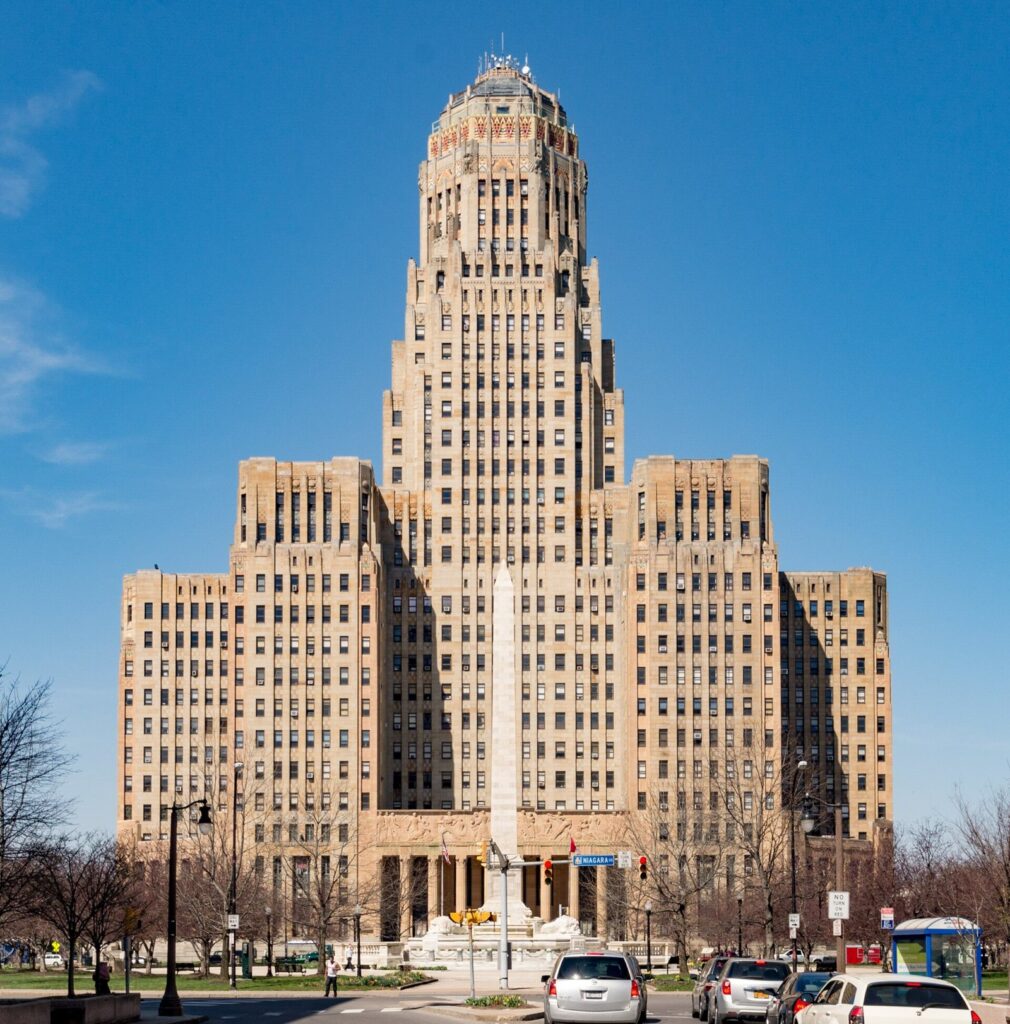
City Hall comes first, for the building and for the view. Finished in 1931 to a design by John Wade and George Dietel, it’s a 32-story Art Deco tower whose carved friezes and lobby decoration tell the city’s story: the canal, the railroads, industry and the people who worked in it. Out front, the McKinley Monument, a marble obelisk, marks the center of Ellicott’s plan. From the observation deck on the 28th floor the radial avenues suddenly make sense, and on a clear day you can see Lake Erie, the Niagara River and the grain elevators to the south.
The deck is free, but it isn’t step-free: elevators stop at the 25th floor, and you climb the last three flights. Explore Buffalo also leads a free 60-minute tour of the building every weekday at noon, which is the best way to understand the symbolism packed into the lobby. The City Hall observation deck guide in this series covers the climb and what to look for on each side.
Plan it: free; weekdays during business hours, closed weekends and holidays; free guided tour weekdays at noon; allow 45 minutes, or 90 with the tour; 65 Niagara Square.
The Guaranty Building
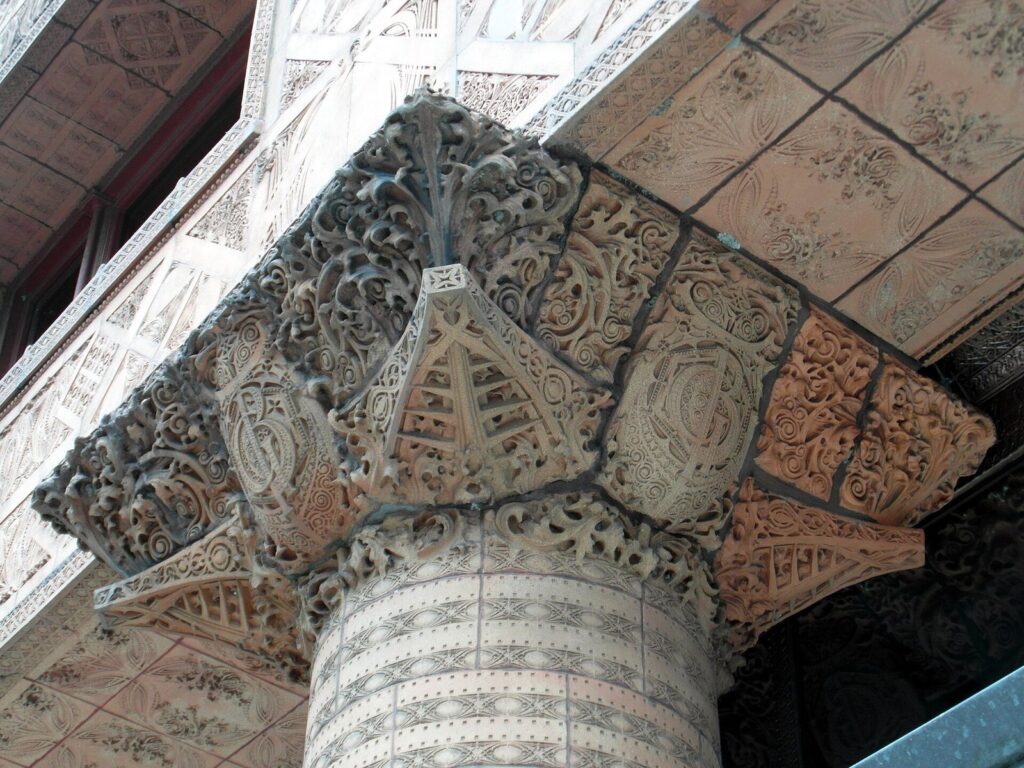
If you study one facade closely, make it the Guaranty. Dankmar Adler and Louis Sullivan finished it in 1896, the year Sullivan published the essay that gave architecture the phrase “form follows function,” and it was one of the first tall buildings to look tall on purpose: a steel frame expressed as soaring vertical piers, wrapped in red terra cotta covered with Sullivan’s leafy, looping ornament. Look hard at the base, where the ornament is at eye level, then up at the rounded cornice with its round windows 13 stories up.
The building came close to demolition in the 1970s and changed hands several times before the Hodgson Russ law firm restored it as its headquarters. It’s a working office building, but Preservation Buffalo Niagara runs an interpretive center in the lobby with 11 exhibits on Sullivan and the building’s rescue. Enter through the Pearl Street doors and check in at the security desk. Our Guaranty Building visitor guide covers the details worth finding inside and out.
Plan it: free; treat it as a weekday stop, since it’s a private office building; allow 20 to 30 minutes; corner of Church and Pearl streets, entrance on Pearl.
Ellicott Square, Lafayette Square and the Main Street spine
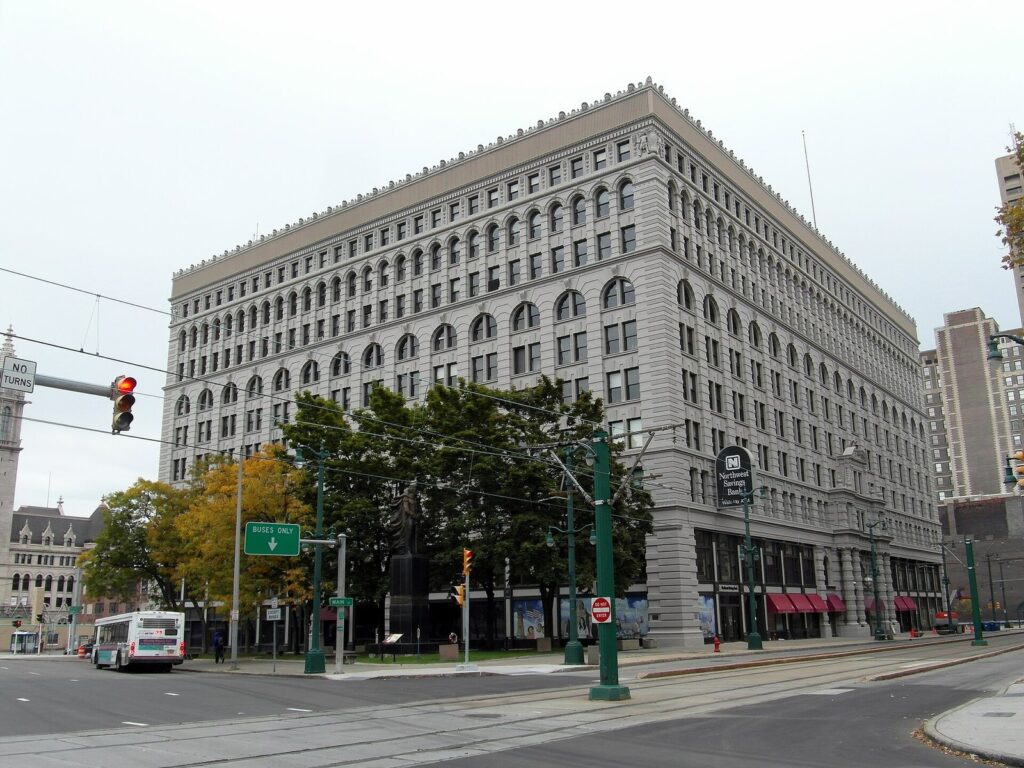
A block east of the Guaranty, the Ellicott Square Building fills an entire block of Main Street. Daniel Burnham’s firm finished it in 1896, and for a few years it was the largest office building in the world. The outside is a sober gray palazzo; the surprise is the glass-roofed central court with its marble mosaic floor. The court works as the building’s lobby, so step in on a weekday.
Farther north, Lafayette Square was the old civic center. The Hotel Lafayette, a block south of the square, was designed by Louise Blanchard Bethune, the first American woman known to have practiced as a professional architect, and it reopened in 2012 after a long restoration. The Liberty Building is easy to spot by the two copies of the Statue of Liberty on its roof, and the gilded dome of the 1901 Buffalo Savings Bank shines at the north end of the core. Back south, St. Paul’s Episcopal Cathedral, a red sandstone Gothic Revival church by Richard Upjohn from 1851, holds the corner of Main and Church streets.
Buffalo’s Art Deco makes a loop of its own. City Hall and the Central Terminal are the headliners, and the Rand Building’s stepped 1929 tower on Lafayette Square is the best of the rest. Our Buffalo Art Deco walking tour links them with the smaller Deco storefronts and lobbies most people walk straight past.
How do you see Frank Lloyd Wright’s Buffalo?
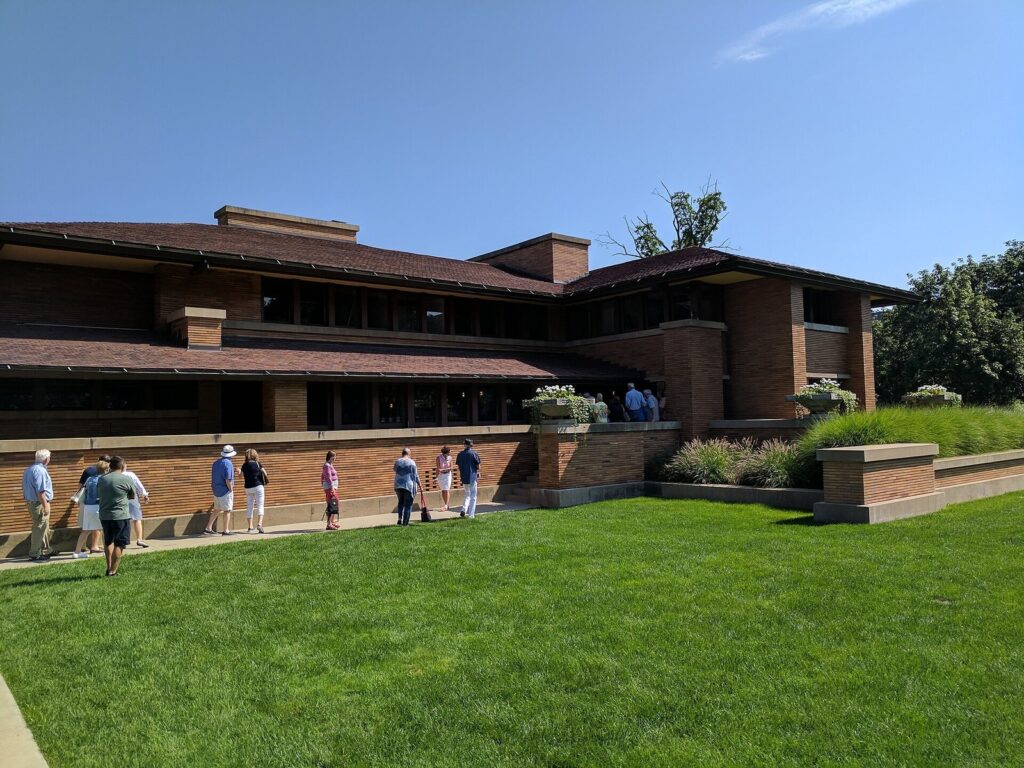
Wright worked in Buffalo because of one client. Darwin D. Martin was a senior executive at the Larkin Company, a mail-order soap business, and over three decades he hired Wright for the company’s headquarters, his own house, a house next door for his sister, a summer home on Lake Erie and a family tomb. The result is one of the largest collections of Wright’s work outside the Chicago area, most of it within a short drive, and our Frank Lloyd Wright sites near Buffalo itinerary strings it together over a day or two.
The Darwin D. Martin House
Built between 1903 and 1905, the Martin House is Wright’s Prairie style at full scale: long brick walls, low roofs with deep overhangs and a chain of buildings joined by a 100-foot pergola that ends in a glass conservatory. After the Martins lost their fortune in the Depression the house stood empty for years, and in the 1960s the pergola, conservatory and carriage house were torn down. A restoration of roughly 25 years rebuilt them and brought back the interiors, including hundreds of art glass windows. You check in at the Greatbatch Pavilion, a glass visitor center by the architect Toshiko Mori.
Tours are timed and they do sell out, so book this before you plan anything else. The standard 75-minute Martin House Tour costs $25 for adults, $23 for seniors and $10 for students, and it’s free for members and children 8 and under. The two-hour Martin House Plus Tour costs $50 and adds the second floor, the Barton House and the Gardener’s Cottage, but it isn’t wheelchair accessible and isn’t open to children under 8. Most of the standard tour is accessible, the pergola excepted. The Martin House tour guide in this series compares the options in detail.
Plan it: $25 adults on the standard tour, $50 on the Plus tour; tours Monday and Wednesday to Friday 9:30am to 4pm (Thursday until 8pm), Saturday 9am to 5pm and Sunday 9:30am to 5pm, closed Tuesday; advance tickets required at martinhouse.org; 125 Jewett Parkway; 10 to 15 minutes by car from downtown.
Graycliff
Graycliff was the Martins’ summer house, built between 1926 and 1931 on a bluff above Lake Erie in Derby, about 25 minutes south of downtown. It’s lighter and more open than the city house, with cantilevered balconies over the lawn and the lake beyond, and a long restoration has brought back both the house and its landscape. It’s the better pick if you’ve already seen the Martin House or want your Wright with a lake view. The Graycliff day trip guide in this series covers what to pair with it.
Plan it: advance tickets required at experiencegraycliff.org; standard and extended tours six days a week April to November, Friday to Sunday December to March; not fully accessible; 6472 Old Lake Shore Road, Derby; allow half a day with the drive.
The mausoleum, the boathouse and the filling station
Buffalo has a Wright oddity no other city can match: three of his designs that went unbuilt in his lifetime have since been constructed here from his drawings. The Blue Sky Mausoleum, designed for the Martin family in 1928, was finally built in 2004 at Forest Lawn Cemetery, a stepped granite terrace set into a hillside. The Fontana Boathouse, a 1905 design for a University of Wisconsin rowing club, opened in 2007 on the Black Rock Channel as a working rowing boathouse. And the Buffalo Filling Station, a 1927 design with a copper roof and overhead fuel hoses, stands indoors at the Buffalo Transportation Pierce-Arrow Museum downtown. Purists argue about whether posthumous builds count. The mausoleum and the filling station are worth the small detour anyway. The Heath and Davidson houses, also by Wright, are private homes: look from the sidewalk.
| Wright site | What it is | How you see it | Worth it? |
|---|---|---|---|
| Martin House | Prairie house complex, 1903 to 1905 | Timed tours, $25 or $50 | Yes. Book it first |
| Graycliff | Summer house on Lake Erie, 1926 to 1931 | Timed tours, 25 minutes south by car | Yes, with a car and half a day |
| Blue Sky Mausoleum | Martin family tomb, built 2004 | Outdoors in Forest Lawn | Yes, paired with Forest Lawn and Delaware Park |
| Buffalo Filling Station | Gas station, built 2002 | Inside the Pierce-Arrow Museum, $20 adults | For car fans; optional for everyone else |
| Fontana Boathouse | Rowing boathouse, built 2007 | From outside | Only if you’re on the Black Rock waterfront anyway |
| Heath and Davidson houses | Private homes, 1905 and 1908 | From the sidewalk | A quick detour from the Martin House |
Can you go inside the Richardson Olmsted Campus?
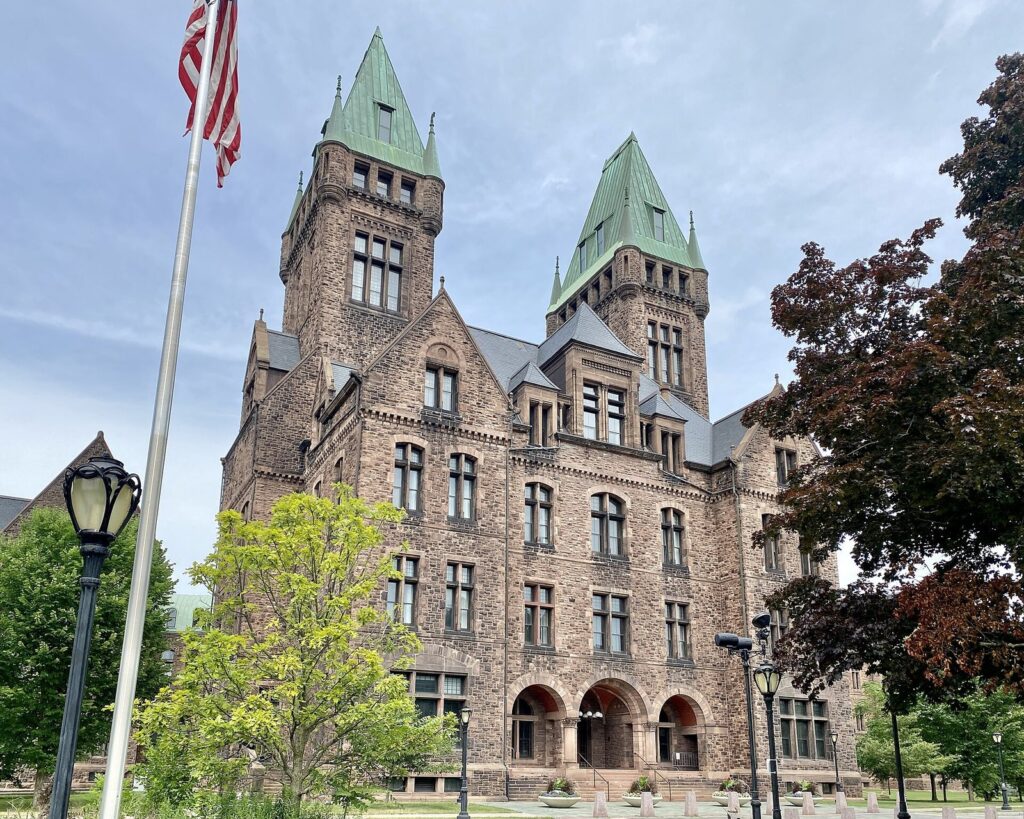
Partly, and it’s worth the effort. H.H. Richardson designed the Buffalo State Asylum for the Insane in the early 1870s, and Olmsted and Vaux laid out its grounds. The plan followed the Kirkbride theory that light, air and landscape could heal: patient wards stepped back in a shallow V from a central administration building, whose twin copper-roofed towers still rise over the neighborhood. The hospital emptied over the 20th century and the central buildings sat vacant for decades. A long rehabilitation turned part of them into the Richardson Hotel and a home for the Lipsey Architecture Center Buffalo, the city’s architecture center and a good orientation stop for everything in this guide.
Guided historical tours of the campus run on Saturdays and Sundays at 10am from June through September, and they’re the way into the parts of the old hospital that aren’t hotel. Outside that season you can still see the towers and the restored front lawn from Forest Avenue. The Richardson Olmsted Campus tour guide in this series covers booking and what the tour includes.
Plan it: tours Saturdays and Sundays at 10am, June to September, booked through Explore Buffalo; check the Lipsey’s hours at thelipsey.org; 444 Forest Avenue, with parking in the north lots off Rockwell Road from Elmwood Avenue; the Burchfield Penney Art Center and the Buffalo AKG are a short walk away.
What are the grain elevators, and how do you see them?
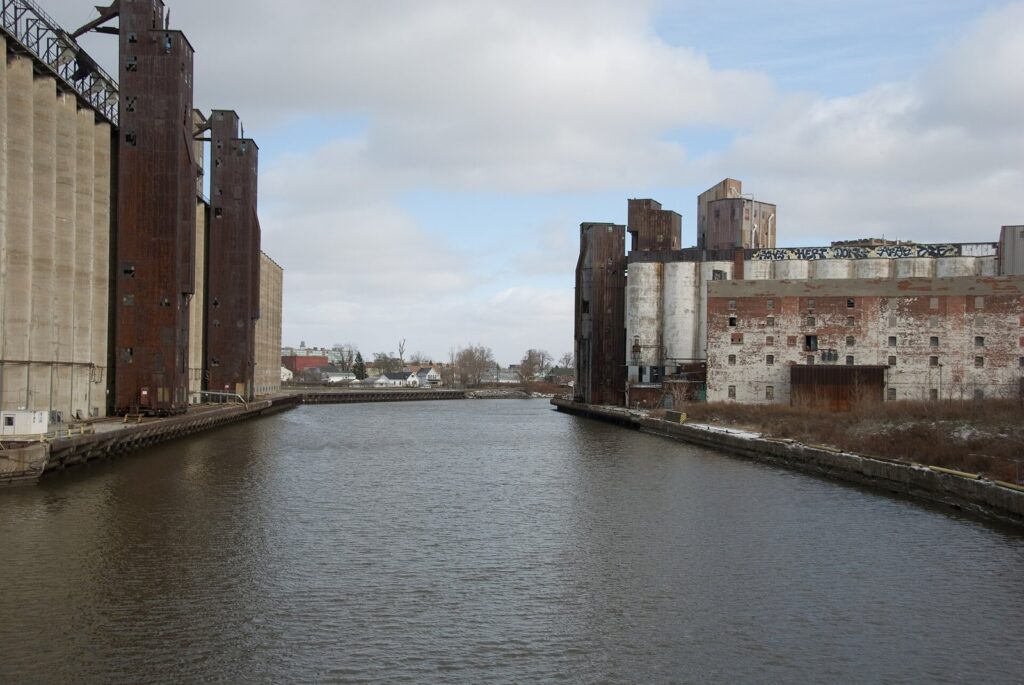
The grain elevators are Buffalo’s most original contribution to architecture, and nobody designed them to be beautiful. An elevator lifted grain out of a lake freighter’s hold and stored it in tall bins until it could be loaded onto canal boats or rail cars. The early wooden elevators burned with depressing regularity, and by the early 20th century rows of concrete silos lined the Buffalo River. European modernists noticed. Walter Gropius and Le Corbusier both published photographs of American grain elevators, Buffalo’s among them, as models of pure form, which is why architects still make the trip.
Many of the elevators still stand, some empty and some still working: the General Mills plant near Canalside still mills oats, and on the right wind downtown smells faintly of Cheerios. Silo City, a cluster of historic elevators on the river, is now an arts and events site, and Explore Buffalo runs a guided “Silo City: Ground” walking tour there. The water gives the best sense of scale. Buffalo River History Tours leaves from 44 Prime Street at Canalside for narrated trips up the river in season, and guided kayak tours paddle the same stretch. Our guide to the grain elevators and Silo City tours compares the options.
Plan it: Silo City: Ground tour $22, or $12 with an Explorer Pass, meeting at 120 Silo City Row; river history cruises leave 44 Prime Street in the warmer months; 5 to 10 minutes by car from downtown; wear closed shoes, since these are industrial sites.
Is Buffalo Central Terminal open to visitors?
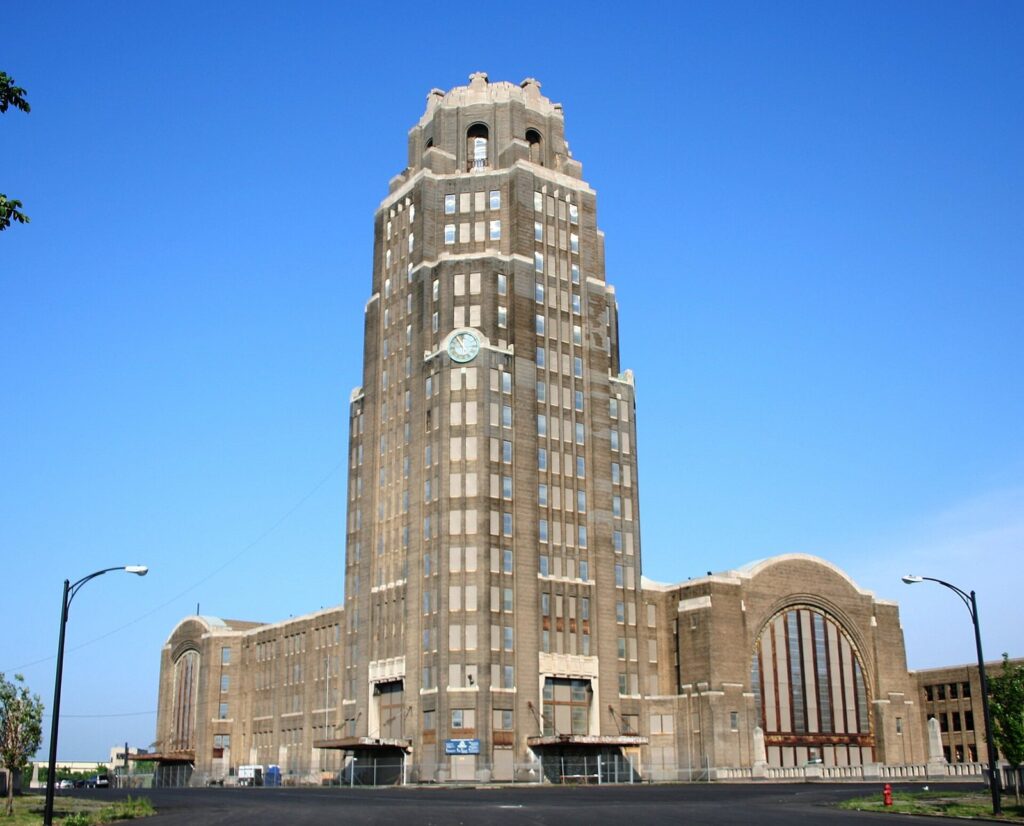
Mostly from the outside, for now. The Central Terminal opened in 1929: a 17-story Art Deco tower above a vast concourse, built by the New York Central Railroad about two and a half miles east of downtown on the bet that the city would grow out to meet it. It didn’t, and the last passenger train left in 1979. After years of neglect and stripping, a nonprofit took over the building in 1997 and has been saving it piece by piece, and a major restoration is now under way.
While construction continues, the visitor offer is a self-guided audio tour along the exterior paths, with segments voiced by members of the Goo Goo Dolls. Check the terminal’s own site for events. Is it worth the drive right now? For railroad and Art Deco fans, yes: the clock tower is a landmark on the East Side skyline, and the surrounding Broadway-Fillmore neighborhood has the Broadway Market and the huge Polish churches built by the same generation. For everyone else, see it from the car and spend the time at the Martin House instead. The Buffalo Central Terminal visitor guide in this series tracks what’s open as the work goes on.
Where can you stand where history happened?
A president was shot in Buffalo and another sworn in, the Erie Canal ended here, and freedom seekers crossed the Niagara River to Canada from here. Four stops put you on the spot.
Theodore Roosevelt Inaugural National Historic Site
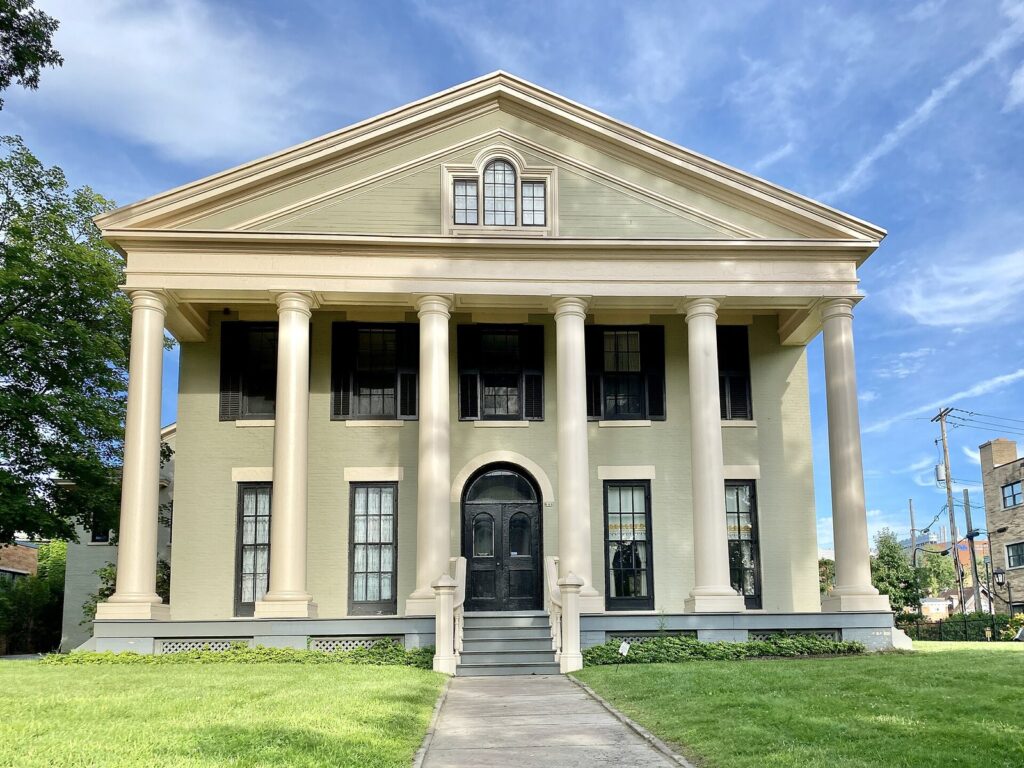
On September 6, 1901, President William McKinley was shot at the Temple of Music on the Pan-American Exposition grounds. He died on September 14, and that afternoon Theodore Roosevelt took the oath of office in the library of his friend Ansley Wilcox’s house on Delaware Avenue. The Greek Revival house, part of which began as officers’ quarters for an 1830s army post, is now a National Historic Site, with the library restored and interactive exhibits on Roosevelt, McKinley and the era. Visits are by guided tour only, and it’s one of the few history sites in town open every day for most of the year, which makes it the fix for a Tuesday. Our Theodore Roosevelt inauguration site guide covers the tour and the mansions nearby.
Plan it: adults $12, seniors 62 and over and veterans $9, 18 and under free; guided tours hourly from 10:30am to 3:30pm; open daily 10am to 5pm February to December, Fridays and Saturdays only in January; booking strongly recommended at trsite.org; 641 Delaware Avenue.
The Buffalo History Museum and the Pan-American Exposition
The Pan-American Exposition of 1901 was Buffalo’s moment on the world stage, a fair lit at night by electricity from Niagara Falls. Nearly all of it was temporary plaster, and the one permanent building is the Buffalo History Museum, designed by George Cary as the New York State Building: a white marble Greek temple above Mirror Lake at the edge of Delaware Park. A boulder on Fordham Drive, a short walk away, marks roughly where the Temple of Music stood and McKinley was shot.
Plan it: pay as you wish, $12 suggested; Wednesday to Saturday 10am to 5pm, Sunday noon to 5pm, closed Monday, Tuesday and national holidays; 1 Museum Court; free parking, and the Elmwood #20 bus stops at Elmwood and Nottingham; allow one to two hours. Details at buffalohistory.org.
Canalside and the end of the Erie Canal
The canal’s western end was the Commercial Slip, and in 2008 it was dug out and filled with water again at what is now Canalside, along with the stone walls and the street grid of the old canal district. That district had a rough reputation, and its saloons and boarding houses are long gone, but the plan survives. The Buffalo History Museum runs a small Canalside site at 44 Prime Street with the Waterway of Change exhibit: entry is free and guided tours cost $3. The Erie Canal history walking tour in this series covers the terminus stop by stop, and our Buffalo waterfront guide covers the rest of the shore, from the Naval Park to the Outer Harbor.
The Michigan Street African American Heritage Corridor
A short stretch of Michigan Avenue just east of downtown holds the city’s most important Black history sites. The Michigan Street Baptist Church, built by its congregation in 1845, was a center of Buffalo’s abolitionist movement and is linked to the Underground Railroad, in the years when freedom was a river crossing away. Next door, the Nash House Museum preserves the home of the Rev. J. Edward Nash, the church’s longtime pastor and a civil rights leader. Both are run by small nonprofits, so check opening days before you go.
Which neighborhoods are architecture in themselves?
Some of Buffalo’s best architecture doesn’t need a ticket, because it’s a whole street. Allentown, just north of downtown, is one of the largest historic districts in the country, with Victorian houses, brick storefronts and galleries on nearly every block. Delaware Avenue north of it was the city’s Millionaires’ Row, lined with mansions that are now clubs, offices and schools. Parkside, around the Martin House, was laid out by Olmsted and Vaux in the 1870s with curving streets that follow the edge of Delaware Park.
For contrast, the Old First Ward near the grain elevators is a neighborhood of workers’ cottages built by the Irish families who worked the docks, with the silos at the end of the street. On the East Side, the Polish churches of Broadway-Fillmore, St. Stanislaus and Corpus Christi above all, are among the largest and most elaborate in western New York. Our guide to Buffalo’s neighborhoods covers what each is like to visit.
Where do the parks and the 20th-century buildings fit in?
Olmsted and Vaux’s park system, begun in 1868, is architecture on a city scale: Delaware Park, Front Park above the Niagara River and the Parade, now Martin Luther King Jr. Park, tied together by tree-lined parkways and traffic circles. It frames a lot of this guide. The History Museum sits on Delaware Park’s lake, the Martin House is a few blocks from the park’s edge, and Forest Lawn Cemetery, founded in 1849 beside the park, holds Millard Fillmore, Shirley Chisholm, Rick James and the Seneca orator Red Jacket along with Wright’s mausoleum.
The 20th century added its own landmarks. Shea’s Buffalo, the 1926 movie palace on Main Street by Rapp and Rapp, has interiors designed with Louis Comfort Tiffany’s studio and still hosts touring Broadway shows. Kleinhans Music Hall, built in 1940 on Symphony Circle to a design by Eliel and Eero Saarinen, is a curving, cream-colored modernist hall known for its acoustics, and the Buffalo Philharmonic Orchestra plays its 2026-27 season there. And the Buffalo AKG Art Museum sums up a century on one campus: E.B. Green’s 1905 Greek temple, Gordon Bunshaft’s 1962 glass-and-granite addition and the Gundlach Building, which opened in 2023. For what’s inside, see our guide to Buffalo’s museums and art.
Guided tour or self-guided: which is better?
You need a bit of both. Downtown’s exteriors are easy to read on your own with a map, but several of the best things in this guide open only on tours: the Martin House, the Roosevelt site, the inside of the Richardson Olmsted Campus and Silo City. A guided walk on your first morning also pays off for the rest of the trip, because a good docent teaches you how to read the city: where the money came from, who was copying whom and what used to stand in the parking lots.
Explore Buffalo, a volunteer-driven nonprofit, runs most of the city’s walking tours. Most last about 90 minutes and cover one to two miles, and the downtown choices include Best of Buffalo, Masters of American Architecture, Reaching for the Skies (the tall buildings) and Buffalo Theater Then & Now. General admission is $20, under-18s go free with a parent or guardian, and an Explorer Pass membership covers every walking tour for a year, which is worth pricing out if you plan to take several. Book at explorebuffalo.org.
| Option | Cost | Length | Best for | Verdict |
|---|---|---|---|---|
| Explore Buffalo downtown walk | $20; under 18 free with a parent | 90 minutes, 1 to 2 miles | Your first morning | The best-value introduction |
| City Hall tour | Free | 60 minutes, weekdays at noon | Art Deco and the deck | Do it if you’re downtown on a weekday |
| Martin House tour | $25, or $50 for Plus | 75 minutes or 2 hours | Wright | Book first and build the day around it |
| Roosevelt site tour | $12, 18 and under free | Hourly, 10:30am to 3:30pm | Presidential history | The best rainy-day history stop |
| River history cruise | Check the operator | In season | Grain elevators | The best way to grasp their size |
| Self-guided | Free | Your pace | Exteriors and neighborhoods | Fine for downtown and Allentown, but you miss the interiors |
What’s open on which day?
The easiest way to wreck an architecture day in Buffalo is to plan it for a Tuesday. The Martin House closes on Tuesdays, the Buffalo History Museum on Mondays and Tuesdays, and City Hall works weekdays only, so no single day has everything. Thursday and Friday come closest.
| Day | Martin House | Roosevelt site | City Hall deck | History Museum | Pierce-Arrow Museum |
|---|---|---|---|---|---|
| Monday | Open | Open | Open | Closed | Closed |
| Tuesday | Closed | Open | Open | Closed | Closed |
| Wednesday | Open | Open | Open | Open | Closed |
| Thursday | Open until 8pm | Open | Open | Open | Open |
| Friday | Open | Open | Open | Open | Open |
| Saturday | Open | Open | Closed | Open | Open |
| Sunday | Open | Open | Closed | Open from noon | Closed |
In January the Roosevelt site opens only on Fridays and Saturdays, and holidays close City Hall and the History Museum. Walking tours and exteriors fill the gaps. On a Tuesday, pair the Roosevelt site with City Hall and a downtown walk; on a Sunday, pair the Martin House with the Roosevelt site and Forest Lawn.
When is the best time of year for an architecture trip?
Late spring to early fall is easiest. The campus tours and river cruises run in the warm months, and the Martin House stays open until 8pm on Thursdays, which is handy on long summer evenings. September and October add color along the Olmsted parkways and the best light for Parkside and Delaware Avenue; our Buffalo fall guide covers that season.
Winter is better for this trip than its reputation. City Hall, the Martin House and the History Museum are indoors, Graycliff runs Friday-to-Sunday tours through the winter, and the Prairie houses look right under snow, low roofs and all. What you give up is the boats, the campus tours and comfortable long walks. Just remember that January cuts the Roosevelt site to two days a week.
How can you fit it into one or two days?
With one day, do downtown in the morning and a pre-booked Martin House tour after lunch, then Forest Lawn and the History Museum. With two, give the second to the Roosevelt site, Canalside and a river cruise or the Silo City tour. Graycliff takes a third morning and a car. Our Buffalo itineraries mix these buildings with the food and the waterfront, and our rundown of things to do in Buffalo covers the rest of the city. If you’d like to sleep inside a landmark, the Richardson Hotel and the Hotel Lafayette both take guests; see where to stay in Buffalo.
Getting between the sites, and access notes
Downtown’s buildings are all within about a 20-minute walk of one another, and Metro Rail runs along Main Street if your feet give out. The rest is a short drive: the Martin House, the Richardson Olmsted Campus and the History Museum are 10 to 15 minutes north, Silo City and the Central Terminal are about 10 minutes south and east, and Graycliff is 25 minutes south. A car or rideshare makes the two-day plan much easier, though the Elmwood #20 bus covers the museum corridor. Outside downtown, parking is easy, and the History Museum and the Pierce-Arrow Museum both have free lots.
Accessibility varies with buildings this old. The Buffalo History Museum is wheelchair accessible throughout, with open-captioned films, sensory kits and a Sensory Hour on Sundays from 11am to noon, and the Pierce-Arrow Museum is accessible too. The Martin House Plus tour, City Hall’s deck and Graycliff are the hard ones. For anything else, call ahead.
Buffalo Architecture and History FAQ
What is the most famous building in Buffalo?
Among architects, it’s a toss-up between Frank Lloyd Wright’s Martin House and Louis Sullivan’s Guaranty Building, both National Historic Landmarks. For most visitors it’s City Hall, the 1931 Art Deco tower on Niagara Square, because you can ride nearly to the top for free on a weekday and see the whole radial street plan laid out below you.
How many Frank Lloyd Wright buildings are in Buffalo?
More than a dozen, depending on how you count. The Martin House complex alone has six buildings, and the Heath and Davidson houses, Graycliff in Derby, and three designs built after Wright’s death (the Blue Sky Mausoleum, the Fontana Boathouse and the Filling Station) add the rest. The Larkin Administration Building, his first big commercial work, was demolished in 1950.
Can you go inside Buffalo City Hall?
Yes. City Hall is a working government building open on weekdays during business hours, and the 28th-floor observation deck is free. Elevators go to the 25th floor and you walk the last three flights. Explore Buffalo also leads a free 60-minute tour every weekday at noon. The building and the deck are closed on weekends and holidays.
Do you need to book the Martin House in advance?
Yes. The Martin House requires advance tickets, and tours sell out. The standard 75-minute tour costs $25 for adults and the two-hour Plus tour costs $50, which adds the second floor and the Barton House. The house is closed on Tuesdays. Book the tour first, then plan the rest of your day around its time slot.
What architecture can you see for free in Buffalo?
City Hall’s observation deck and noon tour, the Guaranty Building’s lobby exhibits, the downtown facades, Forest Lawn Cemetery with Wright’s Blue Sky Mausoleum, and the houses of Allentown, Delaware Avenue and Parkside cost nothing. The Buffalo History Museum is pay as you wish, and its Canalside site is free to enter.
Related Buffalo Guides
- Buffalo NY Museums and Art
- Buffalo NY Neighborhoods Guide
- Things to Do in Buffalo NY
- Buffalo NY Itineraries
- Niagara Falls from Buffalo NY
- Buffalo NY Fall Things to Do
Sources and How We Checked
Hours, prices, routes and other details in this guide were checked on September 23, 2026 against the official sources below. The guide is compiled from those operators and agencies rather than from other travel lists, and it doesn’t describe first-hand visits. Details change, so confirm anything time-sensitive with the operator before you go.
- Darwin D. Martin House: martinhouse.org/tours, martinhouse.org/visit/prepare/hours, martinhouse.org/visit/prepare/accessibility
- Theodore Roosevelt Inaugural National Historic Site: trsite.org/visit/tickets
- The Buffalo History Museum: buffalohistory.org/visit-us
- Buffalo City Hall: explorebuffalo.org/downtown/buffalo-city-hall, buffalony.gov
- Guaranty Building: hodgsonruss.com/newsroom-pressrelease-6506.html
- Richardson Olmsted Campus: richardson-olmsted.com/tours
- Buffalo Central Terminal: buffalocentralterminal.org/tours
- Silo City: explorebuffalo.org/waterfront/silo-city-ground
- Graycliff: experiencegraycliff.org/visit/plan-your-visit
- Buffalo Transportation Pierce-Arrow Museum: pierce-arrow.com/plan-your-visit
- Buffalo Philharmonic Orchestra: bpo.org
- Buffalo River boat tours: buffaloharborcruises.com
- Buffalo River History Tours: buffalohistorytours.com
- Explore Buffalo: explorebuffalo.org/walking-tours, explorebuffalo.org/downtown/best-of-buffalo
- Lipsey Architecture Center Buffalo: richardson-olmsted.com/visit
Buffalo Tourism Guide is an independent publication. We are not affiliated with Visit Buffalo Niagara, the City of Buffalo or any attraction listed here, and no one paid to be included.
Photo Credits
- Darwin D. Martin House: photo by Nathaniel Abbott, Wikimedia Commons (CC BY-SA 4.0)
- Buffalo City Hall: photo by xiquinhosilva, Wikimedia Commons (CC BY 2.0)
- Guaranty Building terra cotta: photo by Reading Tom from Reading, UK, Wikimedia Commons (CC BY 2.0)
- Ellicott Square Building: photo by Reading Tom from Reading, UK, Wikimedia Commons (CC BY 2.0)
- Richardson Olmsted Campus: photo by w_lemay, Wikimedia Commons (CC BY-SA 2.0)
- Buffalo River grain elevators: photo by BriYYZ from Toronto, Canada, Wikimedia Commons (CC BY-SA 2.0)
- Buffalo Central Terminal: photo by Dave Pape, Wikimedia Commons (Public domain)
- Wilcox Mansion: photo by w_lemay, Wikimedia Commons (CC BY-SA 2.0)