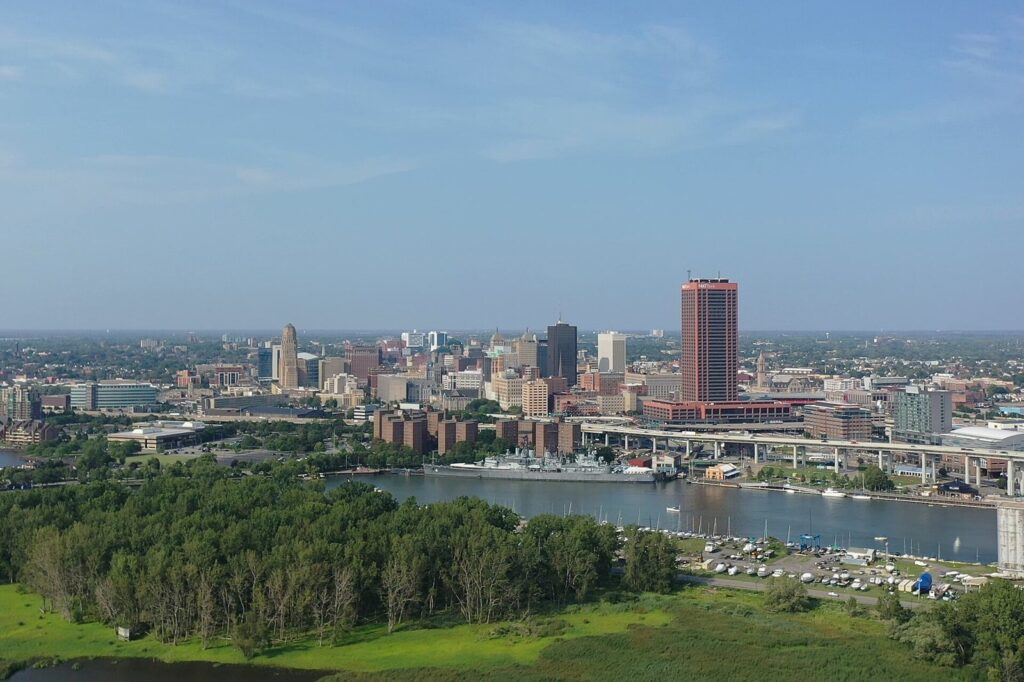
The best things to do in Buffalo NY fit into a surprisingly small area: a free observation deck on the 28th floor of a 1931 Art Deco city hall, a major art museum that reopened in 2023 with a new glass building, Frank Lloyd Wright’s Darwin D. Martin House, a river lined with the concrete grain elevators from the years when Buffalo was the country’s great grain port, and a park system laid out by Frederick Law Olmsted. Almost all of it sits within five miles of Niagara Square, and Niagara Falls is about half an hour north when you want the obvious day trip.
This guide sorts the city by what you have to spend: an afternoon, a long weekend, very little money, or a wet Saturday with kids. The caveat that catches first-timers is the calendar, not the map. Several headline stops close early in the week (the Buffalo AKG on Tuesdays and Wednesdays, the Martin House on Tuesdays, the history and children’s museums on Mondays and Tuesdays), and much of the waterfront fun runs only from late spring to early fall. Hours, prices and seasons were checked September 23, 2026 against each venue’s or agency’s own website.
Buffalo’s Best Things to Do at a Glance
These are the headline things to do in Buffalo NY, with prices for one adult. The last column flags the detail most likely to spoil the visit if you miss it.
| Stop | Why go | Time | Price | Plan ahead |
|---|---|---|---|---|
| City Hall observation deck | Art Deco lobby and a 28th-floor view over the lake | 45 min | Free | Weekdays only; free guided tour at noon |
| Buffalo AKG Art Museum | Modern and contemporary art in buildings from 1905, 1962 and 2023 | 2–3 hrs | $24 | Closed Tue and Wed; pay what you wish on first Fridays |
| Darwin D. Martin House | Frank Lloyd Wright’s Prairie-style estate | 75-min tour | $25 | Advance tickets required; closed Tue |
| Canalside | Free waterfront park where the Erie Canal met the lake | 1–2 hrs | Free | Winter ice activities return in November |
| Buffalo Naval & Military Park | Board a destroyer, a cruiser and a submarine | 2 hrs | $23 | Daily through October, then weekends |
| Buffalo River boat tour | Grain elevators and Silo City from the water | 1.5–2 hrs | Varies | Seasonal; book ahead |
| Delaware Park and the Buffalo History Museum | Olmsted’s lake and meadows, plus the city’s story | 2–3 hrs | Park free; museum pay what you wish | Museum closed Mon and Tue |
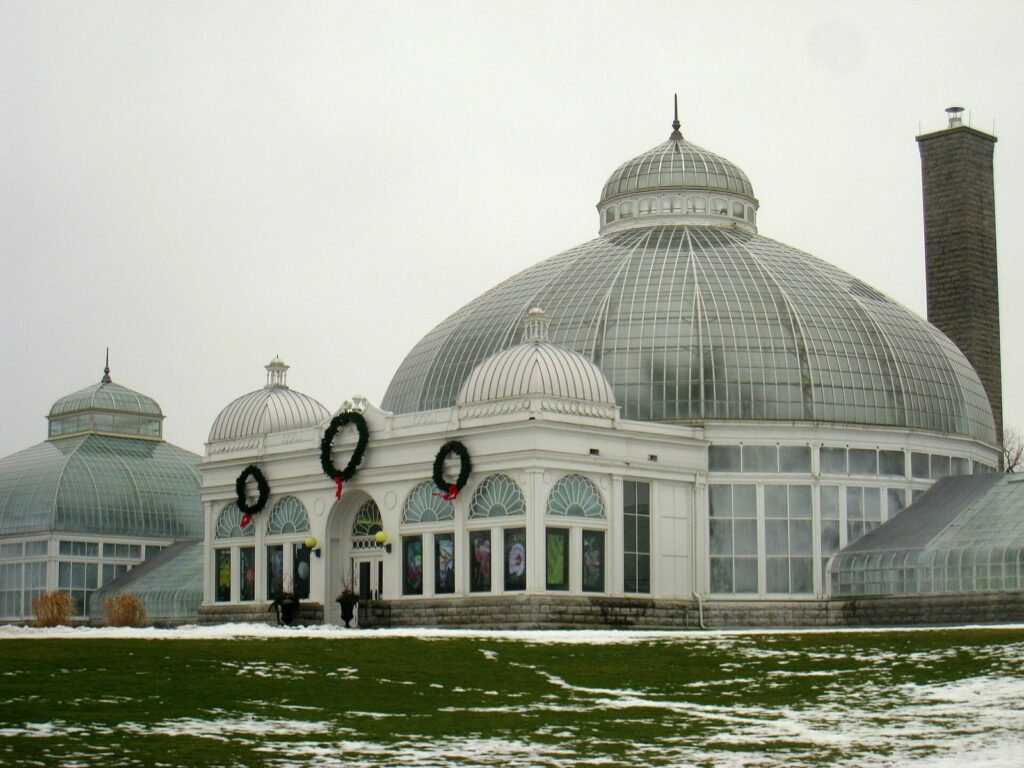
| Buffalo and Erie County Botanical Gardens | A glass conservatory that works in any weather | 1–2 hrs | $19 | Last tickets around 3 p.m. |
| Buffalo Zoo | An easy family half day in Delaware Park | 2–3 hrs | $25.95 | Last admission 4 p.m. |
| Niagara Falls State Park | The falls, about 30 minutes north | Half day or more | Free entry; paid parking | Passport only if you cross into Canada |
How Much Time Do You Need in Buffalo?
Two full days cover the city’s highlights at a sane pace, and a third buys Niagara Falls. Before you slot anything in, it helps to know that Buffalo’s sights fall into four clusters, and that moving between them takes 10 to 20 minutes by car, longer by bus:
- Downtown and Canalside: City Hall, the Guaranty Building, the Theater District, Canalside, the Naval Park and the children’s museum. Compact and walkable, with the Metro Rail running up Main Street.
- The Buffalo River and the Old First Ward: Silo City, Buffalo RiverWorks and the river cruises, a mile or two southeast of Canalside.
- The museum district: the Buffalo AKG, the Burchfield Penney Art Center, the Buffalo History Museum and the zoo, all around Delaware Park, with the Martin House a few blocks east and Forest Lawn just south. It’s three to four miles north of downtown.
- South and east: the Botanical Gardens in South Park, the Outer Harbor and Tifft Nature Preserve on the lake, and the Central Terminal and Broadway Market on the East Side.
If you only have one day
Make it a Friday if you can: every stop below is open, and the Buffalo AKG stays open until 8 p.m. Start downtown at the City Hall observation deck, which opens only on weekdays, then walk about 20 minutes down to Canalside, or ride the free above-ground stretch of Metro Rail, and board the Naval Park’s ships before the last ticket (4 p.m. through September, 3 p.m. in October). After lunch, head north for a Martin House tour you booked in advance, and give the AKG the early evening. Finish with wings or a show in the Theater District. It’s a full day, but nothing in it is wasted on backtracking.
If you have a weekend
Give Saturday to the museum district: a morning Martin House tour, the AKG, a loop around Hoyt Lake and, if there’s time, the Buffalo History Museum or a walk through Forest Lawn. Give Sunday to the water: a river cruise or Silo City tour in season, Canalside, and the Botanical Gardens if the weather turns. The one catch is City Hall, which is closed on weekends, so catch the deck on Friday afternoon or Monday morning.
If you have three days or more
Add Niagara Falls. Niagara Falls State Park is about half an hour north of downtown by car, and NFTA’s Route 40 bus gets you there for the standard $2 fare if you don’t mind a much slower trip. An extra day beyond that buys Graycliff, Wright’s summer house on the Lake Erie bluffs in Derby, about 25 minutes south of downtown (tours run April through November, and advance tickets are required), or a slower day in the Elmwood Village and Allentown.
Which Buffalo Attractions Are Worth Planning Around?
These five justify a trip on their own. Each has a quirk of hours or booking that’s worth knowing before you set out.
Buffalo AKG Art Museum
The museum long known as the Albright-Knox reopened in June 2023 as the Buffalo AKG, adding the glass-walled Jeffrey E. Gundlach Building and a mirrored canopy, Common Sky, over the courtyard of the 1962 Knox Building. The collection is strongest in modern and contemporary art, and it’s the kind of place where a planned two hours turns into three. It sits on the edge of Delaware Park, so it pairs naturally with a walk around the lake.
Plan it: 1285 Elmwood Avenue. Open Monday and Thursday through Sunday from 10 a.m., closing at 5 p.m. except on Fridays (8 p.m.) and Saturdays (6 p.m.); closed Tuesdays and Wednesdays. Adults $24, seniors 62 and older and college students $20, ages 5 to 18 $10, 4 and under free. On M&T FIRST FRIDAYS, the first Friday of each month, admission is pay what you wish (sold onsite only) and the museum stays open until 9 p.m. Parking is $12 for three hours. Every gallery is wheelchair accessible, and wheelchairs and walkers are lent free. See current hours and admission.
Frank Lloyd Wright’s Darwin D. Martin House
Wright designed this Prairie-style estate for Larkin Company executive Darwin D. Martin in the first years of the 1900s, and it’s the reason many architecture fans come to Buffalo at all. The long pergola, the conservatory and the carriage house were torn down in the 1960s and have since been rebuilt, so the complex again reads the way Wright drew it: low, horizontal and stretched along the lot. You can’t wander in on your own, because the interiors are tour-only.
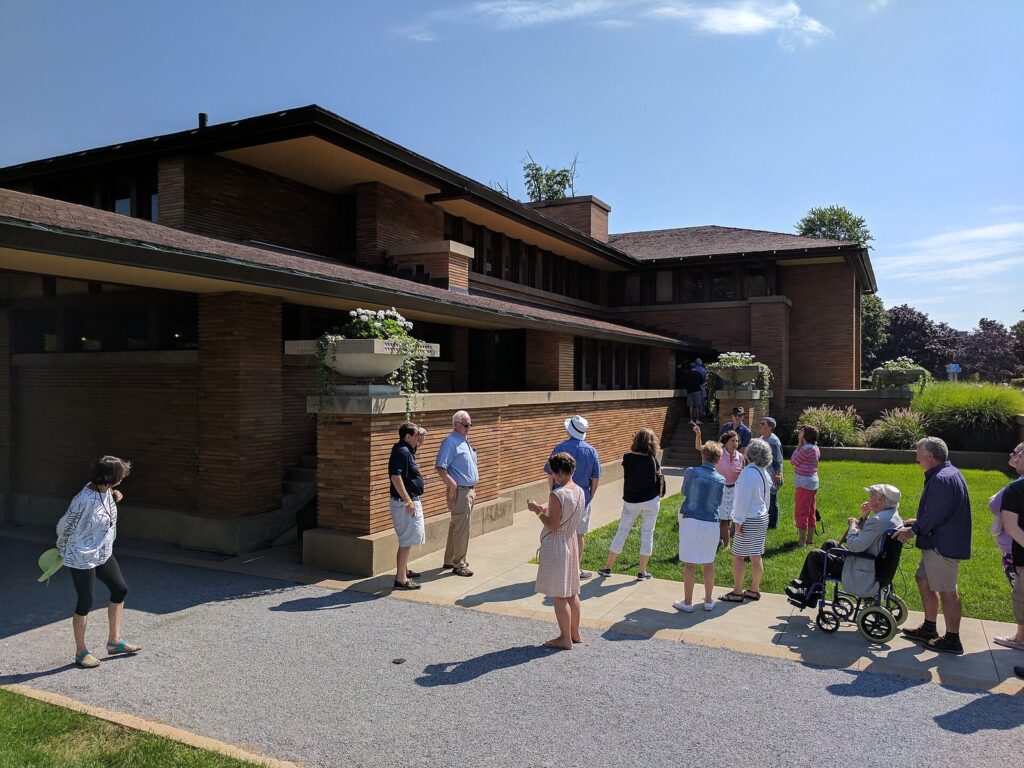
Plan it: 125 Jewett Parkway; check in at the Greatbatch Pavilion visitor center. The 75-minute Martin House Tour costs $25 for adults, $23 for seniors and $10 for students, and it’s free for children 8 and under. Advance tickets are required, and tours do sell out. The two-hour Martin House Plus tour ($50) adds the second floor, the Barton House and the Gardener’s Cottage. Tours run Monday and Wednesday through Friday from 9:30 a.m. to 4 p.m., Saturday from 9 a.m. to 5 p.m. and Sunday from 9:30 a.m. to 5 p.m.; there are none on Tuesdays. Most of the 75-minute tour is wheelchair accessible (the pergola isn’t), but the Plus tour is not. See tour options and tickets.
Buffalo City Hall Observation Deck
City Hall is one of the country’s great Art Deco buildings, and it lets you ride most of the way to the top for nothing. From the 28th-floor deck you look straight down on Niagara Square, where Joseph Ellicott’s streets fan out like the spokes of a wheel, then out over Lake Erie to the Canadian shore. The murals in the lobby are worth slowing down for on the way in.
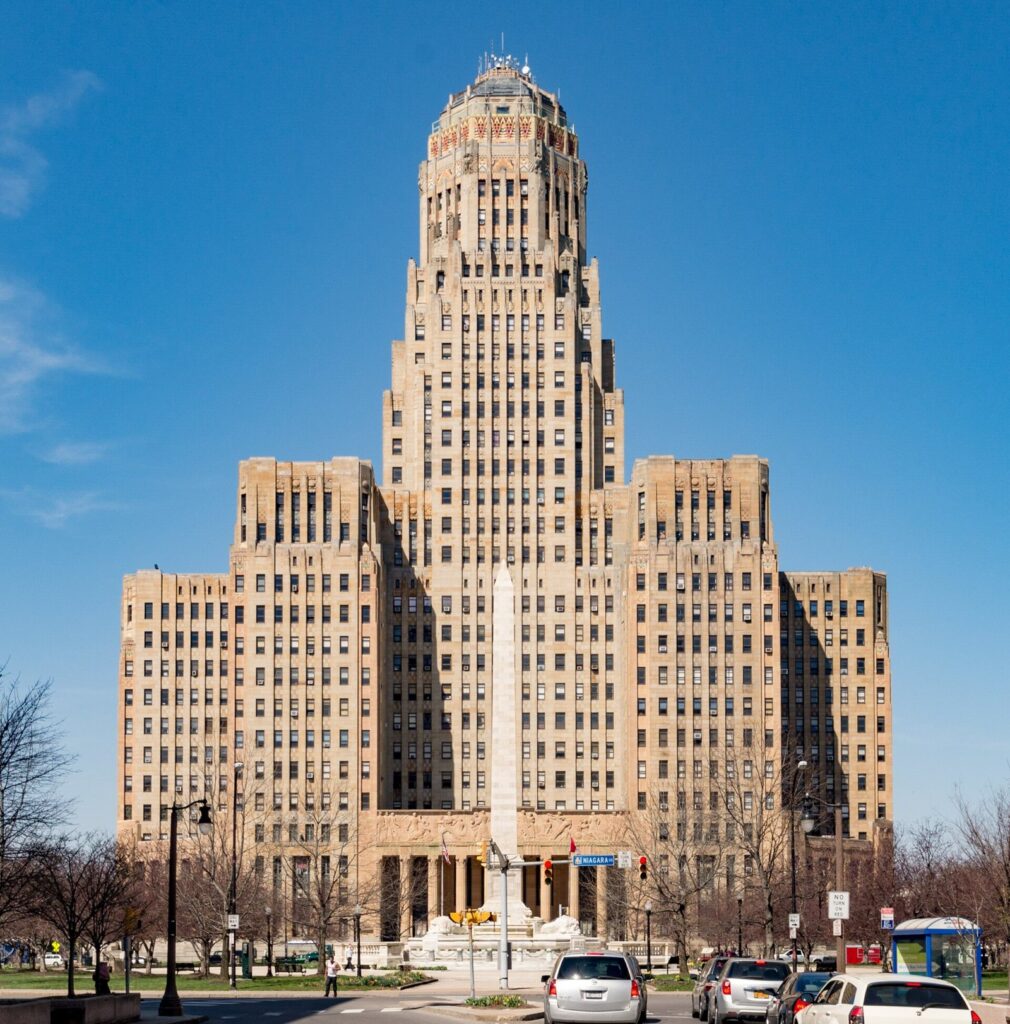
Plan it: 65 Niagara Square. Free, weekdays only during business hours; the building is closed on weekends and holidays. You pass through a lobby metal detector, ride an elevator to the 25th floor and climb the last three flights, so the deck isn’t step-free. Explore Buffalo runs a free 60-minute tour of the building every weekday at noon. On your own, allow 45 minutes.
Canalside and the Naval & Military Park
Canalside is where the Erie Canal met Lake Erie, and the old canal slips have been rebuilt into a free waterfront park with lawns, boardwalks and the Buffalo Heritage Carousel. Summer brings concerts and kayak rentals. From November, the replica canals become Ice at Canalside, with skating, curling and ice bumper cars. Right next door, the Buffalo and Erie County Naval & Military Park lets you climb aboard three ships: the destroyer USS The Sullivans, the cruiser USS Little Rock and the submarine USS Croaker.

Plan it: Canalside is free and open daily from dawn to dusk, with free parking. Carousel rides are $3; in September it runs Friday through Sunday. The Naval Park, at 1 Naval Park Cove, charges $23 for adults, $18 for ages 5 to 12 and for seniors 65 and older, and $16 for veterans; 4 and under are free. It’s open daily from 10 a.m. to 5 p.m. through September and 10 a.m. to 4 p.m. in October, with the last ship ticket sold an hour before closing. From November it opens on weekends only, and winter visits are by guided tour. Below-deck areas of The Sullivans are closed for preservation work. Expect ladders and narrow hatches everywhere else; the park doesn’t publish accessibility details, so call 716-847-1773 if stairs are a problem. See seasonal hours.
Niagara Falls
You don’t need anyone to sell you on the falls, but you may need the logistics. Niagara Falls State Park is about 20 miles north of downtown Buffalo, roughly half an hour by car. Walking in is free; drivers pay to park, and the main lots charge $10 a day from October 12, 2026 through March (in peak season it’s $15 on Fridays through Sundays). Lot 3 on Goat Island is free from the day after Labor Day until late May, and on Tuesdays through Thursdays all year. Without a car, NFTA’s Route 40 runs every day from downtown’s Metropolitan Transportation Center via Grand Island to the Seneca Niagara Casino, about a 15-minute walk from the park, for the standard $2 fare. It’s a local bus, so it takes far longer than the drive. The Canadian side has the wider view, but crossing the Rainbow Bridge means a passport or other accepted travel document and a border line in both directions. Treat the falls as their own half or full day rather than squeezing them in between museums.
What Can You Do in Buffalo for Free?
Quite a lot, as long as you plan around the calendar. The best free things in town:
- City Hall’s observation deck and the free noon tour of the building, weekdays only.
- Canalside, parking included, plus the Buffalo History Museum’s free Waterway of Change exhibit at 44 Prime Street (guided tours there cost $3).
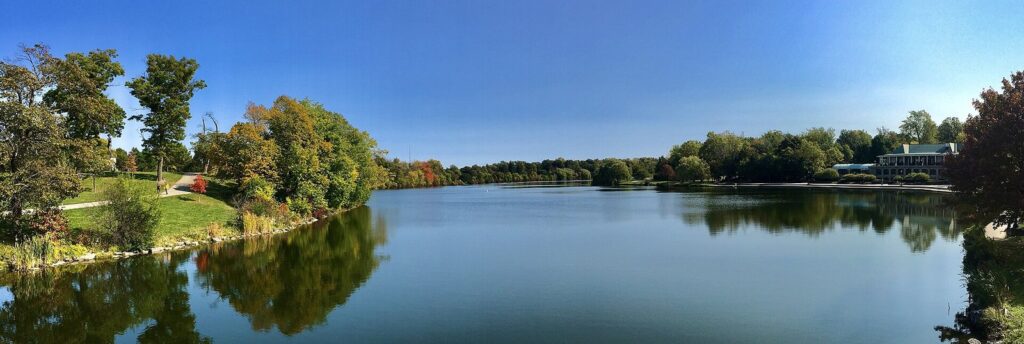
- Delaware Park: the path around Hoyt Lake, the Rose Garden and its 1917 pergola, and the Japanese Garden behind the Buffalo History Museum.
- Forest Lawn, the cemetery founded in 1849, where people come to walk as much as to mourn. Millard Fillmore (section F), Rick James (section 10), Shirley Chisholm (Birchwood Mausoleum) and the Seneca orator Red Jacket (section 12) are all here, as is the Blue Sky Mausoleum, a Frank Lloyd Wright design finally built in 2004. The gates open daily at 8 a.m.; visitors must leave by 7 p.m. through September 30 and by 5 p.m. from October 1.
- The Outer Harbor: free parking, lakeside paths and the boardwalk at Buffalo Harbor State Park, open dawn to dusk. Swimming isn’t allowed.
- Museum deals: the Buffalo History Museum is pay what you wish whenever it’s open ($12 is suggested), the Buffalo AKG is pay what you wish on M&T FIRST FRIDAYS, and the Burchfield Penney Art Center is free on M&T Second Fridays and free every day for visitors under 18.
- Doors Open Buffalo: Explore Buffalo’s open-house day gets you into about 30 downtown buildings for free (in 2026 it falls on Saturday, September 26). Registration is required.
- Shakespeare in Delaware Park: free outdoor performances every summer. The 2026 season has ended, and the 52nd is planned for 2027.
What Should You Do in Buffalo When the Weather Turns?
Buffalo’s snow reputation is earned but lopsided. The National Weather Service’s 1991–2020 normal for the city is 95.4 inches of snow a year. Lake-effect bands can bury one suburb while downtown stays gray and dry, and rain is the likelier spoiler from spring to fall. Either way, these indoor stops can carry a day:
- Buffalo AKG Art Museum: the obvious first choice (details above).
- Buffalo and Erie County Botanical Gardens (2655 South Park Avenue): a Victorian glass conservatory full of palms, cacti and seasonal displays, open daily from 10 a.m. to 4 p.m. Adults $19, seniors and students $17; kids 12 and under were free with a ticket when we checked. Last tickets are sold around 3 p.m.
- Buffalo Museum of Science (1020 Humboldt Parkway): open 10 a.m. to 4 p.m. on weekdays and until 5 p.m. on weekends. Adults $23 in cash or $23.69 by card, ages 2 to 17 $19. Parking is free, and the museum is certified sensory inclusive.
- Buffalo Transportation Pierce-Arrow Museum (263 Michigan Avenue): cars built in Buffalo, plus a Frank Lloyd Wright filling station constructed inside the museum from his 1927 design. Open Thursday through Saturday, 11 a.m. to 4 p.m.; adults $20, children 12 and under $10. Most people spend an hour or so.
- Theodore Roosevelt Inaugural National Historic Site (641 Delaware Avenue): the house where Theodore Roosevelt took the oath of office in 1901, after President William McKinley was shot at the Pan-American Exposition and died eight days later. Visits are by guided tour only, hourly from 10:30 a.m. to 3:30 p.m.; adults $12, seniors and veterans $9, 18 and under free. Booking ahead is strongly recommended.
- Buffalo RiverWorks (359 Ganson Street): skating, curling and roller skating year-round, plus a restaurant and brewery beside the grain silos. Check session times before you go.
Where Should You Go on Buffalo’s Waterfront?
Buffalo’s waterfront is really three places, and first-timers often see only one of them.
Canalside is the polished part at the foot of downtown (see above). Just north of it, Erie Basin Marina is where Buffalo Harbor Cruises’ Miss Buffalo II leaves for two-hour cruises that rise through the Black Rock Lock on the Niagara River and return by way of Lake Erie and the Buffalo River.
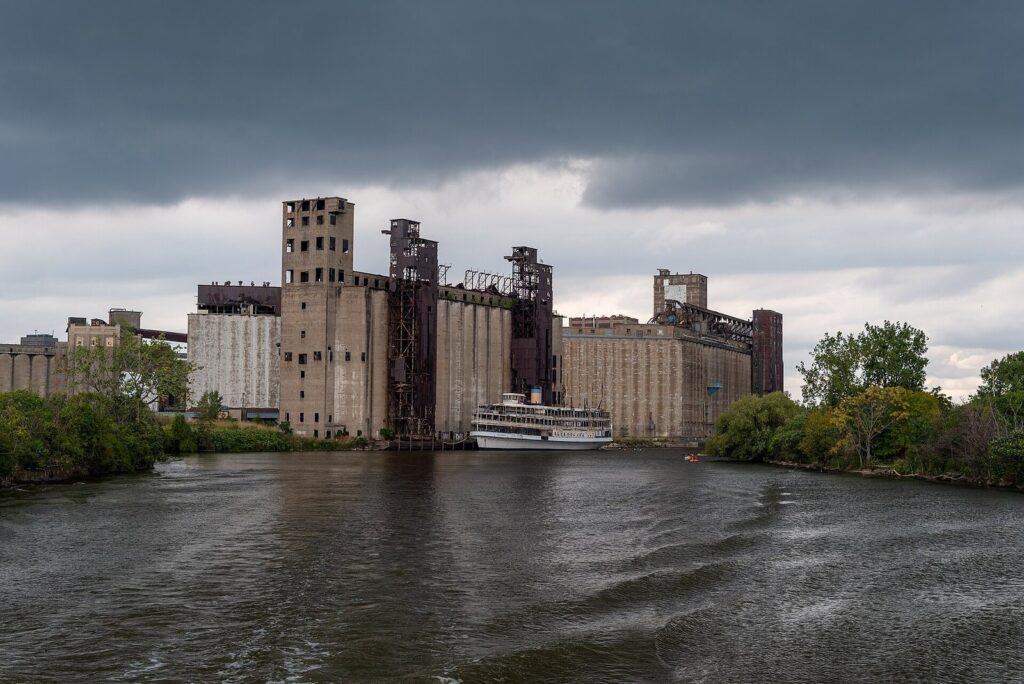
The Buffalo River bends inland past the Old First Ward and the grain elevators of Silo City. It’s Buffalo’s most distinctive landscape, and the water is the best way to see it: Buffalo River History Tours and the red-sailed schooner Spirit of Buffalo both leave from 44 Prime Street at Canalside. On foot, Explore Buffalo’s Silo City: Ground tour costs $22. Buffalo RiverWorks adds rinks, a restaurant and a brewery; its silo climbing and zip lines have closed for the season. Most boat operators run from late spring into fall, and not all post their season dates, so check before you plan a day around one.
The Outer Harbor, across the river mouth, is the wilder side. Buffalo Harbor State Park, the first state park inside the city, has a 1,100-slip marina, a pier and boardwalk and a playground. Wilkeson Pointe has paths and park golf, and Tifft Nature Preserve has trails and boardwalks through restored marsh (its education center is open Wednesday through Sunday, 10 a.m. to 4 p.m.). From Memorial Day weekend to Labor Day weekend, the Queen City Bike Ferry makes the five-to-ten-minute crossing from Canalside’s Commercial Slip; the rest of the year it’s a short drive over the Skyway to Fuhrmann Boulevard. Parking is free, and the grounds are open dawn to dusk.
One caution: the core of Ralph C. Wilson Jr. Centennial Park, the big lakefront park north of downtown that used to be LaSalle Park, has been closed for construction since July 2023. The skate plaza near Centennial Pool is open, but most of the park isn’t yet.
Where Can You See Buffalo’s Famous Architecture?
Around 1900, Buffalo was rich, fast-growing and happy to hire the best architects in the country. The result is a city where you can see work by Frank Lloyd Wright, Louis Sullivan, H.H. Richardson and Frederick Law Olmsted in a single weekend, much of it for free.
- Guaranty Building (Church and Pearl Streets): Louis Sullivan’s 1896 office tower, wrapped in terra cotta, is one of the founding buildings of the American skyscraper. Preservation Buffalo Niagara runs an interpretive center in the lobby; go in through the Pearl Street doors and check in at the security desk.
- City Hall and its observation deck (above), across Niagara Square from the McKinley Monument.
- Richardson Olmsted Campus (444 Forest Avenue): H.H. Richardson’s twin-towered former state asylum, with grounds designed by Olmsted, on a 42-acre site that is a National Historic Landmark. Guided tours run on weekend mornings from June through September and are booked through Explore Buffalo.
- Buffalo Central Terminal: the 1929 Art Deco rail station on the East Side is under restoration. A self-guided outdoor audio tour, with segments voiced by members of the Goo Goo Dolls, leads you around the exterior.
- More Wright: Graycliff in Derby, the filling station inside the Pierce-Arrow Museum, and the Blue Sky Mausoleum at Forest Lawn.
For the stories behind the facades, a guided walk with Explore Buffalo, the nonprofit that runs the free City Hall tours, is money well spent.
Which Buffalo Neighborhoods Are Worth Walking?
Buffalo’s neighborhoods are where the city feels most like itself, and you don’t need a plan beyond a street and a coffee.
- Elmwood Village: Elmwood Avenue’s long run of independent shops, cafes and restaurants, which ends at the museum district.
- Allentown: Victorian side streets, galleries, bars and murals just north of downtown. The Allentown Art Festival fills its streets each summer.
- Hertel Avenue: North Buffalo’s main street, good for a relaxed dinner away from the center.
- Larkinville: the old Larkin Company district east of downtown. In summer, Larkin Square’s Tuesday food truck nights draw a crowd.
- Old First Ward: the historically Irish neighborhood between the grain elevators and the river, with Silo City and RiverWorks on its edge.
- The West Side: Grant Street and the blocks around it, where refugee and immigrant families run many of the city’s most interesting small restaurants.
What Should You Eat in Buffalo?
Wings are the headline, and they deserve it, but the local menu runs deeper than one bar snack.
- Wings: the Anchor Bar at 1047 Main Street says it served the first ones in 1964, and Duff’s, in business since 1946, is the other name you’ll hear in any argument about who does them best. The National Buffalo Wing Festival returns to Sahlen Field on September 4 and 5, 2027, with general admission at $20 a day.
- Beef on weck: thin-sliced roast beef on a kummelweck roll crusted with coarse salt and caraway, with horseradish on the side.
- Sponge candy: brittle honeycomb toffee dipped in chocolate, sold by several of the city’s old candy makers.
- Friday fish fry: a slab of battered haddock with fries or potato salad, a year-round habit that peaks during Lent.
- Buffalo-style pizza: a thick, soft crust, sweet sauce and small pepperoni that curl into crisp cups.
- Sahlen’s hot dogs and loganberry: charcoal-grilled hot dogs and a sweet, pink-purple berry drink that’s hard to find anywhere else.
On the East Side, the Broadway Market is a Polish market hall at its busiest in the weeks before Easter, when the stalls fill with butter lambs, pierogi and placek. More broadly, wings, weck and fish fry are neighborhood food: the best-known places are scattered across the city and its suburbs rather than clustered downtown, so plan meals around where you’ll already be.
What Are the Best Things to Do in Buffalo With Kids?
- Explore & More (130 Main Street, Canalside): the children’s museum, pitched at toddlers through third graders, with an elevator to all four floors. Open Wednesday through Saturday, 10 a.m. to 4 p.m., with varying Sunday hours; $16 per person from age 1, $15 for seniors, under 1 free.
- Buffalo Zoo (300 Parkside Avenue): open daily from 10 a.m. to 5 p.m., with last entry at 4 p.m. Ages 13 to 64 pay $25.95, ages 2 to 12 $19.95, and under 2 are free; parking is $6 for the first two hours. In fall 2026 the Enchanted Pumpkin Trail adds after-dark visits.
- Buffalo Museum of Science: hands-on exhibits, free parking and a quiet room for kids who need a break (details above).
- The Naval Park’s ships, for kids old enough to enjoy steep ladders.
- The Buffalo Heritage Carousel at Canalside: $3 a ride, with quiet rides from 11 a.m. to noon on Sundays.
- Buffalo Harbor State Park’s playground on the Outer Harbor; the splash pad reopens Memorial Day weekend 2027.
What Is There to Do in Buffalo at Night?
Buffalo’s nights are low-key by big-city standards and built around a stage, a game or a bar stool.
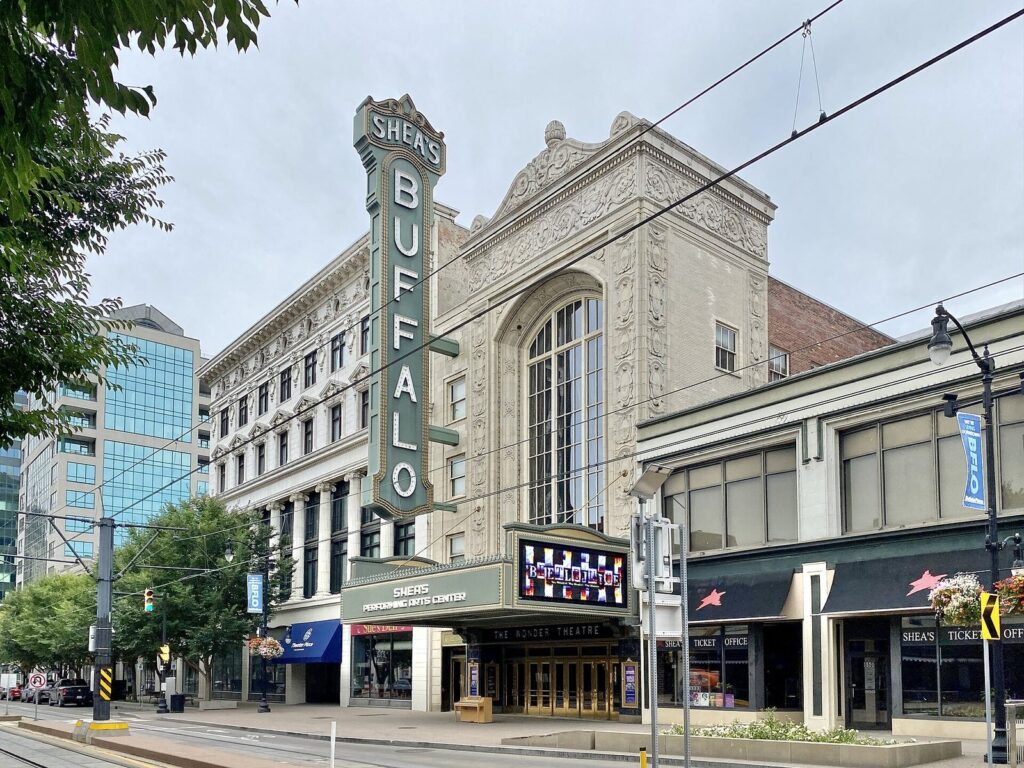
- Shea’s Buffalo Theatre (Main Street, in the Theater District): a 1926 movie palace designed by Rapp and Rapp with interiors by Tiffany Studios, now the city’s Broadway house. Its 2026–27 Broadway season runs into June 2027, with Hell’s Kitchen, The Great Gatsby and The Sound of Music this fall and Harry Potter and the Cursed Child in the spring. Historic tours run one Monday a month at 6 p.m. for $25. The building has no elevator, and the balcony has no accessible seating.
- The Buffalo Philharmonic Orchestra at Kleinhans Music Hall, Eliel and Eero Saarinen’s 1940 concert hall on Symphony Circle. The 2026–27 season is under way.
- The Buffalo AKG on Friday nights, open until 8 p.m., or 9 p.m. on the first Friday of the month.
- Live sports: the Sabres play hockey at KeyBank Center downtown from October (the 2026–27 home opener is October 3), and the Bandits’ pro lacrosse season there runs from late fall into April. The Bisons play Triple-A baseball at Sahlen Field from spring into September. The Bills now play at the new Highmark Stadium in Orchard Park, which hosted its first regular-season game on September 17, 2026; NFTA’s Game Day Express buses run there from six transit centers, including downtown’s Metropolitan Transportation Center, for $5 each way.
- Live music: summer concerts at Canalside and the Outer Harbor. The Colored Musicians Club, a jazz landmark on Broadway, has been closed for a renovation and expansion that its website dates to June 2023, so check its status before you build a night around it.
When Is the Best Time to Visit Buffalo?
Late spring through early fall is the easy answer: everything is open, the waterfront is running and the weather is mild. But the season changes the list of things to do in Buffalo NY more than it does in most cities.
| Season | Typical weather | At its best | Limited or closed |
|---|---|---|---|
| Summer (Jun–Aug) | July averages a high of about 80°F and a low of 63°F | Canalside concerts, boat tours, the bike ferry, Shakespeare in Delaware Park, the Juneteenth Festival in June, and Taste of Buffalo and Garden Walk Buffalo in July | Niagara Falls at its busiest |
| Fall (Sep–Nov) | October averages a high near 60°F and a low near 44°F | Bills and Sabres seasons, Doors Open Buffalo in late September, Martin House and Graycliff tours, and fall color that tends to peak late in October | Bike ferry ends Labor Day weekend; boat tours and the Naval Park’s daily hours wind down |
| Winter (Dec–Mar) | January averages a high near 32°F and a low near 19°F, and a normal year brings about 95 inches of snow | Ice at Canalside, Sabres hockey, museums and the Botanical Gardens’ conservatory | Naval Park weekends only; Graycliff tours Friday to Sunday; lake-effect storms can close roads |
| Spring (Apr–May) | April averages a high near 55°F and a low near 37°F | Dyngus Day on Easter Monday, the Broadway Market’s Easter season, the start of Bisons baseball and quieter museums | Many waterfront operations wait until Memorial Day weekend |
Festival dates shift from year to year, so confirm them with the organizers before you book around one.
How Do You Get Around Buffalo Without a Car?
Downtown and the Main Street corridor are the easy part. NFTA’s Metro Rail runs a single line, seven days a week, from DL&W Station at the foot of downtown, past Canalside and up Main Street to University Station at the University at Buffalo’s South Campus. It’s free on the above-ground stretch between Fountain Plaza and DL&W Station, which covers most of downtown. Elsewhere a ride is $2 and a day pass $5, and with a MetGo card, fare capping stops charging you once you’ve spent $5 in a day; buses also take cash. Construction has trains single-tracking above ground between Church and Canalside stations and running about every 20 minutes, so leave some slack. Buses fill the gaps: the 20 Elmwood stops near the Buffalo History Museum, and the 24 and 24L link the airport with the city. Reddy Bikeshare bikes are available from April through October.
The honest verdict: downtown, Canalside and the Main Street corridor are easy without a car, while the Martin House, the Botanical Gardens, the Outer Harbor and anything outside the city are much easier with one or with a rideshare. Parking is rarely the problem it is in bigger cities. Canalside, the Outer Harbor, the Buffalo History Museum, the Museum of Science and the Pierce-Arrow Museum all have free lots; the AKG charges $12 for three hours and the zoo $6 for two.
Which Buffalo Attractions Work Best With Limited Mobility?
Newer and renovated museums do well. Historic houses, towers and ships are harder.
- Easiest: the Buffalo AKG (every gallery and entrance accessible, free wheelchairs and walkers, and free entry for personal care attendants), the Buffalo Museum of Science (free wheelchairs, elevators and sensory bags), the Buffalo History Museum (wheelchair accessible throughout, captioned films and a Sunday sensory hour from 11 a.m. to noon), Explore & More and the Pierce-Arrow Museum.
- Partly accessible: the Martin House’s 75-minute tour (everything but the pergola), the Heritage Carousel (ADA seating) and the Accessible Trail at Tifft Nature Preserve.
- Hard: City Hall’s deck (three flights above the elevator), the balcony at Shea’s (no elevator), Graycliff (stairs and uneven ground), the Martin House Plus tour and the Naval Park’s ships.
Buffalo Things to Do: Frequently Asked Questions
Is Buffalo worth visiting for a weekend?
Yes, especially if you like architecture, art or food more than theme-park attractions. Two days cover the Buffalo AKG, the Martin House, City Hall’s deck, Canalside and a river tour at a relaxed pace, and the city is easy to drive and park in. Add a third day if you want to see Niagara Falls without rushing it.
What is Buffalo, NY best known for?
Chicken wings, snow and the Bills, in roughly that order. What deserves to be better known is the architecture: Frank Lloyd Wright’s Martin House, Louis Sullivan’s Guaranty Building, H.H. Richardson’s asylum towers and one of the finest Art Deco city halls in the country, all within a short drive of one another.
What is open in Buffalo on a Monday?
More than you might expect. The Buffalo AKG, the Martin House, City Hall’s observation deck, the zoo, the Botanical Gardens, the Museum of Science, the Theodore Roosevelt site and the Naval Park (daily through October) are all open on Mondays. The Buffalo History Museum, the Burchfield Penney, Explore & More and the Pierce-Arrow Museum are closed.
Can you visit Niagara Falls on a day trip from Buffalo?
Easily. Niagara Falls State Park is about half an hour north of downtown by car, and walking into the park is free; the main parking lots cost $10 to $15 a day depending on the season. Without a car, NFTA’s Route 40 bus makes the trip every day for $2, though it’s a slow local route. Bring a passport if there’s any chance you’ll cross the Rainbow Bridge to the Canadian side.
Is downtown Buffalo walkable?
Yes. City Hall, the Theater District, Canalside and the Naval Park are all within about a mile of one another, and the Metro Rail runs up Main Street. The museum district around Delaware Park is three to four miles north, so most visitors take the train, a bus or a car between the two.
What is there to do in Buffalo in winter?
Plenty, if you dress for it. Ice at Canalside returns each November with skating, curling and ice bumper cars, the Sabres and the Bandits play at KeyBank Center, and the museums, the Botanical Gardens’ conservatory and Shea’s keep going all winter. Build some slack into your plans for lake-effect snow, which can close roads with little warning.
Sources and How We Checked
Hours, prices, seasons and access details were checked on September 23, 2026 on the websites of the attractions, operators and agencies listed below. This guide is compiled from those official sources rather than from other travel lists, and it doesn’t describe first-hand visits. Schedules change often, so confirm anything time-sensitive with the operator before you go.
- Museums and historic sites: Buffalo AKG Art Museum hours and admission and accessibility; Burchfield Penney Art Center; The Buffalo History Museum; Buffalo Museum of Science and its accessibility page; Explore & More; Buffalo and Erie County Naval & Military Park; Theodore Roosevelt Inaugural National Historic Site; Buffalo Transportation Pierce-Arrow Museum; The Colored Musicians Club.
- Architecture: Martin House tours, hours and accessibility; Explore Buffalo’s City Hall tour, Silo City tour and Doors Open Buffalo; Richardson Olmsted Campus; Buffalo Central Terminal; Forest Lawn hours and notable burials; Graycliff; Shea’s historic tours and Broadway season; Buffalo Philharmonic Orchestra.
- Waterfront and parks: Buffalo Waterfront (Canalside and the Outer Harbor), Queen City Bike Ferry and winter activities; Buffalo Heritage Carousel; New York State Parks: Buffalo Harbor State Park; Tifft Nature Preserve; Buffalo RiverWorks; Buffalo River History Tours; Spirit of Buffalo; Buffalo Harbor Cruises; Ralph C. Wilson Jr. Centennial Park; Buffalo Olmsted Parks Conservancy; Shakespeare in Delaware Park; Buffalo and Erie County Botanical Gardens; Buffalo Zoo.
- Transit, weather and events: NFTA Metro fares, Metro Rail, Route 40, airport service and Game Day Express; Niagara Falls State Park parking; National Weather Service Buffalo climate normals; I LOVE NY fall foliage report; Buffalo Bills; Buffalo Sabres; Buffalo Bandits; National Buffalo Wing Festival; Reddy Bikeshare; Visit Buffalo’s signature events calendar for 2026 festival dates.
Buffalo Tourism Guide is an independent publication. We are not affiliated with Visit Buffalo Niagara, the City of Buffalo or any attraction listed here, and no one paid to be included.
Photo Credits
- Downtown Buffalo and the Buffalo River from the air: photo by Dekema, Wikimedia Commons (CC BY-SA 4.0)
- Darwin D. Martin House: photo by Nathaniel Abbott, Wikimedia Commons (CC BY-SA 4.0)
- Buffalo City Hall: photo by xiquinhosilva, Wikimedia Commons (CC BY 2.0)
- USS The Sullivans: photo by Reading Tom from Reading, UK, Wikimedia Commons (CC BY 2.0)
- Hoyt Lake, Delaware Park: photo by Andre Carrotflower, Wikimedia Commons (CC BY-SA 4.0)
- Buffalo and Erie County Botanical Gardens: photo by Daderot, Wikimedia Commons (Public domain)
- Silo City grain elevators: photo by Mys 721tx, Wikimedia Commons (CC BY-SA 3.0)
- Shea's Buffalo Theatre: photo by w_lemay, Wikimedia Commons (CC BY-SA 2.0)